 Back
BackThe Endocrine System: Endocrine Glands and Hormone Actions
Study Guide - Smart Notes
 Tailored notes based on your materials, expanded with key definitions, examples, and context.
The Endocrine System: Overview
General Characteristics
The endocrine system is responsible for long-distance communication within the body, primarily through the release of hormones. It is a slow-acting system compared to the nervous system and consists of glands derived from epithelial tissue. Endocrine glands are classified as either primary or secondary, depending on their main function.
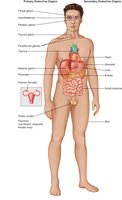
Primary endocrine organs: Main function is hormone secretion.
Secondary endocrine organs: Hormone secretion is secondary to other functions.
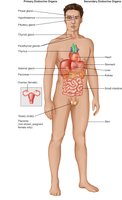
Primary Endocrine Organs
Organs Located Within the Brain
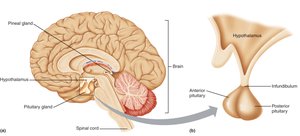
Hypothalamus
Pituitary gland
Pineal gland
Organs Located Outside the Nervous System
Thyroid gland and parathyroid glands
Thymus
Adrenal glands
Pancreas
Gonads (testes and ovaries)
Placenta (in pregnant females)
Secondary Endocrine Organs
Organs and Functions
Heart: Secretes atrial natriuretic peptide (ANP), regulates sodium reabsorption.
Liver: Secretes insulin-like growth factors (IGFs), promotes tissue growth.
Stomach, small intestine: Secrete hormones regulating digestion.
Kidney: Secretes erythropoietin, stimulates red blood cell production.
Skin: Involved in vitamin D metabolism.
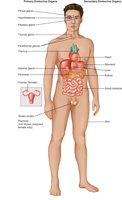
Hypothalamus and Pituitary Gland
Structure and Connection
The hypothalamus and pituitary gland are located in the brain and are connected by the infundibulum, a thin stalk of tissue. The pituitary gland is divided into the anterior lobe (epithelial tissue) and posterior lobe (neural tissue). Hormones secreted by the hypothalamus regulate pituitary gland function.
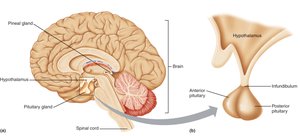
Neural Connection: Posterior Pituitary
Neurons from the hypothalamus project to the posterior pituitary.
Secrete two peptide hormones: antidiuretic hormone (ADH) and oxytocin.
ADH increases water reabsorption in kidneys; oxytocin increases uterine contraction and milk letdown.
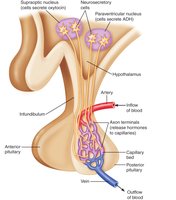
Blood Connection: Anterior Pituitary
The hypothalamic-pituitary portal system is a specialized blood vessel arrangement linking two capillary beds in series. Neurosecretory cells in the hypothalamus secrete tropic hormones into this system, which travel to the anterior pituitary and regulate hormone release.
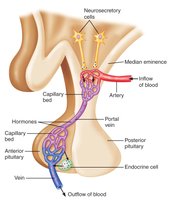
Hypothalamic and Anterior Pituitary Tropic Hormones
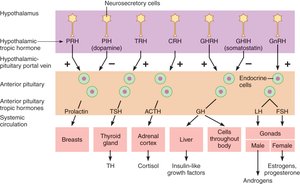
Types and Functions
The hypothalamus secretes seven tropic hormones: five stimulating (–RH) and two inhibiting (–IH).
Tropic hormones regulate the secretion of other hormones, either stimulating or inhibiting.
Anterior pituitary tropic hormones act on other endocrine glands to stimulate hormone release.
Feedback Regulation of Hormone Release
Negative Feedback Loops
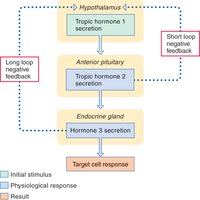
Feedback loops regulate hormone release in multistep pathways:
Short loop negative feedback: Anterior pituitary tropic hormone inhibits hypothalamic tropic hormone.
Long loop negative feedback: Hormone from the endocrine gland inhibits secretion of tropic hormones by hypothalamus/anterior pituitary.
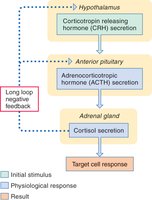
Example: Regulation of Cortisol Release
Cortisol inhibits its own secretion by decreasing CRH and ACTH release.
Pineal Gland
Structure and Function
The pineal gland is located in the brain and composed of epithelial tissue. It secretes melatonin, which regulates circadian rhythms, enhances immune function, and is used therapeutically for sleep disorders and jet lag.
Thyroid and Parathyroid Glands
Thyroid Gland
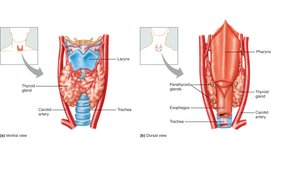
Butterfly-shaped, located on the ventral surface of the trachea.
Secretes T4 (thyroxin) and T3 (triiodothyronine) to regulate metabolic rate and growth.
Secretes calcitonin to regulate blood calcium levels.
Parathyroid Gland
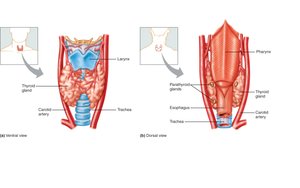
Four small glands on the posterior surface of the thyroid.
Secrete parathyroid hormone (PTH) to increase blood calcium levels by acting on bones, kidneys, and intestines.
Thymus
Structure and Function
Located near the heart.
Secretes thymosin, which regulates T-cell function and maturation.
Adrenal Glands
Structure
The adrenal glands are located above the kidneys and are divided into two regions: the inner medulla (neural tissue) and the outer cortex (epithelial tissue). The cortex contains three layers: zona glomerulosa, zona fasciculata, and zona reticularis.
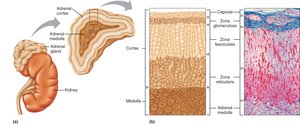
Hormones of the Adrenal Cortex
Mineralocorticoids (aldosterone): Regulate sodium and potassium levels.
Glucocorticoids (cortisol): Regulate stress response and metabolism.
Sex hormones (androgens): Regulate reproductive function.
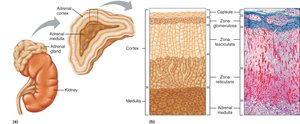
Adrenal Medulla
Contains chromaffin cells.
Secretes catecholamines: 80% epinephrine, 20% norepinephrine, <1% dopamine.
Epinephrine is released during stress, increasing heart rate and mobilizing energy stores.
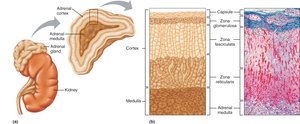
Pancreas
Structure and Dual Function
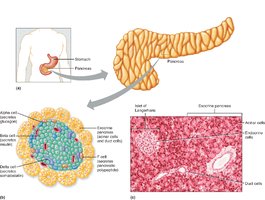
The pancreas is located below the stomach and functions as both an exocrine and endocrine gland. Exocrine cells secrete digestive enzymes, while endocrine cells (islets of Langerhans) secrete hormones.
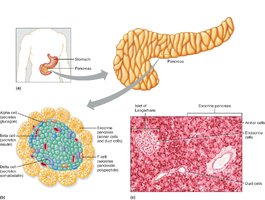
Endocrine Pancreas: Islets of Langerhans
Alpha cells: Secrete glucagon, increase blood glucose.
Beta cells: Secrete insulin, decrease blood glucose.
Delta cells: Secrete somatostatin, regulate digestion and hormone secretion.
F cells: Secrete pancreatic polypeptide, inhibit exocrine pancreas and gallbladder contraction.
Gonads and Placenta
Gonads
Produce gametes (sperm and oocytes).
Secrete sex hormones: androgens (testosterone, androstenedione) in males; estradiol and progesterone in females.
Placenta
Functions as an endocrine gland in pregnancy.
Secretes estrogens, progesterone, and human chorionic gonadotropin (hCG).
Supports pregnancy and fetal development.
Control of Hormone Levels in Blood
Factors Affecting Hormone Concentration
Rate of hormone secretion
Amount of hormone bound to plasma proteins
Rate of hormone metabolism
Rate of Hormone Secretion
Endocrine cells respond to neural and humoral signals, which may be stimulatory or inhibitory.
Transport of Hormones
Hydrophobic hormones are transported bound to carrier proteins, increasing their half-life.
Only free hormone can bind to receptors and produce effects.
Rate of Hormone Metabolism
Hormones are metabolized in target cells, blood, and liver.
Hydrophobic hormones are metabolized more slowly than hydrophilic hormones.
Abnormal Secretion of Hormones
Types and Consequences
Hyposecretion: Too little hormone (e.g., diabetes mellitus type 1).
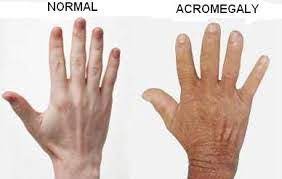
Hypersecretion: Too much hormone (e.g., acromegaly—excess growth hormone in adults causes bone thickening and organ growth).
Primary vs. Secondary Hormone Secretion Disorders
Primary disorder: Abnormality in the endocrine gland itself.
Secondary disorder: Abnormality in hypothalamic or anterior pituitary tropic hormone secretion.
Primary Hypersecretion of Cortisol
Abnormal adrenal gland secretes excess cortisol.
Strong negative feedback decreases CRH and ACTH release.
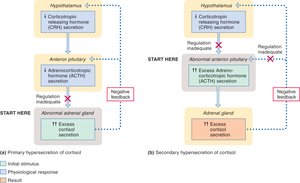
Secondary Hypersecretion of Cortisol
Abnormal anterior pituitary secretes excess ACTH.
Stimulates excess cortisol production.
Increased negative feedback decreases CRH levels.

Hormone Interactions
Types of Interactions
Antagonism: Hormones have opposing effects (e.g., glucagon vs. insulin).
Additive: Net effect equals the sum of individual effects.
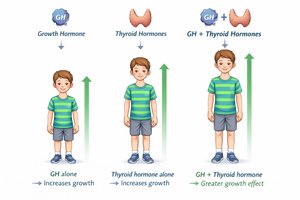
Synergistic: Net effect exceeds the sum of individual effects.
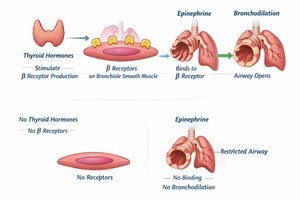
Permissiveness: One hormone enables another to exert its effect (e.g., thyroid hormones enable epinephrine-induced bronchodilation).
Tables: Endocrine Organs and Their Hormones
Table: Primary Endocrine Organs and Hormones
Organ | Hormones | Functions |
|---|---|---|
Hypothalamus | Releasing/inhibiting hormones | Regulate secretion of anterior pituitary hormones |
Anterior pituitary | GH, ACTH, TSH, PRL, FSH, LH | Growth, metabolism, stress, thyroid function, reproduction |
Posterior pituitary | ADH, oxytocin | Water balance, uterine contraction, milk letdown |
Pineal gland | Melatonin | Circadian rhythms, immune function |
Thyroid gland | T3, T4, calcitonin | Metabolic rate, growth, calcium regulation |
Parathyroid gland | PTH | Calcium regulation |
Thymus | Thymosin | T-cell maturation |
Adrenal cortex | Aldosterone, cortisol, androgens | Electrolyte balance, stress response, reproduction |
Adrenal medulla | Epinephrine, norepinephrine | Fight-or-flight response |
Pancreas | Insulin, glucagon, somatostatin, pancreatic polypeptide | Blood glucose regulation, digestion |
Gonads | Testosterone, estradiol, progesterone | Reproduction |
Placenta | Estrogens, progesterone, hCG | Pregnancy maintenance |
Table: Secondary Endocrine Organs and Hormones
Organ | Hormones | Functions |
|---|---|---|
Heart | ANP | Sodium regulation |
Kidney | Erythropoietin | Red blood cell production |
GI tract | Cholecystokinin, secretin, gastrin | Digestion regulation |
Liver | IGFs | Tissue growth |
Skin, liver, kidney | Vitamin D3 | Calcium regulation |
Additional info: Academic context was added to clarify hormone functions, feedback mechanisms, and hormone interactions. Tables were inferred and expanded for completeness.
