 Back
BackThe Endocrine System: Hormonal Regulation and Glandular Function
Study Guide - Smart Notes
 Tailored notes based on your materials, expanded with key definitions, examples, and context.
The Endocrine System
Overview of Hormonal Signaling
The endocrine system regulates physiological processes through the secretion of hormones, which are chemical messengers released into the bloodstream. These hormones act on specific target cells that possess the appropriate receptors, influencing metabolism, growth, development, and homeostasis.
Target Cell Specificity: Only cells with specific receptors for a hormone will respond to its signal.
Factors Affecting Target Cell Activation:
Blood levels of the hormone
Number of receptors on the target cell
Affinity (strength) of hormone-receptor binding
Regulation of Receptors:
Up-regulation: Increase in receptor number in response to low hormone levels, enhancing sensitivity.
Down-regulation: Decrease in receptor number in response to high hormone levels, reducing sensitivity.
Hormone Activity: Half-Life, Onset, and Duration
Hormones circulate in the blood either freely or bound to plasma proteins. Their concentration is determined by the rate of release and the speed of inactivation/removal, primarily by the liver and kidneys.
Half-life: The time required for the concentration of a hormone in the blood to decrease by half. This varies from minutes to a week depending on the hormone.
Hormone Interactions at Target Cells
Permissiveness: One hormone requires another to exert its full effects (e.g., reproductive hormones need thyroid hormone).
Synergism: Multiple hormones produce amplified effects (e.g., glucagon and epinephrine both increase blood glucose).
Antagonism: One hormone opposes the action of another (e.g., insulin vs. glucagon).
Pituitary-Hypothalamic Relationships
Structure and Function
The hypothalamus controls the pituitary gland, which is divided into two lobes: the posterior pituitary (neurohypophysis) and the anterior pituitary (adenohypophysis). The pituitary gland secretes at least eight hormones that regulate various physiological processes.
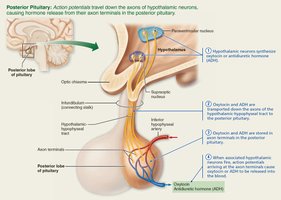
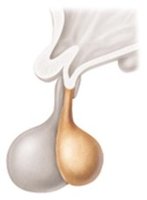
Posterior Pituitary: Composed of neural tissue; stores and releases two neurohormones (oxytocin and antidiuretic hormone, ADH) produced by the hypothalamus.
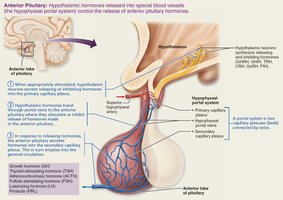
Anterior Pituitary: Glandular tissue; produces and secretes six hormones under hypothalamic regulation.
Posterior Pituitary and Hypothalamic Hormones
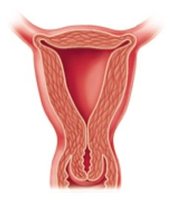
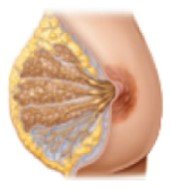
Oxytocin: Stimulates uterine contractions during childbirth and milk ejection during breastfeeding. Both are positive feedback mechanisms. Also acts as a neurotransmitter in the brain.
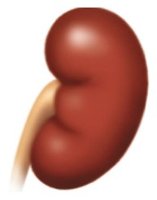
Antidiuretic Hormone (ADH): Regulates water balance by increasing water reabsorption in the kidneys. High ADH causes vasoconstriction (vasopressin). Release is triggered by high blood osmolarity, pain, low blood pressure, and certain drugs; inhibited by alcohol.
Clinical Imbalances
Diabetes Insipidus: ADH deficiency causing excessive thirst and urination.
SIADH (Syndrome of Inappropriate ADH Secretion): Excess ADH causing fluid retention, headache, and disorientation.
Anterior Pituitary Hormones
The anterior pituitary produces six peptide/protein hormones, most of which are tropic (regulate other endocrine glands):
Growth Hormone (GH): Stimulates growth and metabolism.
Thyroid-Stimulating Hormone (TSH): Stimulates thyroid gland activity.
Adrenocorticotropic Hormone (ACTH): Stimulates adrenal cortex to release corticosteroids.
Follicle-Stimulating Hormone (FSH): Stimulates gamete production.
Luteinizing Hormone (LH): Stimulates gonadal hormone production and ovulation.
Prolactin (PRL): Stimulates milk production.
Growth Hormone (GH)
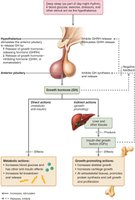
Direct Actions: Increases blood glucose and fatty acids, decreases glucose uptake (anti-insulin effect), stimulates protein synthesis.
Indirect Actions: Stimulates liver, bone, and muscle to produce insulin-like growth factors (IGFs), promoting cell growth and division.
Regulation: Controlled by GHRH (stimulates) and GHIH (inhibits) from the hypothalamus; negative feedback by GH and IGFs.
Clinical Imbalances of GH
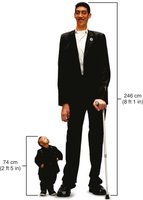
Hypersecretion: Gigantism in children, acromegaly in adults (usually due to pituitary tumor).
Hyposecretion: Pituitary dwarfism in children.
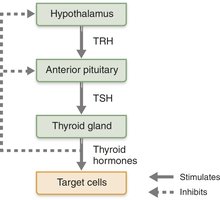
Thyroid-Stimulating Hormone (TSH)
Stimulates thyroid gland to produce thyroid hormones.
Regulated by TRH from hypothalamus; inhibited by rising thyroid hormone levels (negative feedback).
Adrenocorticotropic Hormone (ACTH)
Stimulates adrenal cortex to release corticosteroids (mainly glucocorticoids).
Regulated by CRH from hypothalamus; increased by stress and hypoglycemia; negative feedback by glucocorticoids.
Gonadotropins (FSH and LH)
FSH: Stimulates gamete (egg/sperm) production.
LH: Stimulates production of gonadal hormones, triggers ovulation, and formation of corpus luteum in females.
Regulated by GnRH from hypothalamus; negative feedback by gonadal hormones.
Prolactin (PRL)
Stimulates milk production in females; role in males is unclear.
Regulated by PIH (dopamine) from hypothalamus; increased by estrogen and infant suckling.
The Thyroid Gland
Location, Structure, and Function
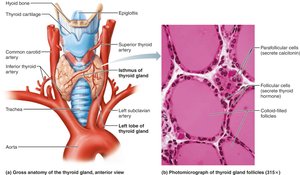
The thyroid gland is a butterfly-shaped organ located anterior to the trachea. It consists of follicles filled with colloid, where thyroid hormone is synthesized and stored. Parafollicular cells produce calcitonin.
Thyroid Hormone (TH)
Forms: Thyroxine (T4) and Triiodothyronine (T3), both derived from tyrosine and iodine.
Properties: Lipid-soluble, requires carrier proteins in blood, acts on intracellular receptors to regulate gene expression.
Effects:
Increases basal metabolic rate and heat production (calorigenic effect)
Regulates tissue growth and development (especially skeletal, nervous, and reproductive systems)
Permissive for catecholamines (epinephrine/norepinephrine) in maintaining blood pressure
Synthesis of Thyroid Hormone
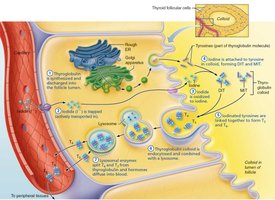
Thyroglobulin is synthesized and secreted into the follicle lumen.
Iodide is actively transported into the follicle, oxidized to iodine, and attached to tyrosine residues (forming MIT and DIT).
Iodinated tyrosines are coupled to form T3 and T4.
Thyroid hormones are stored in colloid and released upon stimulation.
Regulation of Thyroid Hormone Secretion
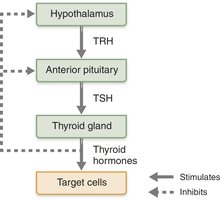
TRH (hypothalamus) → TSH (anterior pituitary) → Thyroid gland → TH (negative feedback on TRH and TSH)
Clinical Imbalances
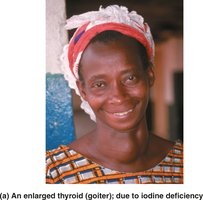
Hypothyroidism (Myxedema): Low metabolic rate, thick/dry skin, puffy eyes, lethargy. Iodine deficiency can cause goiter.
Congenital Hypothyroidism: Poor development of thyroid gland in infants; critical for brain development.
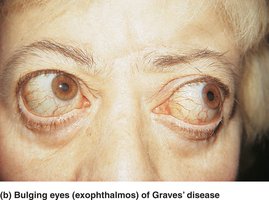
Hyperthyroidism (Graves' Disease): Autoimmune stimulation of thyroid; symptoms include high metabolic rate, weight loss, exophthalmos.
The Parathyroid Glands
Structure and Function
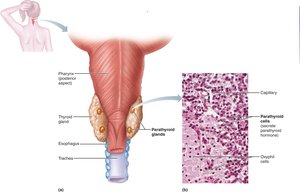
Typically four small glands located on the posterior thyroid, the parathyroid glands secrete parathyroid hormone (PTH), the primary regulator of blood calcium levels.
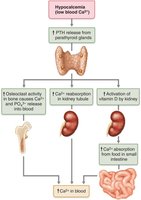
PTH Release: Stimulated by low blood calcium; inhibited by high blood calcium.
Target Organs: Bone (stimulates osteoclasts), kidneys (increases calcium reabsorption, activates vitamin D), intestine (increases calcium absorption via vitamin D).
Clinical Imbalances
Hyperparathyroidism: Excess PTH, bone softening, fractures, kidney stones, nervous system depression.
Hypoparathyroidism: Insufficient PTH, hypocalcemia, muscle tetany, convulsions.
The Adrenal Glands
Structure and Function
The adrenal glands sit atop the kidneys and consist of two regions: the cortex (glandular tissue) and the medulla (nervous tissue). They produce hormones involved in electrolyte balance and stress response.
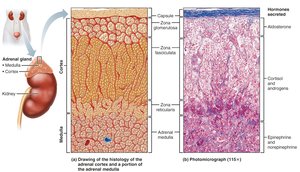
Adrenal Cortex
Mineralocorticoids (e.g., Aldosterone): Regulate sodium and potassium balance, affecting blood volume and pressure.
Glucocorticoids (e.g., Cortisol): Regulate metabolism, stress response, and blood glucose levels.
Gonadocorticoids (e.g., Androgens): Contribute to secondary sex characteristics and sex drive.
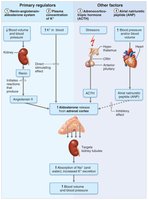
Clinical Imbalances
Aldosteronism: Excess aldosterone, hypertension, edema, muscle weakness.
Cushing's Syndrome: Excess glucocorticoids, high blood glucose, muscle/bone loss, hypertension, immune suppression.
Addison's Disease: Deficits in glucocorticoids and mineralocorticoids, weight loss, dehydration, hypotension, skin bronzing.
Adrenogenital Syndrome: Excess androgens, masculinization in females and prepubertal males.
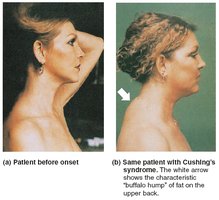
Adrenal Medulla
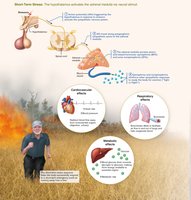
Secretes catecholamines (epinephrine and norepinephrine) during stress (fight-or-flight response).
Effects: Increased heart rate, blood pressure, blood glucose, and blood flow to muscles.
Clinical Imbalances
Pheochromocytoma: Tumor causing excess catecholamine secretion, leading to hypertension, rapid heartbeat, and sweating.
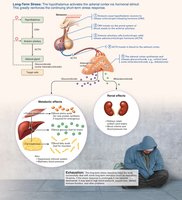
The Stress Response
Short-term: Mediated by catecholamines (adrenal medulla).
Long-term: Mediated by corticosteroids (adrenal cortex).
Exhaustion: Prolonged stress can disrupt homeostasis and cause disease.
The Pineal Gland
Structure and Function
The pineal gland, located in the diencephalon, secretes melatonin, which regulates circadian rhythms and may have antioxidant and antigonadotropic effects.
Melatonin levels peak at night, promoting sleepiness.
May influence timing of puberty and protect cells from oxidative damage.
The Pancreas
Structure and Function
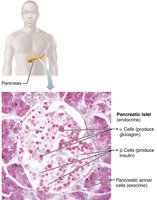
The pancreas is a mixed gland with both exocrine (digestive enzyme production) and endocrine (hormone production) functions. The endocrine portion consists of pancreatic islets containing alpha (glucagon) and beta (insulin) cells.
Hormonal Regulation of Blood Glucose
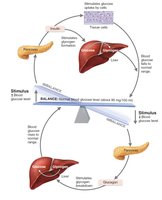
Glucagon: Secreted by alpha cells in response to low blood glucose; stimulates glycogen breakdown and gluconeogenesis in the liver, raising blood glucose.
Insulin: Secreted by beta cells in response to high blood glucose; promotes glucose uptake by cells, glycogen synthesis, and inhibits gluconeogenesis, lowering blood glucose.
Clinical Imbalances
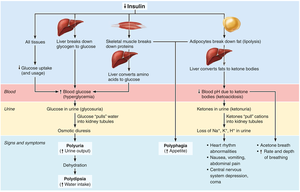
Diabetes Mellitus (DM): Hyposecretion (Type 1) or hypoactivity (Type 2) of insulin. Characterized by polyuria, polydipsia, and polyphagia. Untreated DM leads to lipidemia, ketosis, and potentially fatal ketoacidosis.
Hyperinsulinism: Excess insulin causes hypoglycemia, leading to nervousness, tremors, and potentially coma or death.
Additional info: This summary covers the major glands and hormones of the endocrine system, their mechanisms of action, regulatory feedback, and common clinical disorders. It is suitable for ANP college-level exam preparation.
