 Back
BackThe Endocrine System: Structure, Function, and Hormonal Regulation
Study Guide - Smart Notes
 Tailored notes based on your materials, expanded with key definitions, examples, and context.
The Endocrine System
Overview and Major Functions
The endocrine system is a major control system in the human body, responsible for regulating long-term processes such as homeostasis, metabolism, growth, reproduction, and the stress response. Unlike the nervous system, which provides rapid, short-term control, the endocrine system uses hormones to exert slower, sustained effects.
Homeostasis: Maintains stable internal conditions.
Blood Chemistry and Metabolism: Regulates blood glucose, ion concentrations, and metabolic rate.
Growth and Development: Controls growth and reproductive maturation.
Stress Response: Coordinates adaptation to physical and emotional stress.
Endocrine Glands and Organs
Endocrine glands are ductless organs that secrete hormones directly into the bloodstream. Some organs are dedicated endocrine glands, while others have mixed functions.
Dedicated Endocrine Glands: Pituitary, Pineal, Thyroid, Parathyroid, Adrenal glands.
Mixed Function Organs: Hypothalamus (nervous), Thymus (immune), Pancreas (digestive), Gonads (reproductive).
Minor Secretions: Heart, alimentary canal, kidneys, skin.
Common Features of Endocrine Glands
Ductless: Hormones are produced by epithelial cells and released into the bloodstream.
Rich Blood Supply: Extensive vascular and lymphatic networks facilitate hormone transport.
Hormones: Definition and Classification
What is a Hormone?
A hormone is a long-distance chemical signal that travels in blood or lymph to affect target cells throughout the body. Hormones are distinct from autocrines (act on the same cell that secretes them) and paracrines (act locally within the same tissue).
Types of Hormones
Hormones are classified based on their chemical structure:
Amino Acid-Based Hormones: Includes simple derivatives (e.g., melatonin) and complex polypeptides/proteins (e.g., insulin).
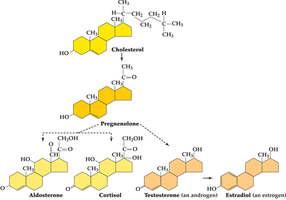
Steroid Hormones: Synthesized from cholesterol (e.g., aldosterone, cortisol, testosterone, estradiol).

Hormone Transport and Receptor Location
The solubility of a hormone determines its transport and mechanism of action:
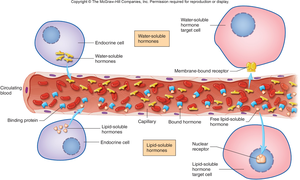
Water-Soluble (Peptide) Hormones: Travel freely in plasma; bind to membrane-bound receptors.
Lipid-Soluble (Steroid) Hormones: Bound to carrier proteins in plasma; diffuse through cell membranes and bind to intracellular receptors.
Mechanisms of Hormone Action
Steroid Hormones
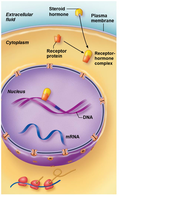
Steroid hormones are lipid-soluble and can cross cell membranes. They bind to intracellular receptors, forming a hormone-receptor complex that enters the nucleus and regulates gene expression.
Amino Acid/Peptide Hormones
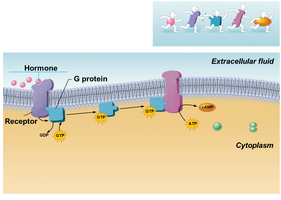
These hormones are water-soluble and cannot cross cell membranes. They bind to membrane receptors, activating second messenger systems (e.g., cAMP) that alter cellular activity.
Target Cell Specificity and Hormonal Interactions
Target Cell Specificity
For a cell to respond to a hormone, it must express the appropriate receptor. Some hormones have limited target cells (e.g., ADH receptors on kidney epithelia), while others (e.g., thyroxine) affect nearly all cells.

Hormonal Interactions
Synergism: Hormones amplify each other's effects.
Permissiveness: One hormone enables another to function (e.g., thyroid hormone allows reproductive hormones to work).
Antagonism: Hormones oppose each other's actions (e.g., insulin lowers blood sugar, glucagon raises it).
Regulation of Hormone Secretion
Stimuli for Hormone Release
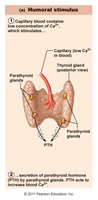
Humoral Stimulus: Changes in blood levels of ions or nutrients trigger hormone release (e.g., parathyroid hormone in response to low calcium).
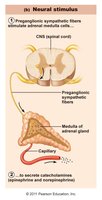
Neural Stimulus: Nerve fibers stimulate hormone release (e.g., adrenal medulla hormones during stress).
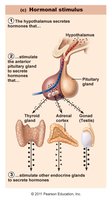
Hormonal Stimulus: Hormones from one gland stimulate another gland (e.g., pituitary hormones stimulate thyroid, adrenal, and gonadal hormones).
Feedback Mechanisms
Hormone secretion is primarily regulated by negative feedback, where the effects of a hormone reduce its further release. Positive feedback is less common and amplifies hormone secretion.
Major Endocrine Glands and Their Hormones
Pituitary Gland
The pituitary gland, located at the base of the brain, consists of anterior and posterior lobes. It secretes eight hormones, many of which regulate other endocrine glands.
Posterior Pituitary: Releases oxytocin and antidiuretic hormone (ADH) directly from neurons.
Anterior Pituitary: Releases six hormones, including growth hormone (GH), prolactin (PRL), and four tropic hormones (FSH, LH, ACTH, TSH).
Thyroid and Parathyroid Glands
The thyroid gland, located on the trachea, secretes thyroid hormone (T3, T4) and calcitonin. The parathyroid glands, embedded within the thyroid, secrete parathyroid hormone (PTH).
Thyroid Hormone: Regulates metabolism; contains T3 (more active) and T4 (less active).
Calcitonin: Lowers blood calcium levels.
Parathyroid Hormone: Raises blood calcium levels.
Adrenal Glands
Located above the kidneys, the adrenal glands consist of a medulla (deep) and cortex (superficial).
Adrenal Medulla: Secretes catecholamines (epinephrine, norepinephrine) for short-term stress response.
Adrenal Cortex: Synthesizes corticosteroids: mineralocorticoids (aldosterone), glucocorticoids (cortisol), and gonadocorticoids (androgens).
Pineal Gland
The pineal gland secretes melatonin, which regulates circadian rhythms and is influenced by light exposure.
Pancreas
The pancreas functions as both an endocrine and digestive organ. It secretes insulin and glucagon to regulate blood glucose levels.
Insulin: Lowers blood glucose by promoting cellular uptake.
Glucagon: Raises blood glucose by stimulating glycogen breakdown.
Summary Table: Hormones, Glands, and Functions
Hormone | Gland | Target Organ/Cells | Main Function |
|---|---|---|---|
Growth Hormone (GH) | Anterior Pituitary | Muscle, bone, liver | Stimulates growth, protein synthesis |
Prolactin (PRL) | Anterior Pituitary | Mammary glands | Promotes milk production |
FSH/LH | Anterior Pituitary | Gonads | Stimulates gamete production, sex hormone secretion |
ACTH | Anterior Pituitary | Adrenal cortex | Stimulates corticosteroid release |
TSH | Anterior Pituitary | Thyroid gland | Stimulates thyroid hormone release |
Oxytocin | Posterior Pituitary | Uterus, mammary glands | Promotes uterine contraction, milk ejection |
ADH | Posterior Pituitary | Kidney | Promotes water reabsorption |
Thyroid Hormone (T3/T4) | Thyroid | Most cells | Regulates metabolism |
Calcitonin | Thyroid | Bone | Lowers blood calcium |
Parathyroid Hormone (PTH) | Parathyroid | Bone, kidney | Raises blood calcium |
Epinephrine/Norepinephrine | Adrenal Medulla | Various | Fight or flight response |
Aldosterone | Adrenal Cortex | Kidney | Regulates sodium and water balance |
Cortisol | Adrenal Cortex | Various | Regulates metabolism, stress response |
Androgens | Adrenal Cortex | Various | Sex hormone precursors |
Melatonin | Pineal | Brain | Regulates circadian rhythm |
Insulin | Pancreas | Most cells | Lowers blood glucose |
Glucagon | Pancreas | Liver | Raises blood glucose |
Key Equations and Concepts
Negative Feedback:
Blood Glucose Regulation: ,
Clinical Relevance
Diabetes Mellitus: Type I (insulin deficiency), Type II (insulin resistance).
Hypothyroidism: Caused by iodine deficiency, leads to swollen thyroid follicles.
Cushing's Disease: Excess ACTH causes hypersecretion of adrenal cortex hormones.
Additional info: Expanded explanations and table entries were inferred for completeness and clarity.
