 Back
BackThe Endocrine System: Structure, Function, and Regulation
Study Guide - Smart Notes
 Tailored notes based on your materials, expanded with key definitions, examples, and context.
Chapter 16: The Endocrine System
Overview of the Endocrine System
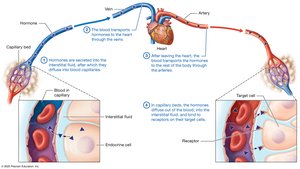
The endocrine system is one of the two major regulatory systems of the body, alongside the nervous system. It consists of organs that synthesize and secrete chemical messengers called hormones into the blood. Hormones interact with specific target cells that possess receptors for those hormones, leading to changes in cellular function. The tissues containing these target cells are called target tissues.
Hormones: Chemical messengers secreted into the blood to regulate distant target cells.
Target Cells: Cells with specific receptors for a hormone.
Receptors: Proteins on or in target cells that bind hormones and initiate cellular changes.
Comparison of the Endocrine and Nervous Systems
The endocrine and nervous systems both regulate body functions, but differ in their mechanisms and effects:
Endocrine system: Hormones are secreted into interstitial fluid, diffuse into blood, and are transported throughout the body. Effects are generally slower to initiate but longer-lasting.
Nervous system: Neurotransmitters act locally and rapidly, with effects that are typically short-lived.
Types of Chemical Signaling
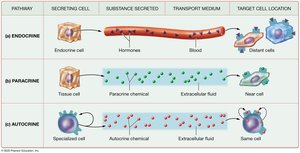
Endocrine signaling: Hormones travel through the blood to distant target cells.
Paracrine signaling: Chemicals affect nearby cells without entering the blood.
Autocrine signaling: Chemicals affect the same cell that secreted them.
Endocrine Organs
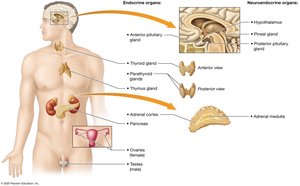
Endocrine glands are ductless organs that secrete hormones into the interstitial fluid for transport by the bloodstream. In contrast, exocrine glands secrete their products into ducts leading to body surfaces or cavities.
Primary endocrine organs: Anterior pituitary, thyroid, parathyroid, adrenal cortices, pancreas, thymus, ovaries/testes.
Secondary endocrine glands: Heart, kidneys, small intestine, adipose tissue.
Neuroendocrine organs: Hypothalamus, pineal gland, adrenal medulla (nervous tissue that secretes hormones).
Hormones: Structure, Function, and Mechanisms
Classes of Hormones
Amino acid-based hormones: Derived from amino acids; generally hydrophilic (except thyroid hormone).
Peptide/protein hormones: Chains of amino acids; hydrophilic.
Steroid hormones: Derived from cholesterol; hydrophobic and lipid-soluble.
Hormone Transport in Blood
Free hormones: Hydrophilic, travel unbound in plasma.
Bound hormones: Hydrophobic, travel bound to plasma proteins, which extends their half-life.
Hormone Receptors and Target Cells
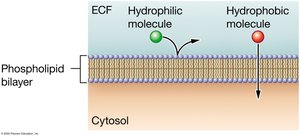
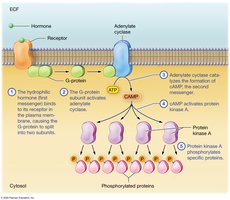
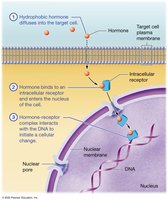
Receptors may be located on the plasma membrane (for hydrophilic hormones) or inside the cell (for hydrophobic hormones).
Some hormones bind only one receptor type; others bind multiple receptors, producing different effects.
Cells regulate sensitivity by upregulation (increasing receptors) or downregulation (decreasing receptors).
Mechanisms of Hormone Action
Hydrophilic hormones: Bind to cell surface receptors and activate second-messenger systems (e.g., cAMP pathway).
Hydrophobic hormones: Diffuse into cells, bind intracellular receptors, and directly influence gene expression.
Hormone Effects and Interactions
Stimulate secretion, activate/inhibit enzymes, regulate mitosis/meiosis, alter membrane potential, or affect gene expression.
Complementary actions: Different hormones work together for a common goal.
Synergists: Hormones act together for the same effect.
Antagonists: Hormones have opposing effects.
Regulation of Hormone Secretion
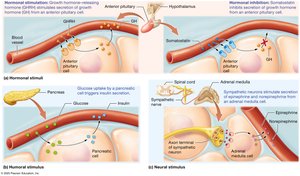
Hormonal stimuli: Hormones regulate other hormones (e.g., hypothalamic control of pituitary).
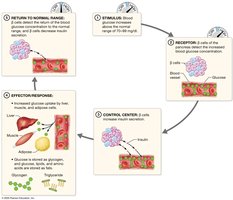
Humoral stimuli: Changes in blood levels of ions/nutrients trigger hormone release (e.g., insulin in response to glucose).
Neural stimuli: Nervous system signals trigger hormone release (e.g., adrenal medulla secretion).
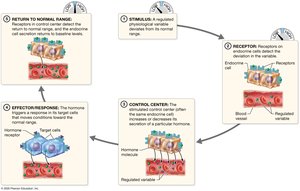
Most hormone secretion is regulated by negative feedback loops.
Hypothalamus and Pituitary Gland
Structure and Functional Relationships
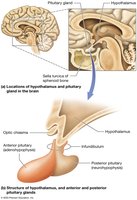
Hypothalamus: Part of the diencephalon; connects to the pituitary gland via the infundibulum.
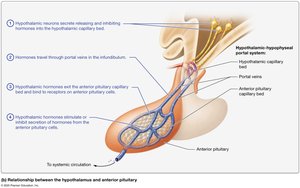
Anterior pituitary (adenohypophysis): True gland; controlled by hypothalamic releasing/inhibiting hormones via the hypophyseal portal system.
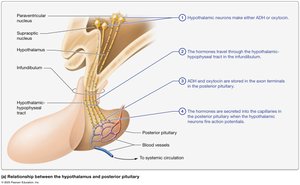
Posterior pituitary (neurohypophysis): Nervous tissue; stores and releases neurohormones (ADH and oxytocin) produced by the hypothalamus.
Hormones of the Posterior Pituitary
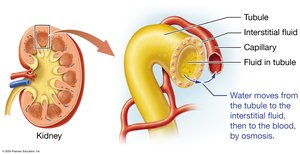
Antidiuretic hormone (ADH): Promotes water retention by the kidneys; released in response to high blood solute concentration.
Oxytocin: Stimulates uterine contractions and milk ejection; involved in emotional bonding.
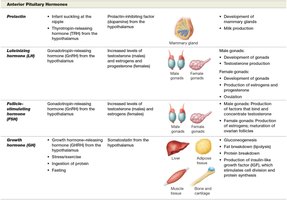
Hormones of the Anterior Pituitary
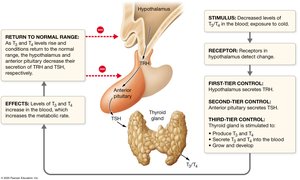
Thyroid-stimulating hormone (TSH): Stimulates thyroid hormone production.
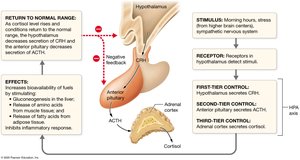
Adrenocorticotropic hormone (ACTH): Stimulates adrenal cortex hormone production.
Prolactin: Stimulates milk production.
Luteinizing hormone (LH) and Follicle-stimulating hormone (FSH): Regulate gonadal function.
Growth hormone (GH): Stimulates growth, protein synthesis, and metabolism.
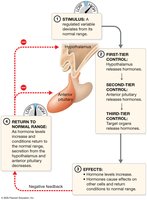
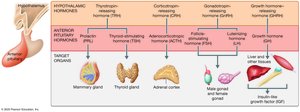
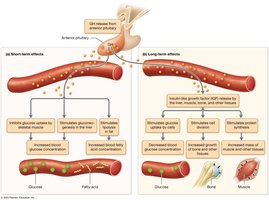
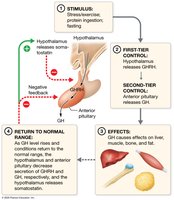
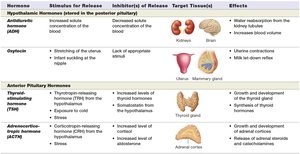
Hormones of the Hypothalamus and Pituitary Gland (Summary Table)
Hormone | Stimulus for Release | Inhibitor of Release | Target Tissue(s) | Effects |
|---|---|---|---|---|
ADH | Increased blood solute concentration | Decreased blood solute concentration | Kidneys, brain | Water reabsorption, increased blood volume |
Oxytocin | Stretching of uterus, infant suckling | Lack of appropriate stimuli | Uterus, mammary glands | Uterine contraction, milk ejection |
TSH | TRH from hypothalamus, cold, stress | Increased thyroid hormones, somatostatin | Thyroid gland | Growth and secretion of thyroid hormones |
ACTH | CRH from hypothalamus, stress | Increased cortisol | Adrenal cortex | Growth and secretion of adrenal cortex hormones |
GH | GHRH, stress, protein intake, fasting | Somatostatin | Liver, muscle, bone, fat | Growth, protein synthesis, metabolism |
Thyroid and Parathyroid Glands
Structure and Function
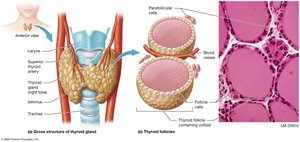
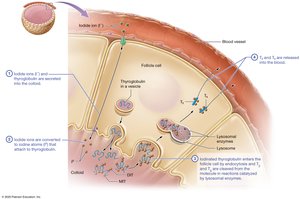
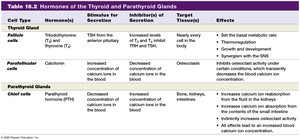
Thyroid gland: Located in the anterior neck; composed of follicles that produce thyroid hormones (T3 and T4) and parafollicular cells that produce calcitonin.
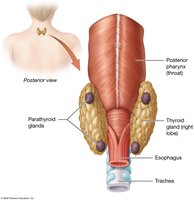
Parathyroid glands: Usually four glands on the posterior thyroid; chief cells produce parathyroid hormone (PTH).
Thyroid Hormones: Metabolic Regulators
T3 (triiodothyronine): Three iodine atoms; more active form.
T4 (thyroxine): Four iodine atoms; converted to T3 in target cells.
Regulate basal metabolic rate, thermoregulation, growth, and development; synergize with the sympathetic nervous system.
Thyroid Disorders
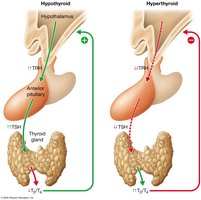
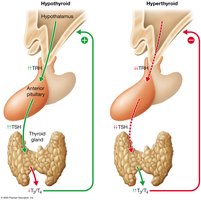
Hyperthyroidism: Excess thyroid hormone (e.g., Graves disease).
Hypothyroidism: Deficient thyroid hormone (e.g., Hashimoto thyroiditis, iodine deficiency).
Goiter: Enlargement of the thyroid gland.

Parathyroid Hormone and Calcitonin: Bone Homeostasis
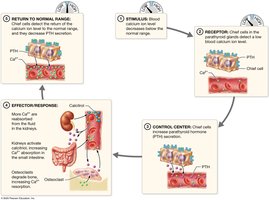
PTH: Increases blood calcium by stimulating osteoclasts, increasing intestinal absorption, and increasing kidney reabsorption.
Calcitonin: Lowers blood calcium by inhibiting osteoclasts; more significant during bone growth.
Adrenal Glands
Structure
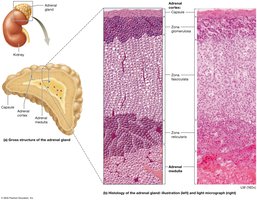
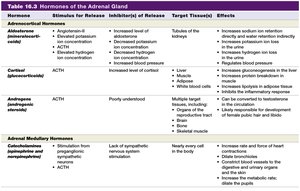
Adrenal cortex: Outer region; produces steroid hormones (mineralocorticoids, glucocorticoids, and androgens).
Adrenal medulla: Inner region; produces catecholamines (epinephrine and norepinephrine).
Hormones of the Adrenal Cortex
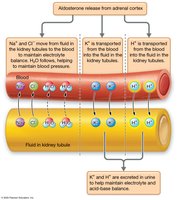
Aldosterone (mineralocorticoid): Regulates sodium, potassium, fluid volume, and acid-base balance.
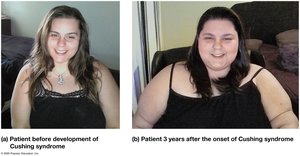
Cortisol (glucocorticoid): Mediates stress response, increases blood glucose, anti-inflammatory effects.
Androgenic steroids: Minor sex hormones.
Hormones of the Adrenal Medulla
Epinephrine and norepinephrine: Mediate the fight-or-flight response, increase heart rate, blood pressure, and metabolic rate.
Pancreas and Glucose Homeostasis
Structure and Function
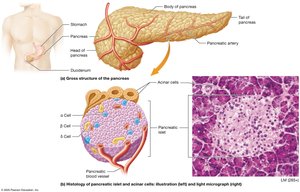
Pancreatic islets: Endocrine cells (alpha, beta, delta) secrete glucagon, insulin, and somatostatin, respectively.
Acinar cells: Exocrine cells secrete digestive enzymes.
Hormones of the Endocrine Pancreas
Glucagon: Increases blood glucose by promoting glycogenolysis, gluconeogenesis, and fat breakdown.
Insulin: Lowers blood glucose by promoting glucose uptake and storage.
Diabetes Mellitus
Type 1: Autoimmune destruction of beta cells; requires insulin therapy.
Type 2: Insulin resistance; associated with obesity and heredity; may require lifestyle changes and medication.
Other Endocrine Organs and Hormones
Thymus: Secretes thymosin and thymopoietin for T cell maturation.
Gonads: Testes produce testosterone; ovaries produce estrogens and progesterone.
Pineal gland: Secretes melatonin, regulates sleep-wake cycles.
Adipose tissue: Produces leptin, regulates satiety.
Heart: Produces atrial natriuretic peptide (ANP), lowers blood pressure.
Kidneys: Produce erythropoietin (EPO), renin, and activate vitamin D.
Hormonal Control of Homeostasis
Metabolic Homeostasis
Thyroid hormones set basal metabolic rate.
Insulin and glucagon regulate blood glucose during feeding and fasting.
Catecholamines and glucagon increase during exercise to provide metabolic fuels.
Fluid Homeostasis
ADH, aldosterone, and ANP regulate water balance and blood pressure.
Negative feedback mechanisms adjust hormone secretion to maintain homeostasis.
Additional info: This summary covers the structure, function, and regulation of the endocrine system, including major glands, hormone classes, mechanisms of action, and clinical correlations relevant to ANP college students.
