 Back
The Endocrine System: Structure, Function, and Regulation
Study Guide - Smart Notes
 Tailored notes based on your materials, expanded with key definitions, examples, and context.
The Endocrine System: Overview
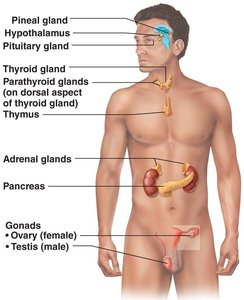
General Functions and Organization
The endocrine system works alongside the nervous system to coordinate and integrate the activity of body cells. It influences metabolic activities through hormones transported in the blood, with responses that are slower but longer-lasting than those of the nervous system.
Hormones are chemical messengers that regulate reproduction, growth, development, body defenses, cellular metabolism, and blood chemistry.
Some organs, such as the pancreas and gonads, have both endocrine (ductless, hormone-releasing) and exocrine (duct, substance-releasing) functions.
The hypothalamus is a neuroendocrine organ, integrating neural and hormonal signals.
Types of Chemical Messengers
Hormones: Long-distance signals in blood or lymph.
Autocrines: Affect the same cell that secretes them (e.g., prostaglandins).
Paracrines: Affect nearby cells (e.g., histamine, serotonin).
Only hormones are considered part of the endocrine system.
Chemistry of Hormones
Hormone Classes
Hormones are classified based on their chemical structure, which determines their mechanism of action.
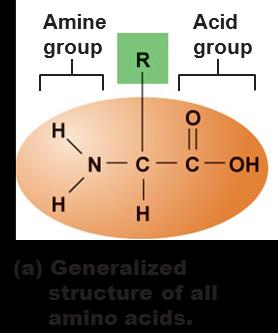
Amino acid-based hormones: Includes amines, thyroxine, peptides, and proteins.
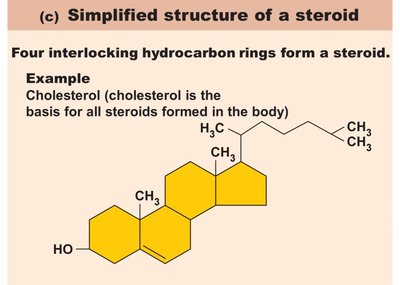
Steroid hormones: Synthesized from cholesterol; includes gonadal and adrenocortical hormones.
Mechanisms of Hormone Action
How Hormones Affect Target Cells
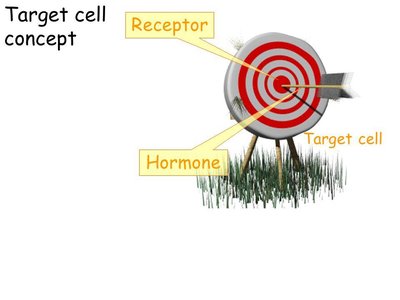
Hormones act on specific target cells with appropriate receptors, altering cellular activity in several ways:
Changing membrane permeability and potential
Stimulating protein or regulatory molecule synthesis
Activating or deactivating enzyme systems
Inducing secretory activity
Stimulating mitosis
Water-Soluble vs. Lipid-Soluble Hormones
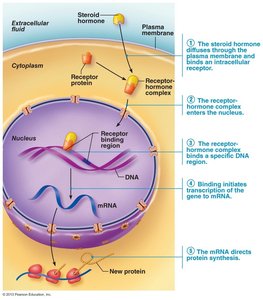
Water-soluble hormones (all amino acid–based except thyroid hormone): Cannot enter cells, act via membrane receptors and G proteins, using second messengers.
Lipid-soluble hormones (steroid and thyroid hormones): Enter cells, bind to intracellular receptors, and directly activate genes.
Target Cell Specificity and Activation
Receptor Specificity
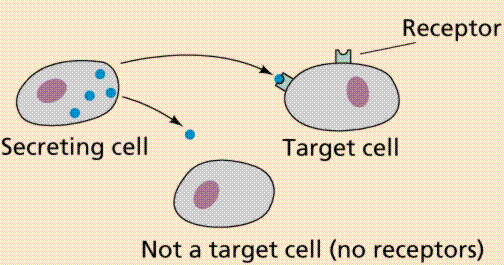
Target cells must have specific receptors for a hormone to bind and exert its effect.
ACTH receptors are limited to certain cells; thyroxine receptors are widespread.
Factors Affecting Activation
Number of receptors on/in the cell
Blood hormone levels
Affinity between hormone and receptor
Regulation of Receptor Numbers
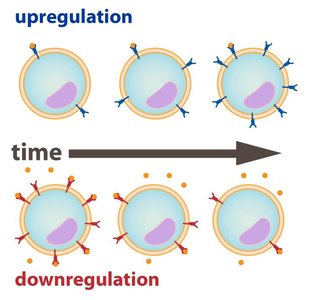
Up-regulation: More receptors formed in response to low hormone levels.
Down-regulation: Fewer receptors formed in response to high hormone levels.
Hormone Levels and Removal
Transport and Removal
Lipid-soluble hormones (steroids, thyroid) are carried by plasma proteins; others circulate freely.
Hormone concentration depends on rate of release and speed of removal (inactivation).
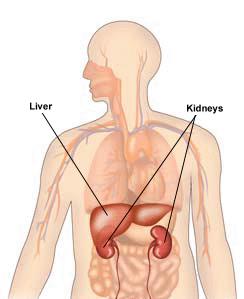
Removal occurs via degrading enzymes, kidneys, and liver; measured by half-life.
Water-soluble hormones have the shortest half-lives.
Control of Hormone Release
Feedback Mechanisms
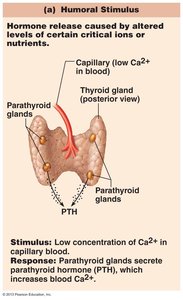
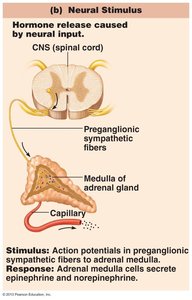
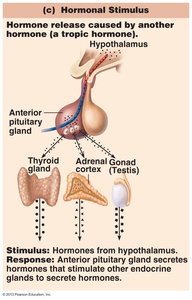
Blood hormone levels are regulated by negative feedback, maintaining homeostasis. Hormones are released in response to three types of stimuli:
Humoral stimuli: Changes in blood levels of ions/nutrients (e.g., Ca2+ triggers PTH release).
Neural stimuli: Nerve fibers stimulate hormone release (e.g., sympathetic nerves trigger adrenal medulla).
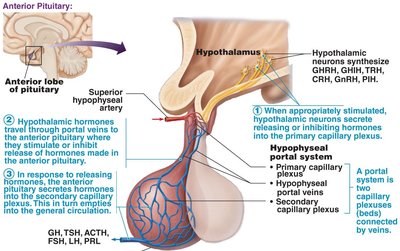
Hormonal stimuli: Hormones stimulate other endocrine glands (e.g., hypothalamic hormones trigger pituitary hormones).
Interaction of Hormones at Target Cells
Types of Hormone Interactions
Permissiveness: One hormone requires another to exert its effect (e.g., reproductive hormones and thyroid hormone).
Synergism: Multiple hormones produce amplified effects (e.g., glucagon and epinephrine).
Antagonism: One hormone opposes another (e.g., insulin vs. epinephrine).
Pituitary Gland and Hypothalamus
Structure and Function
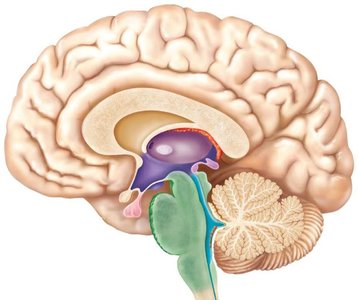
The pituitary gland (hypophysis) consists of two lobes:
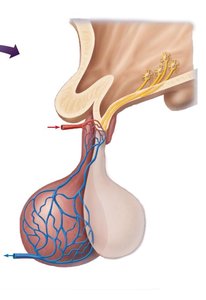
Posterior pituitary: Neural tissue, stores and releases oxytocin and ADH produced by the hypothalamus.
Anterior pituitary: Glandular tissue, produces and releases several hormones.
Pituitary-Hypothalamic Relationships
Posterior lobe: Neural connection; stores oxytocin and ADH.
Anterior lobe: Hypophyseal portal system carries releasing/inhibiting hormones from hypothalamus.
Anterior Pituitary Hormones
Hormones Produced
Growth hormone (GH)
Thyroid-stimulating hormone (TSH)
Adrenocorticotropic hormone (ACTH)
Follicle-stimulating hormone (FSH)
Luteinizing hormone (LH)
Prolactin (PRL)
Growth Hormone (GH)
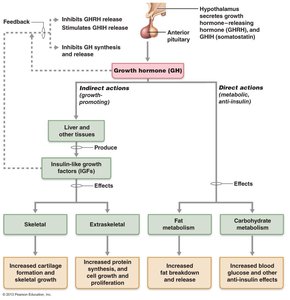
GH stimulates growth, especially in bone and skeletal muscle, promotes protein synthesis, and encourages fat utilization. Most effects are mediated by insulin-like growth factors (IGFs). 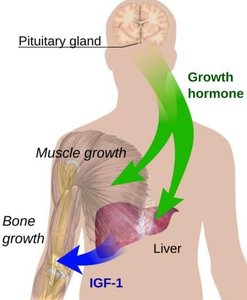
Homeostatic Imbalances of GH
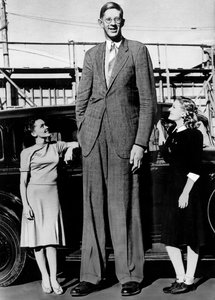
Hypersecretion: Gigantism in children, acromegaly in adults.
Hyposecretion: Pituitary dwarfism in children.

Thyroid-Stimulating Hormone (TSH)
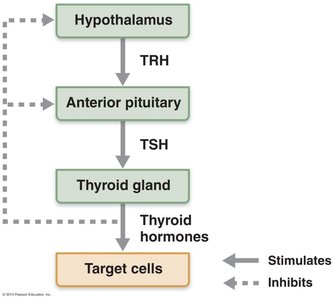
TSH stimulates the thyroid gland's development and activity.
Regulated by thyrotropin-releasing hormone (TRH) and negative feedback from thyroid hormones.
Adrenocorticotropic Hormone (ACTH)
ACTH stimulates the adrenal cortex to release corticosteroids, mainly glucocorticoids.
Regulated by corticotropin-releasing hormone (CRH) and affected by stress, fever, hypoglycemia.
Gonadotropins (FSH and LH)
FSH stimulates gamete production; LH promotes gonadal hormone production.
Regulated by gonadotropin-releasing hormone (GnRH) and negative feedback from sex hormones.
Prolactin (PRL)
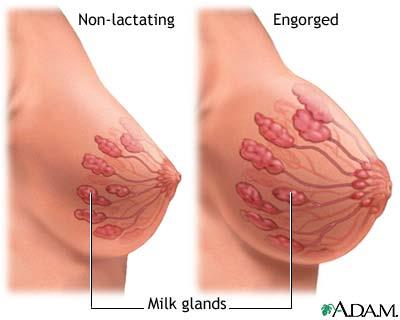
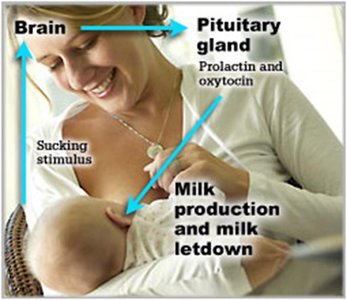
Stimulates milk production; regulated by prolactin-inhibiting hormone (PIH, dopamine).
Suckling increases PRL release.
Posterior Pituitary Hormones
Oxytocin
Stimulates uterine contractions and milk ejection.
Involved in sexual arousal and orgasm.
Antidiuretic Hormone (ADH)
Regulates water balance; released in response to high blood solute concentration.
Deficiency causes diabetes insipidus; hypersecretion causes SIADH.
Thyroid Gland
Structure and Function
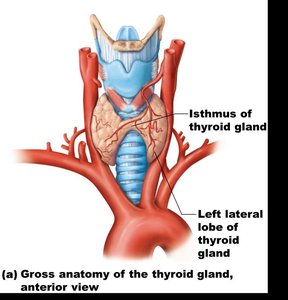
Two lobes connected by an isthmus; follicle cells produce thyroglobulin, parafollicular cells produce calcitonin.
Thyroid Hormone (TH)
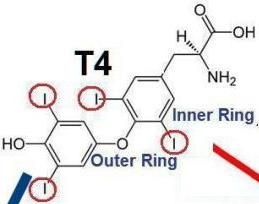
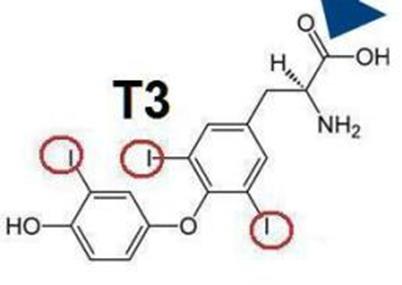
T4 (thyroxine) and T3 (triiodothyronine) are major metabolic hormones.
Increase metabolic rate, heat production, regulate growth, development, and reproductive function.
Synthesis and Regulation of TH
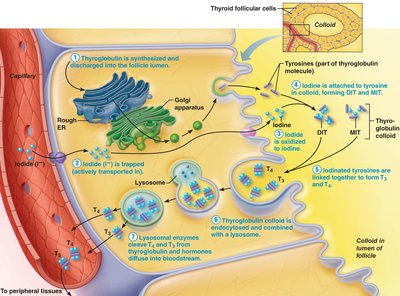
Thyroglobulin discharged into follicle lumen; iodide taken up, oxidized, and attached to tyrosine.
Iodinated tyrosines form T3 and T4; colloid endocytosed, hormones released into bloodstream.
Transported by thyroxine-binding globulins; T3 is more active.
Negative feedback regulates release; TRH can override during pregnancy or cold exposure.
Homeostatic Imbalances of TH
Hyposecretion: Myxedema, goiter (adults); congenital iodine deficiency syndrome (infants).
Hypersecretion: Graves' disease (high metabolism, exophthalmos).
Calcitonin
Produced by parafollicular cells; antagonizes PTH.
Inhibits osteoclast activity, stimulates Ca2+ uptake into bone.
Regulated by blood Ca2+ levels; minimal role in humans.
Parathyroid Glands
Structure and Function
Four to eight glands on posterior thyroid; chief cells secrete PTH.
PTH is the most important hormone in Ca2+ homeostasis.
Parathyroid Hormone (PTH)
Stimulates osteoclasts, enhances Ca2+ reabsorption in kidneys, promotes vitamin D activation.
Negative feedback: rising Ca2+ inhibits PTH release.
Homeostatic Imbalances of PTH
Hyperparathyroidism: Bone deformity, kidney stones, nervous system depression.
Hypoparathyroidism: Tetany, respiratory paralysis, death.
Adrenal (Suprarenal) Glands
Structure and Function
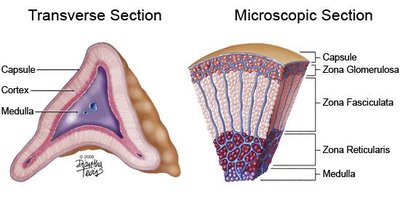
Located atop kidneys; two parts: adrenal medulla (nervous tissue) and adrenal cortex (glandular tissue).
Cortex has three layers: zona glomerulosa (mineralocorticoids), zona fasciculata (glucocorticoids), zona reticularis (gonadocorticoids).
Mineralocorticoids (Aldosterone)
Regulate Na+ and K+ in extracellular fluid.
Aldosterone stimulates Na+ reabsorption and water retention, K+ secretion.
Secretion regulated by renin-angiotensin mechanism, plasma K+, ACTH, and ANP.
Homeostatic Imbalances of Aldosterone
Aldosteronism: Hypersecretion causes hypertension, edema, abnormal neuron/muscle function.
Glucocorticoids (Cortisol)
Maintain blood sugar and pressure; cortisol is the main glucocorticoid.
Released in response to ACTH, stress, and daily rhythms; promotes gluconeogenesis.
Regulated by negative feedback, overridden during prolonged stress.
Homeostatic Imbalances of Glucocorticoids
Hypersecretion: Cushing's syndrome (immune suppression, bone/cartilage depression).
Hyposecretion: Addison's disease (low glucose, Na+, dehydration, hypotension).
Gonadocorticoids (Sex Hormones)
Mostly androgens; contribute to puberty, secondary sex characteristics, sex drive.
Adrenal Medulla
Chromaffin cells secrete epinephrine (80%) and norepinephrine (20%).
Effects: increased blood glucose, blood pressure, heart rate, blood flow to muscles.
Epinephrine: metabolic activities, fight or flight; norepinephrine: vasoconstriction, blood pressure.
Pineal Gland
Structure and Function
Secretes melatonin, regulates day/night cycles, puberty timing, and rhythmic physiological processes.
Pancreas
Structure and Function
Behind stomach; both exocrine (digestive enzymes) and endocrine (hormones) functions.
Alpha cells produce glucagon (raises blood glucose); beta cells produce insulin (lowers blood glucose).
Glucagon
Targets liver: promotes glycogenolysis, gluconeogenesis, and glucose release.
Insulin
Lowers blood glucose, enhances glucose uptake, inhibits glycogenolysis and gluconeogenesis.
Homeostatic Imbalances of Insulin
Diabetes mellitus: Hyposecretion/hypoactivity of insulin; polyuria, polydipsia, polyphagia.
Hyperinsulinism: Excess insulin causes hypoglycemia, disorientation, unconsciousness.
Gonads and Placenta
Ovaries
Produce estrogens and progesterone; regulate female reproductive organ maturation, secondary sex characteristics, breast development, uterine cycle.
Placenta
Secretes estrogens, progesterone, and hCG during pregnancy.
Testes
Produce testosterone; initiates male reproductive organ maturation, secondary sex characteristics, sex drive, sperm production.
Other Hormone-Producing Structures
Heart
Atrial natriuretic peptide (ANP) reduces blood pressure, volume, and Na+ concentration.
Gastrointestinal Tract
Enteroendocrine cells produce gastrin, secretin, cholecystokinin.
Kidneys
Erythropoietin (EPO) stimulates red blood cell production; renin initiates renin-angiotensin system.
Skin
Produces cholecalciferol, precursor to vitamin D.
Adipose Tissue
Leptin regulates appetite and energy expenditure.
Skeleton
Osteocalcin stimulates insulin secretion and improves glucose handling.
Thymus
Produces thymulin, thymopoietins, and thymosins for T lymphocyte development.
Additional info:
Hormone regulation often involves complex feedback loops, with the hypothalamus and pituitary acting as central regulators.
Many endocrine disorders result from imbalances in hormone secretion or receptor sensitivity.
