 Back
BackThe Endocrine System: Structure, Function, and Clinical Correlations
Study Guide - Smart Notes
 Tailored notes based on your materials, expanded with key definitions, examples, and context.
Endocrine System Overview
Introduction to the Endocrine System
The endocrine system is a major regulatory system of the body, working alongside the nervous system to maintain homeostasis. Unlike the nervous system, which uses rapid electrical signals, the endocrine system communicates via hormones—chemical messengers secreted into the bloodstream that act on distant target organs.
Endocrine glands are ductless and secrete hormones directly into the blood.
Exocrine glands secrete their products into ducts that lead to body surfaces or cavities and are not part of the endocrine system.
Hormones regulate growth, metabolism, reproduction, and many other functions.
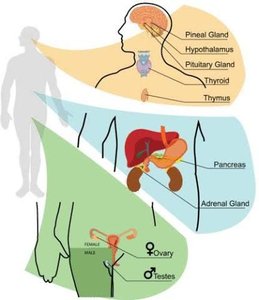
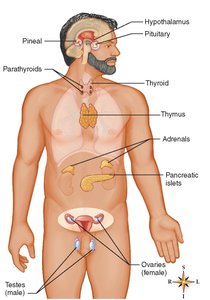
Major Endocrine Glands and Their Locations
The main endocrine glands are distributed throughout the body and include the pituitary, thyroid, parathyroid, adrenal glands, pancreas, ovaries, testes, pineal gland, and thymus.
Hormones: Types and Mechanisms of Action
Definition and Function of Hormones
A hormone is a chemical messenger produced by an endocrine gland that regulates the activity of specific target cells or organs. Hormones can be classified as steroid or nonsteroid (protein/peptide) hormones, each with distinct mechanisms of action.
Mechanisms of Hormone Action
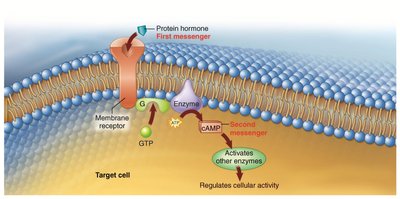
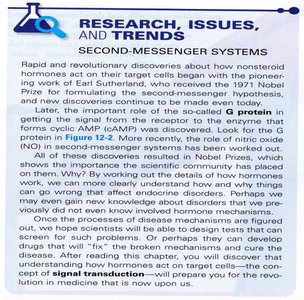
Nonsteroid hormones (first messengers) bind to receptors on the cell membrane, activating second messengers (e.g., cyclic AMP) inside the cell to trigger cellular responses.
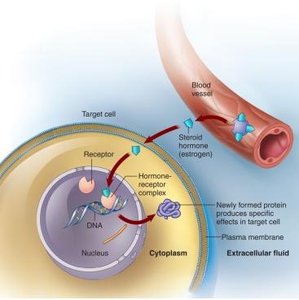
Steroid hormones pass through the cell membrane and bind to intracellular receptors, directly influencing gene expression and protein synthesis.
Second Messenger Systems
Second messenger systems, such as those involving cyclic AMP (cAMP), are crucial for transmitting the signal from nonsteroid hormones at the cell surface to the cell's interior, resulting in a physiological response.
Regulation of Hormone Secretion
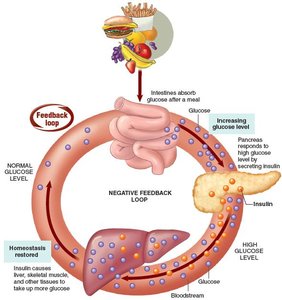
Negative feedback mechanisms reverse changes to maintain homeostasis (e.g., regulation of blood glucose by insulin and glucagon).
Positive feedback mechanisms amplify changes (less common, e.g., oxytocin during childbirth).
Prostaglandins (PGs)
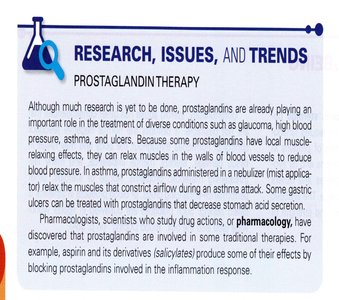
Prostaglandins are local hormones produced in many tissues, affecting nearby cells. They play roles in inflammation, blood pressure regulation, and other processes. Pharmacological manipulation of prostaglandins is used in treating various conditions.
Major Endocrine Glands, Hormones, and Disorders
Pituitary Gland
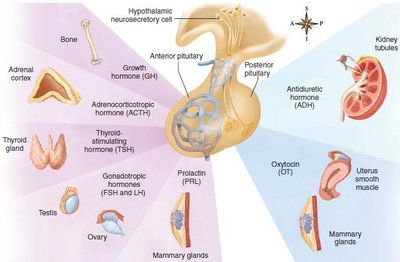
The pituitary gland is divided into the anterior (adenohypophysis) and posterior (neurohypophysis) lobes, each secreting different hormones.
Anterior pituitary hormones: TSH, ACTH, FSH, LH, GH, PRL
Posterior pituitary hormones: ADH, OT
Growth Hormone (GH) Disorders
Hypersecretion in children: Gigantism
Hypersecretion in adults: Acromegaly
Hyposecretion in children: Pituitary dwarfism

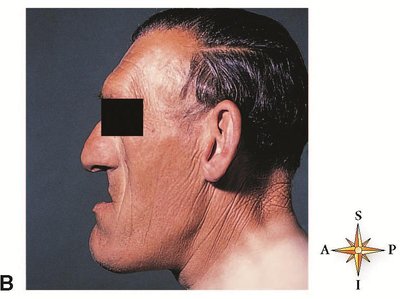
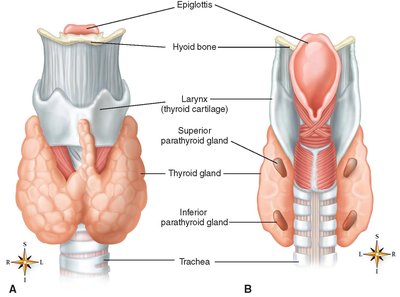
Thyroid and Parathyroid Glands
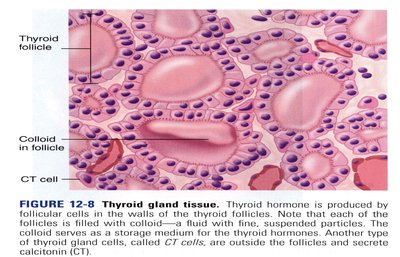
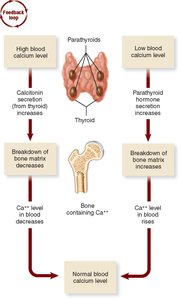
The thyroid gland produces thyroxine (T4), triiodothyronine (T3), and calcitonin. The parathyroid glands secrete parathyroid hormone (PTH).
Thyroid hormones: Increase metabolic rate
Calcitonin: Lowers blood calcium
PTH: Raises blood calcium
Thyroid Disorders
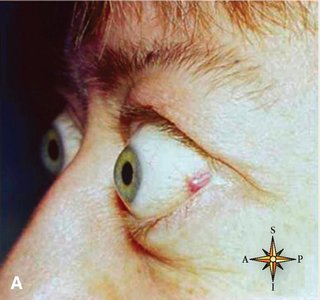
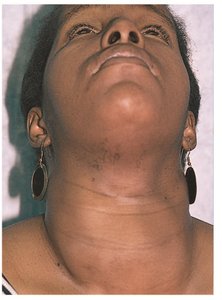
Hyperthyroidism: Increased metabolic rate, restlessness, exophthalmos (Graves disease)
Hypothyroidism: Goiter, cretinism (children), myxedema (adults)
Regulation of Blood Calcium
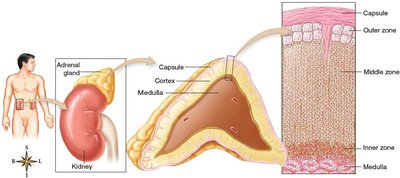
Adrenal Glands
The adrenal cortex produces glucocorticoids (cortisol), mineralocorticoids (aldosterone), and sex hormones. The adrenal medulla secretes epinephrine and norepinephrine.
Glucocorticoids: Regulate metabolism, stress response, anti-inflammatory effects
Mineralocorticoids: Regulate sodium and potassium balance
Adrenal medulla hormones: Mediate fight-or-flight response
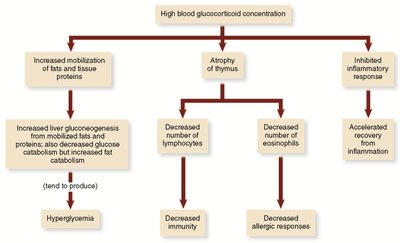
Adrenal Disorders
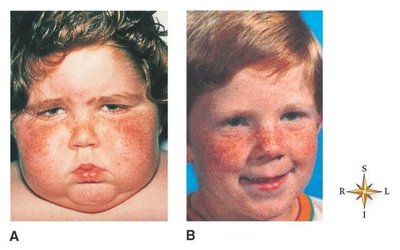
Cushing syndrome: Hypersecretion of glucocorticoids
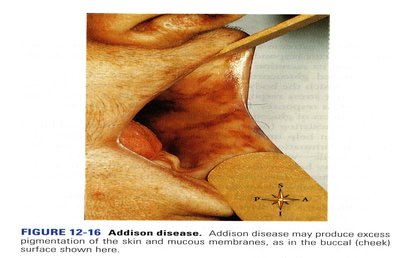
Addison disease: Hyposecretion of cortical hormones
Pancreatic Islets
The pancreatic islets secrete insulin (beta cells) and glucagon (alpha cells), which regulate blood glucose levels.
Insulin: Lowers blood glucose by promoting cellular uptake
Glucagon: Raises blood glucose by stimulating glycogen breakdown
Diabetes mellitus results from hyposecretion of insulin (Type 1) or target cell insensitivity (Type 2), leading to hyperglycemia and glycosuria.
Gonads (Ovaries and Testes)
Ovaries: Secrete estrogens and progesterone, regulating female reproductive development and menstrual cycle
Testes: Secrete testosterone, responsible for male secondary sexual characteristics
Other Endocrine Glands
Thymus: Secretes thymosin, important for immune function
Pineal gland: Secretes melatonin, regulates circadian rhythms and reproductive timing
Placenta: Secretes hormones to maintain pregnancy
Other tissues: Stomach (ghrelin), heart (ANH), fat cells (leptin)
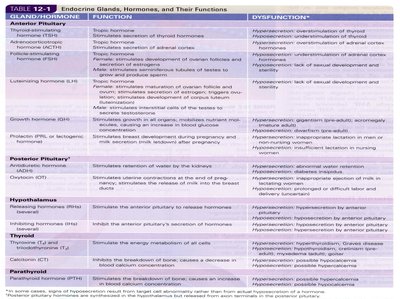
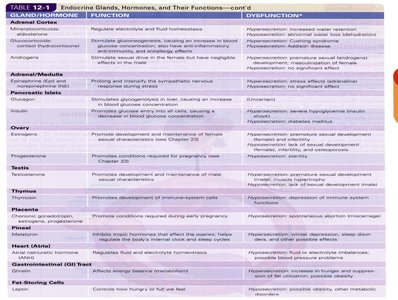
Summary Table: Endocrine Glands, Hormones, and Functions
Gland/Hormone | Function | Dysfunction |
|---|---|---|
Anterior Pituitary (TSH, ACTH, FSH, LH, GH, PRL) | Stimulates target glands, growth, lactation | Gigantism, dwarfism, infertility, etc. |
Posterior Pituitary (ADH, OT) | Water balance, uterine contraction, milk ejection | Diabetes insipidus, labor issues |
Thyroid (T3, T4, CT) | Metabolic rate, calcium regulation | Hyper/hypothyroidism, goiter |
Parathyroid (PTH) | Raises blood calcium | Muscle spasms, bone weakness |
Adrenal Cortex (Cortisol, Aldosterone, Androgens) | Stress response, electrolyte balance, sex traits | Cushing syndrome, Addison disease |
Adrenal Medulla (Epinephrine, Norepinephrine) | Fight-or-flight response | Hypertension, stress disorders |
Pancreatic Islets (Insulin, Glucagon) | Blood glucose regulation | Diabetes mellitus |
Ovary (Estrogen, Progesterone) | Female sexual development, menstrual cycle | Infertility, menstrual disorders |
Testis (Testosterone) | Male sexual development | Infertility, underdevelopment |
Thymus (Thymosin) | Immune system development | Immune deficiency |
Pineal (Melatonin) | Biological clock, reproductive timing | Sleep disorders, SAD |
Placenta (Estrogens, Progesterone, hCG) | Pregnancy maintenance | Pregnancy loss |
Other (Ghrelin, ANH, Leptin) | Appetite, sodium loss, satiety | Obesity, metabolic disorders |
Clinical and Applied Aspects
Steroid Abuse
Some steroid hormones are used illicitly to enhance muscle mass and athletic performance. However, steroid abuse can disrupt normal hormonal feedback, cause tissue damage, infertility, and other health risks.
Sample Review Questions
The two major classes of hormones are: steroid and nonsteroid.
Negative feedback mechanisms: reverse the direction of a disturbance to the stability of the internal environment.
Anterior pituitary gland secretes: Follicle-stimulating hormone (FSH).
Prominent, protruding eyes in hyperthyroidism is called: Exophthalmos.
Parathyroid glands secrete: Parathyroid hormone (PTH), which has the opposite effect of calcitonin.
In diabetes mellitus, excess glucose in urine is called: Glycosuria.
Seasonal affective disorder is related to abnormal secretion of: Melatonin.
Additional info: This guide integrates textbook content, clinical images, and summary tables to provide a comprehensive overview of the endocrine system for Anatomy & Physiology students.
