 Back
The Immune System: Innate and Adaptive Body Defenses (Chapter 21 Study Notes)
Study Guide - Smart Notes
 Tailored notes based on your materials, expanded with key definitions, examples, and context.
The Immune System: Innate and Adaptive Body Defenses
Overview of Immunity
The immune system protects the body from disease by recognizing and eliminating pathogens. It is divided into two main branches: innate (nonspecific) defenses and adaptive (specific) defenses. Each branch utilizes specialized cells and mechanisms to provide resistance to infection.
Innate defenses: Provide immediate, general protection against pathogens.
Adaptive defenses: Provide targeted, long-lasting immunity and memory against specific pathogens.
Innate (Nonspecific) Defense System
Surface Barriers
Surface barriers are the body's first line of defense, preventing pathogen entry through physical and chemical means.
Skin: Acts as a mechanical barrier, blocking pathogen entry.
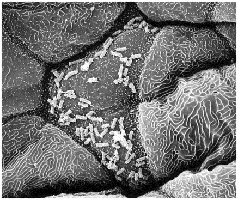
Mucous membranes: Trap and eliminate microbes; secrete mucus, acids, and enzymes (e.g., lysozyme) that inhibit pathogens.
Internal Defenses
If pathogens breach surface barriers, internal defenses provide a second line of protection through cellular and chemical mechanisms.
Phagocytes: Engulf and destroy pathogens (e.g., macrophages, neutrophils).
Natural Killer (NK) cells: Attack abnormal cells lacking "self" markers, induce apoptosis, and secrete inflammatory chemicals.
Inflammation: Localized response to injury or infection, characterized by redness, heat, swelling, and pain.
Antimicrobial proteins: Interferons and complement proteins that inhibit microbial growth and enhance immune responses.
Fever: Systemic response that raises body temperature to inhibit pathogens and speed up tissue repair.
Phagocytes
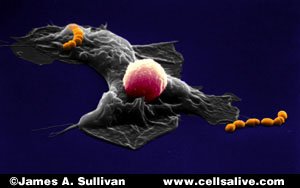
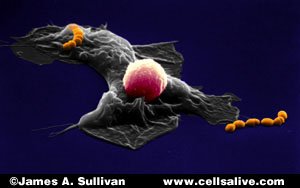
Phagocytes are immune cells that ingest and digest foreign invaders.
Macrophages: Derived from monocytes; chief phagocytic cells in tissues.
Neutrophils: Most abundant white blood cells; become phagocytic upon encountering pathogens.
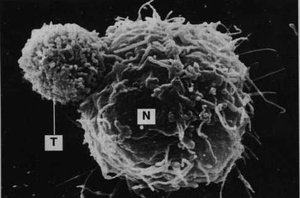
Natural Killer (NK) Cells
NK cells are large lymphocytes that target and destroy virus-infected and cancerous cells by recognizing the absence of "self" markers.
Induce apoptosis in abnormal cells.
Secrete chemicals that enhance inflammation.
Antimicrobial Proteins
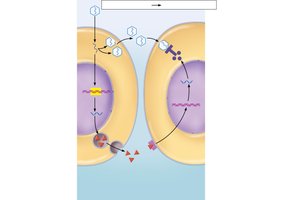
Antimicrobial proteins interfere with pathogen replication and enhance immune responses.
Interferons: Released by virus-infected cells; signal neighboring cells to produce antiviral proteins and activate immune cells.
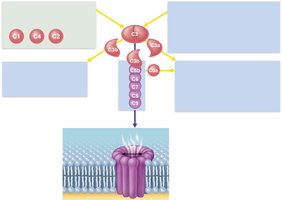
Complement proteins: A group of ~20 plasma proteins that, when activated, enhance inflammation, promote phagocytosis (opsonization), and cause cell lysis.
Inflammation
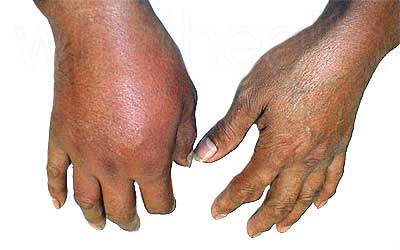
Inflammation is a protective response to tissue injury or infection, aiming to contain damage, remove pathogens, and initiate repair.
Cardinal signs: Redness, heat, swelling, pain.
Caused by release of mediators (histamine, cytokines, prostaglandins, etc.) from damaged cells and immune cells.
Results in vasodilation, increased vascular permeability, and recruitment of immune cells.
Fever
Fever is a systemic response to infection, mediated by pyrogens released from leukocytes and macrophages.
Pyrogens reset the hypothalamic thermostat, raising body temperature.
Moderate fever enhances immune function and inhibits microbial growth by sequestering iron and zinc.
High fever can be dangerous due to protein denaturation.

Adaptive (Specific) Defense System
General Properties
The adaptive immune system provides specific, systemic, and memory-based responses to pathogens. It consists of two main arms: humoral immunity (mediated by B cells and antibodies) and cellular immunity (mediated by T cells).
Specificity: Targets particular antigens.
Memory: Mounts stronger responses upon re-exposure to the same antigen.
Cells of the Adaptive Immune System
Lymphocytes: Originate in red bone marrow. B cells mature in bone marrow; T cells mature in the thymus.
Immunocompetence: Ability to recognize a specific antigen and tolerate self-antigens (self-tolerance).
Development of Self-Tolerance
T cells undergo selection in the thymus to ensure they recognize self-MHC proteins but do not react strongly to self-antigens, preventing autoimmunity.
Positive selection: T cells must recognize self-MHC to survive.
Negative selection: T cells that bind strongly to self-antigens are eliminated.
Humoral Immunity (Antibody-Mediated)
Humoral immunity is mediated by B cells, which produce antibodies that target extracellular pathogens and toxins.
B cells: Mature in bone marrow; differentiate into plasma cells (antibody-secreting) and memory B cells.
Antibodies: Proteins that bind specifically to antigens, marking them for destruction.
Antigen Challenge and Clonal Selection
The first encounter between a naive B cell and its specific antigen triggers clonal selection, resulting in proliferation and differentiation into plasma cells and memory cells.
Immunological Memory
Primary response: Slow, occurs upon first exposure to antigen; antibody levels peak in ~10 days.
Secondary response: Faster and stronger upon re-exposure; antibody levels peak in 2–3 days and remain high longer.
Types of Humoral Immunity
Type | Acquisition | Example |
|---|---|---|
Active, Naturally Acquired | Infection; contact with pathogen | Chickenpox infection |
Active, Artificially Acquired | Vaccine (dead/attenuated pathogens) | Flu vaccine |
Passive, Naturally Acquired | Antibodies from mother (placenta/milk) | Maternal IgG to fetus |
Passive, Artificially Acquired | Injection of immune serum | Gamma globulin injection |
Antibodies (Immunoglobulins)
Antibodies are Y-shaped proteins composed of two heavy and two light chains. The variable region binds antigens; the constant region determines the antibody class and function.

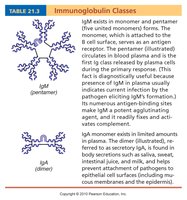
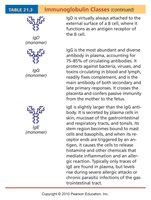
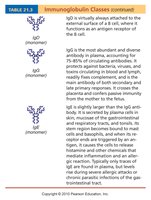
Classes of Antibodies
Class | Structure | Main Functions |
|---|---|---|
IgM | Pentamer | First antibody released; agglutination; activates complement |
IgA | Monomer/dimer | In mucus/secretions; prevents pathogen entry |
IgD | Monomer | B cell receptor |
IgG | Monomer | Main antibody in plasma; crosses placenta |
IgE | Monomer | Allergies, parasitic infections; triggers histamine release |
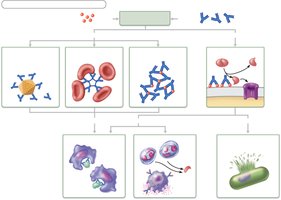
Actions of Antibodies
Neutralization: Block pathogen binding sites.
Agglutination: Clump cell-bound antigens.
Precipitation: Clump soluble antigens for phagocytosis.
Complement fixation: Trigger complement cascade, leading to cell lysis.
Cell-Mediated Immunity
Cell-mediated immunity is provided by T cells, which defend against intracellular pathogens and abnormal cells.
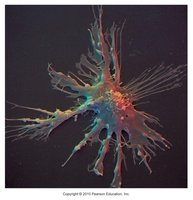
Antigen-presenting cells (APCs): Dendritic cells, macrophages, and B cells that process and present antigens to T cells.
T cells: Mature in the thymus; include helper T cells (CD4), cytotoxic T cells (CD8), regulatory T cells, and memory T cells.
T Cell Activation and Differentiation
T cells are activated when their receptors bind to antigen-MHC complexes on APCs.
CD4 cells: Recognize antigens on class II MHC; become helper T cells.
CD8 cells: Recognize antigens on class I MHC; become cytotoxic T cells.
Activated T cells proliferate and differentiate into effector and memory cells.
Actions of Helper T Cells (TH)
Central coordinators of adaptive immunity.
Activate B cells, cytotoxic T cells, and macrophages.
Secrete cytokines to stimulate immune cell proliferation and function.
Actions of Cytotoxic T Cells (TC)
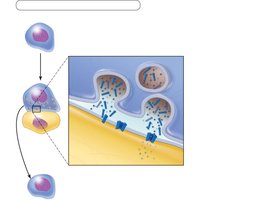
Directly attack and kill infected or abnormal cells.
Release perforin (forms pores) and granzymes (induce apoptosis) into target cells.
Actions of Regulatory T Cells (TREG)
Suppress immune responses to prevent autoimmunity.
Clinical Aspects and Homeostatic Imbalances
Organ Transplants and Rejection
Autografts: Same person.
Isografts: Identical twins.
Allografts: Same species, genetically different.
Xenografts: Different species.
Immunosuppressive therapy is required to prevent rejection but increases infection risk.
Immunodeficiencies
Result from congenital or acquired defects in immune cells or proteins.
AIDS (Acquired Immune Deficiency Syndrome): Caused by HIV, which destroys helper T cells, leading to severe immunosuppression.
Autoimmune Diseases
Immune system attacks self-tissues due to loss of self-tolerance.
Examples: Multiple sclerosis, type I diabetes, lupus, rheumatoid arthritis.
Hypersensitivities (Allergies)
Excessive immune responses to harmless antigens (allergens).
Type I (acute) hypersensitivity involves rapid histamine release, which can cause anaphylactic shock.

Additional info: This guide expands on the provided outline with definitions, mechanisms, and clinical context to ensure comprehensive coverage for exam preparation in Human Anatomy and Physiology II (BSC 2086), Chapter 21: The Immune System.
