 Back
The Muscular System: Structure, Function, and Nomenclature
Study Guide - Smart Notes
 Tailored notes based on your materials, expanded with key definitions, examples, and context.
The Muscular System
Overview of Skeletal Muscle Function
The muscular system is responsible for producing movement, maintaining posture, and stabilizing joints. Skeletal muscles typically work in groups and are arranged in antagonistic pairs, allowing for coordinated movement and control.
Group Actions: Muscles perform movements together, with one group performing an action and another group reversing it.
Antagonistic Pairs: For every muscle or group that performs an action (e.g., flexion), there is an opposing muscle or group that performs the opposite action (e.g., extension).
Examples: Flexor-extensor, abductor-adductor pairs.
How Skeletal Muscles Produce Movement
Muscle Attachments and Actions
Skeletal muscles produce movement by exerting force on tendons, which pull on bones. Most muscles span a joint, and contraction changes the angle or position of one bone relative to another.
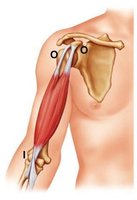
Origin: The attachment site on the stationary bone.
Insertion: The attachment site on the bone that moves.
Belly: The fleshy part of the muscle between the origin and insertion.
Interactions of Skeletal Muscles
Functional Roles
Muscles are classified based on their roles during movement:
Prime Mover (Agonist): The main muscle responsible for a specific movement (e.g., biceps brachii for forearm flexion).
Antagonist: The muscle that opposes the action of the agonist (e.g., triceps brachii for forearm extension).
Synergists: Assist the prime mover by adding force or reducing unnecessary movement.
Fixators: Specialized synergists that stabilize the origin of the prime mover.
During most movements, agonists and synergists contract while antagonists relax and are stretched. The roles of these muscles can change depending on the movement.
Naming Skeletal Muscles
Criteria for Muscle Nomenclature
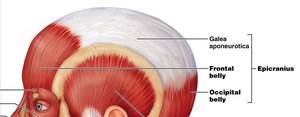
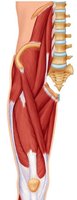
Muscles are named based on several criteria, which often describe their location, shape, size, orientation, number of origins, attachment sites, or action.
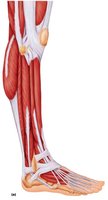
Location: Indicates the region of the body (e.g., tibialis anterior is located on the anterior tibia).
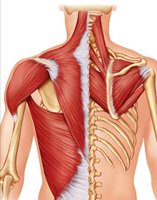
Shape: Describes the muscle's form (e.g., deltoid is triangular, trapezius is trapezoidal).
Size: Terms like maximus (largest), minimus (smallest), longus (longest), brevis (short), major (large), and minor (small) are used.
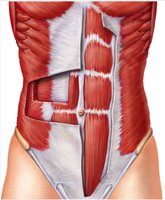
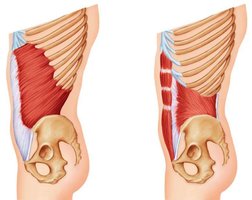
Direction of Fibers: Rectus (straight), transverse (across), oblique (at an angle).
Number of Origins: Biceps (two origins), triceps (three), quadriceps (four).
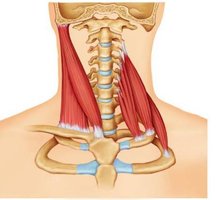
Location of Attachments: Named for their origin and insertion points (e.g., sternocleidomastoid originates from the sternum and clavicle and inserts on the mastoid process).
Action: Named for the movement they produce (e.g., flexor carpi radialis flexes the wrist).
Fascicle Arrangement in Skeletal Muscles
Types and Functional Implications
Fascicles are bundles of muscle fibers, and their arrangement affects muscle shape and function.
Parallel: Fascicles run parallel to the long axis (e.g., sartorius).
Fusiform: Spindle-shaped with a central belly (e.g., biceps brachii).
Pennate: Fascicles attach obliquely to a central tendon (unipennate, bipennate, multipennate).
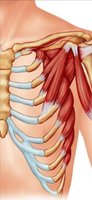
Convergent: Fascicles converge toward a single tendon (e.g., pectoralis major).
Circular: Fascicles arranged in concentric rings (e.g., orbicularis oris).
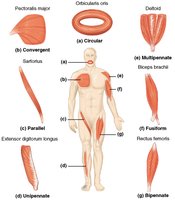
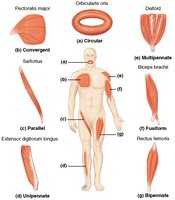
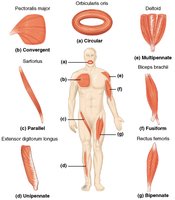
Range of Motion (ROM): Muscles with long fibers (parallel, fusiform) have a greater ROM. Power: Muscles with more fibers (convergent, pennate) generate more force.
Lever Systems and Leverage
Biomechanics of Muscle Action
Muscles, bones, and joints form lever systems that determine the efficiency and effectiveness of movement.
Lever: A rigid bar (bone) that moves on a fixed point (fulcrum, usually a joint).
Fulcrum: The fixed point around which the lever moves.
Resistance (Load): The force that opposes movement (e.g., weight of a body part or object).
Effort: The force applied by muscle contraction to move the load.
Motion occurs when the effort exceeds the resistance, resulting in isotonic contraction.
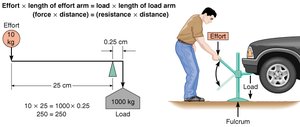
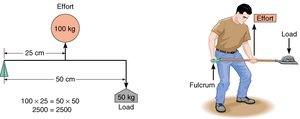
Leverage: The mechanical advantage gained by a lever. Power is increased when the effort is farther from the fulcrum, while range of motion is increased when the effort is closer to the fulcrum.
Summary Table: Muscle Naming Criteria
Criterion | Example | Description |
|---|---|---|
Location | Tibialis anterior | Located on the anterior tibia |
Shape | Deltoid | Triangular shape |
Size | Gluteus maximus | Largest muscle of the gluteal group |
Direction of Fibers | Rectus abdominis | Fibers run straight |
Number of Origins | Biceps brachii | Two origins |
Attachment Sites | Sternocleidomastoid | Originates from sternum and clavicle, inserts on mastoid process |
Action | Flexor carpi radialis | Flexes the wrist |
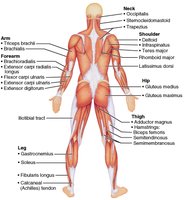
Major Skeletal Muscles
Students should be familiar with the names, origins, and insertions of major muscles as described in laboratory exercises.
Key Equations
Lever Law (Mechanical Advantage):
Additional Information
Details of different leverage system types are not required for Exam 3.
Refer to laboratory PowerPoint slides for more examples of muscle naming conventions.
