 Back
The Muscular System: Structure, Function, and Major Muscles
Study Guide - Smart Notes
 Tailored notes based on your materials, expanded with key definitions, examples, and context.
The Muscular System
Introduction
The muscular system is essential for movement, posture, and vital bodily functions. This chapter focuses on the anatomy and physiology of skeletal muscles, their organization, and their roles in producing movement. Understanding muscle structure and function is crucial for students of anatomy and physiology, as it underpins many aspects of human health and disease.
Muscle Actions and Interactions
Functional Groups of Muscles
Prime Mover (Agonist): The main muscle responsible for a specific movement (e.g., biceps brachii for elbow flexion).
Antagonist: Opposes or reverses a particular movement (e.g., triceps brachii for elbow extension).
Synergist: Assists the prime mover by adding force or reducing unwanted movement.
Fixator: A type of synergist that stabilizes the origin of the prime mover.
Muscles can only pull; they never push. The action of a muscle is determined by its position relative to the joint it crosses.
Inferring Muscle Action by Position
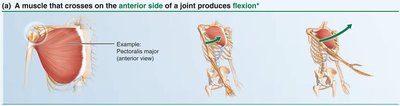
A muscle crossing the anterior side of a joint produces flexion.
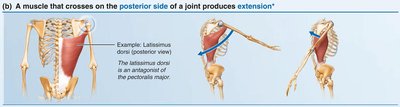
A muscle crossing the posterior side of a joint produces extension.
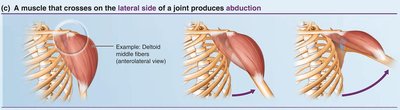
A muscle crossing the lateral side of a joint produces abduction.
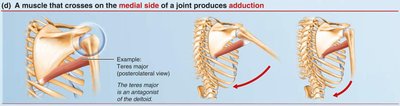
A muscle crossing the medial side of a joint produces adduction.
Naming Skeletal Muscles
Criteria for Naming Muscles
Location: Named for the bone or region (e.g., temporalis).
Shape: Named for distinctive shapes (e.g., deltoid = triangle).
Size: Maximus (largest), minimus (smallest), longus (long).
Direction of fibers: Rectus (straight), transversus (right angles), oblique (angles).
Number of origins: Biceps (two), triceps (three).
Location of attachments: Origin and insertion (e.g., sternocleidomastoid).
Action: Flexor, extensor, adductor, etc.
Often, several criteria are combined in a single muscle name (e.g., extensor carpi radialis longus).
Fascicle Arrangements in Muscles
Types of Fascicle Arrangements
Circular: Fascicles arranged in concentric rings (e.g., orbicularis oris).
Convergent: Broad origin, fascicles converge toward a single tendon (e.g., pectoralis major).
Parallel: Fascicles parallel to the long axis (e.g., sartorius).
Fusiform: Spindle-shaped with parallel fibers (e.g., biceps brachii).
Pennate: Short fascicles attach obliquely to a central tendon (unipennate, bipennate, multipennate).
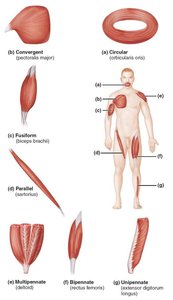
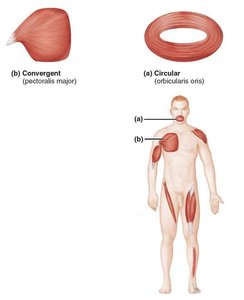
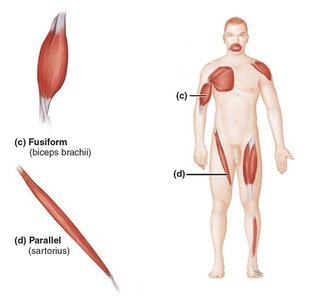
Functional Implications: Fascicle arrangement determines a muscle's range of motion and power. Long, parallel fibers allow greater movement but less power, while pennate muscles are more powerful but have less range of motion.
Lever Systems in the Musculoskeletal System
Basic Components of a Lever System
Lever: Rigid bar (bone) that moves on a fixed point (fulcrum, usually a joint).
Effort: Force applied by muscle contraction.
Load: Resistance moved by the lever (body part plus any added weight).
Mechanical Advantage and Disadvantage
Power Lever (Mechanical Advantage): Load is close to fulcrum, effort is far. Small effort moves a large load.
Speed Lever (Mechanical Disadvantage): Load is far from fulcrum, effort is close. Allows rapid, wide movement but less force.
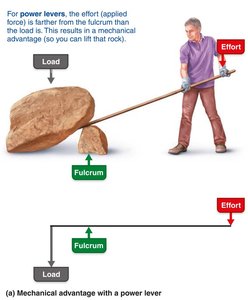
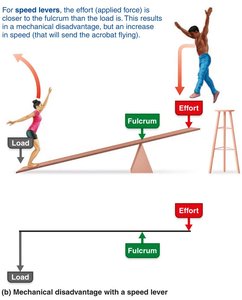
Classes of Levers
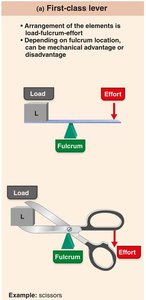
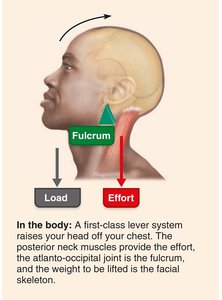
First-Class Lever: Fulcrum between load and effort (e.g., seesaw, scissors, raising head off chest).
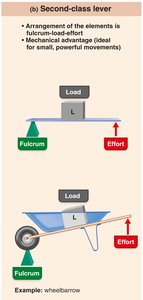
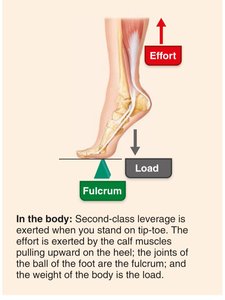
Second-Class Lever: Load between fulcrum and effort (e.g., wheelbarrow, standing on tiptoe).
Third-Class Lever: Effort between fulcrum and load (e.g., tweezers, most skeletal muscles, biceps curl).
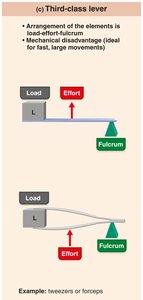
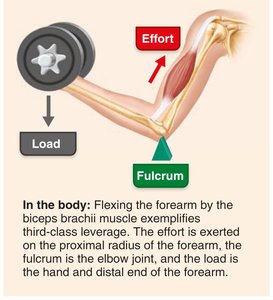
Summary: First-class levers can be either advantageous or disadvantageous depending on fulcrum position. Second-class levers always provide mechanical advantage (power), while third-class levers always provide mechanical disadvantage (speed and range).
Major Skeletal Muscles of the Body
Overview of Major Muscle Groups
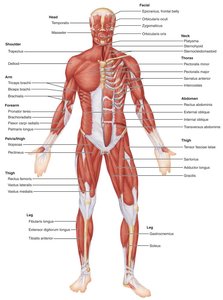
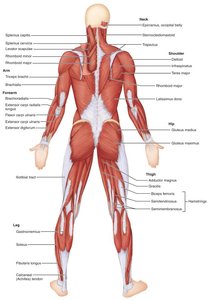
There are over 600 skeletal muscles in the human body, grouped by function and location. Understanding their origins, insertions, actions, and innervation is essential for clinical and academic purposes.
Muscles of the Head and Neck
Muscles of Facial Expression
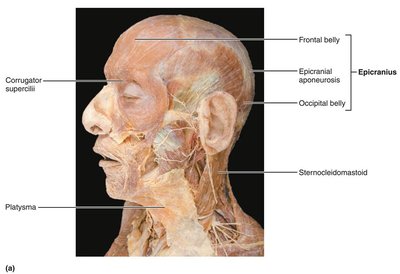
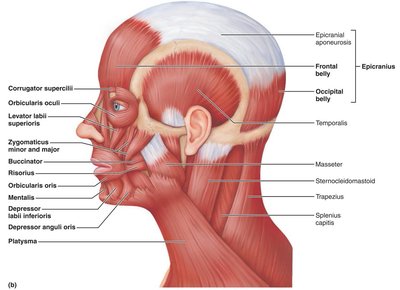
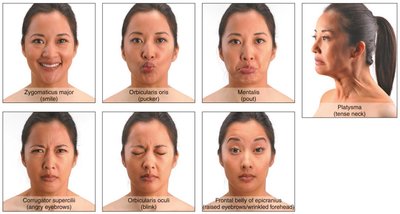
Insert into skin, not bone; allow for nonverbal communication.
All innervated by cranial nerve VII (facial nerve).
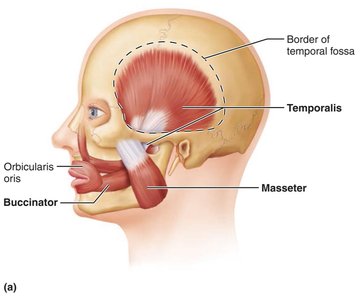
Include muscles of the scalp (epicranius) and face (e.g., orbicularis oculi, zygomaticus, buccinator, platysma).
Muscles of Mastication and Tongue Movement
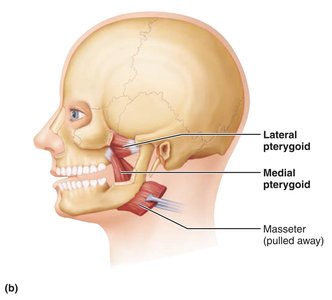
Mastication: Masseter and temporalis (jaw closure), pterygoids (grinding), buccinator (chewing).
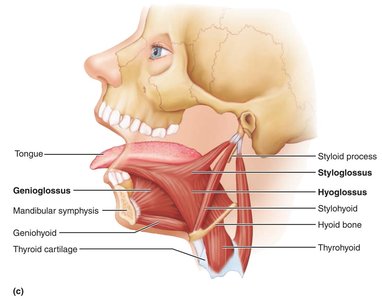
Tongue Movement: Genioglossus, hyoglossus, styloglossus (move tongue in various directions).
Muscles of the Anterior Neck and Throat (Swallowing)
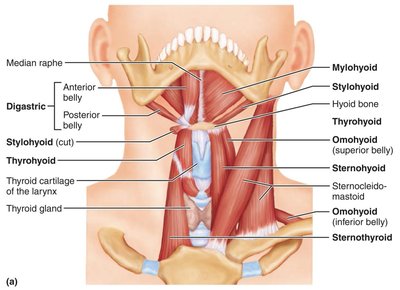
Suprahyoid Muscles: Elevate hyoid bone and larynx during swallowing (e.g., digastric, stylohyoid, mylohyoid, geniohyoid).
Infrahyoid Muscles: Depress hyoid bone and larynx (e.g., sternohyoid, omohyoid, sternothyroid, thyrohyoid).
Pharyngeal Constrictors: Propel food into the esophagus.
Summary Table: Fascicle Arrangements
Arrangement | Example | Function |
|---|---|---|
Circular | Orbicularis oris | Closes body openings |
Convergent | Pectoralis major | Versatile movement, strong |
Parallel | Sartorius | Great range of motion |
Fusiform | Biceps brachii | Moderate power and range |
Pennate | Rectus femoris | High power, less range |
Summary Table: Lever Classes
Class | Arrangement | Example | Advantage |
|---|---|---|---|
First | Fulcrum between load and effort | Seesaw, neck extension | Varies |
Second | Load between fulcrum and effort | Wheelbarrow, tiptoe | Power |
Third | Effort between fulcrum and load | Tweezers, biceps curl | Speed/range |
Additional info: This guide covers the foundational concepts of muscle anatomy, function, and organization, as well as the major muscle groups and their actions. For detailed study, refer to the full chapter and associated figures in your textbook.
