Back
BackThe Reproductive System: Structure, Function, and Regulation
Study Guide - Smart Notes
 Tailored notes based on your materials, expanded with key definitions, examples, and context.
The Reproductive System
Overview and Common Features
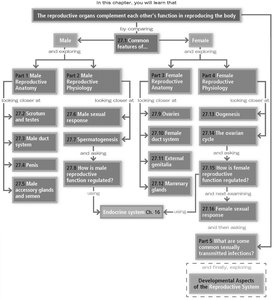
The reproductive system ensures the continuation of the species by producing, storing, nourishing, and transporting gametes. Both male and female systems share homologous structures and are regulated by similar hormonal mechanisms.
Homologous Structures: Many male and female reproductive organs share a common embryological origin (e.g., testes and ovaries, penis and clitoris).
Primary Sex Organs (Gonads): Testes in males and ovaries in females produce gametes (sperm and eggs) and sex hormones.
Accessory Organs: Include ducts, glands, and external genitalia that support gamete transport and reproductive function.
The Hypothalamic-Pituitary-Gonadal (HPG) Axis
The HPG axis is a hormonal system that regulates the development and function of the gonads and the production of sex hormones.
GnRH (Gonadotropin-Releasing Hormone): Released from the hypothalamus, stimulates the anterior pituitary to secrete FSH and LH.
FSH (Follicle-Stimulating Hormone): Stimulates gamete production and the release of androgen-binding protein in males.
LH (Luteinizing Hormone): Stimulates hormone production (testosterone in males, estrogen/progesterone in females).
Inhibin: Produced by gonads, inhibits FSH release to regulate gamete production.
Puberty: Initiated by increased GnRH secretion, leading to increased sex hormone production and reproductive maturity.
Meiosis and Gametogenesis
Meiosis is a specialized type of cell division that reduces the chromosome number by half, producing haploid gametes. This process introduces genetic variability and is essential for sexual reproduction.
Meiosis vs. Mitosis:
Mitosis: Produces two identical diploid (2n) cells for growth and repair.
Meiosis: Produces four genetically unique haploid (n) gametes.
Key Events in Meiosis:
Homologous chromosomes pair and may exchange genetic material (crossing over).
Two consecutive divisions: Meiosis I (homologous chromosomes separate) and Meiosis II (sister chromatids separate).
Genetic Variability: Crossing over and independent assortment during meiosis increase genetic diversity among offspring.
Part 1: Male Reproductive Anatomy
Structure and Function of the Testes
The testes are the primary male reproductive organs, responsible for producing sperm and testosterone. They are housed in the scrotum, which maintains a temperature optimal for sperm production.
Scrotum: Sac of skin and fascia that regulates testicular temperature via the dartos and cremaster muscles.
Tunics: The testes are covered by the tunica vaginalis (outer) and tunica albuginea (inner fibrous capsule).
Lobules and Seminiferous Tubules: Each testis contains lobules with seminiferous tubules, the site of spermatogenesis.
Interstitial (Leydig) Cells: Located between tubules, produce testosterone.
Blood Supply: Gonadal arteries and pampiniform venous plexus help regulate temperature and supply nutrients.
Spermatic Cord: Contains blood vessels, nerves, and lymphatics passing through the inguinal canal.
Male Duct System
Sperm travel from the testes to the exterior through a series of ducts, each with specialized functions.
Epididymis: Coiled tube where sperm mature and are stored.
Ductus (Vas) Deferens: Transports sperm from the epididymis to the ejaculatory duct.
Urethra: Terminal duct for both urine and semen, divided into prostatic, intermediate, and spongy regions.
The Penis
The penis is the male copulatory organ, designed to deliver sperm into the female reproductive tract.
Structure: Consists of the root, body, and glans penis. The prepuce (foreskin) covers the glans.
Erectile Tissue: Three cylindrical bodies: corpus spongiosum (surrounds urethra) and paired corpora cavernosa.
Perineum: Diamond-shaped region containing the root of the penis, scrotum, and anus.
Male Accessory Glands and Semen
Accessory glands produce secretions that form the bulk of semen, supporting and protecting sperm.
Seminal Glands: Produce alkaline fluid with fructose and prostaglandins (70% of semen volume).
Prostate Gland: Secretes milky, slightly acidic fluid with enzymes and prostate-specific antigen (up to 1/3 of semen volume).
Bulbo-Urethral Glands: Produce clear mucus that neutralizes acidic urine in the urethra.
Semen: Milky mixture of sperm and glandular secretions, providing a transport medium and nutrients for sperm.
Part 2: Physiology of the Male Reproductive System
Male Sexual Response
The male sexual response involves erection and ejaculation, coordinated by the nervous system.
Erection: Parasympathetic activity releases nitric oxide (NO), dilating arterioles and filling erectile tissue with blood.
Ejaculation: Sympathetic activity propels semen through the ducts and out of the body.
Spermatogenesis
Spermatogenesis is the process of sperm production in the seminiferous tubules, beginning at puberty and continuing throughout life.
Spermatogonia: Stem cells that divide to produce type A (remain as stem cells) and type B (differentiate into primary spermatocytes).
Meiosis: Primary spermatocytes undergo meiosis I to form secondary spermatocytes, which undergo meiosis II to form spermatids.
Spermiogenesis: Spermatids mature into spermatozoa, developing a head, midpiece, and tail.
Sustentocytes (Sertoli Cells): Support and nourish developing sperm, form the blood-testis barrier, and regulate spermatogenesis.
Interstitial (Leydig) Cells: Produce testosterone, essential for spermatogenesis and male secondary sex characteristics.
Hormonal Regulation of Male Reproductive Function
Testicular function is regulated by the HPG axis, ensuring proper sperm production and hormone balance.
GnRH: Stimulates FSH and LH release from the anterior pituitary.
FSH: Stimulates sustentocytes to release androgen-binding protein, maintaining high testosterone levels near spermatogenic cells.
LH: Stimulates Leydig cells to produce testosterone.
Testosterone: Promotes spermatogenesis, development of male reproductive organs, and secondary sex characteristics.
Negative Feedback: Rising testosterone and inhibin levels inhibit GnRH, FSH, and LH release to maintain hormonal balance.
Testosterone Effects
Initiates and maintains spermatogenesis.
Promotes growth and function of male reproductive organs.
Induces secondary sex characteristics (hair growth, voice deepening, increased muscle and bone mass).
Increases basal metabolic rate and influences brain development.