 Back
BackThe Skeletal System: Structure, Function, and Anatomy
Study Guide - Smart Notes
 Tailored notes based on your materials, expanded with key definitions, examples, and context.
The Skeletal System
Introduction to Bone and Skeletal Tissue
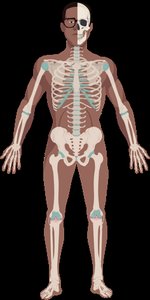
The skeletal system is composed of bones and associated structures such as cartilage, ligaments, and tendons. Bone is a dynamic, living connective tissue that responds to its environment and plays several critical roles in the human body.
Support: Bones provide the structural framework for the body.
Protection: Bones protect soft internal organs (e.g., the skull protects the brain, the rib cage protects the heart and lungs).
Movement: Bones act as levers for muscles, enabling movement.
Mineral Storage: Bones store minerals such as calcium and phosphate, which can be released into the bloodstream as needed.
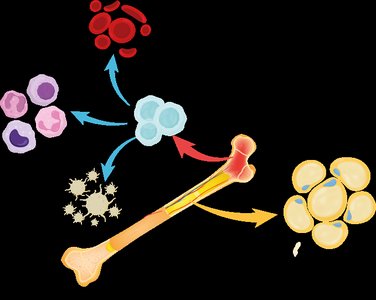
Blood Cell Production: Hematopoiesis occurs in the red marrow of certain bones, producing red and white blood cells and platelets.
Fat Storage: Yellow marrow stores triglycerides (fat) as an energy reserve.


Classification of Bones
Types of Bones
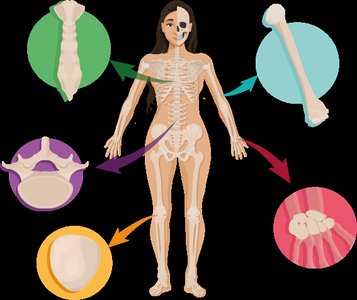
Bones are classified by their shape and structure, which relate to their function:
Long Bones: Longer than they are wide; primarily found in the limbs (e.g., humerus, femur).
Short Bones: Cube-shaped; found in the wrist (carpals) and ankle (tarsals).
Flat Bones: Thin, flattened, and usually curved; found in the skull, ribs, and sternum.
Irregular Bones: Complicated shapes; found in the vertebrae and pelvis.
Sesamoid Bones: Develop within tendons; the patella is the largest example.
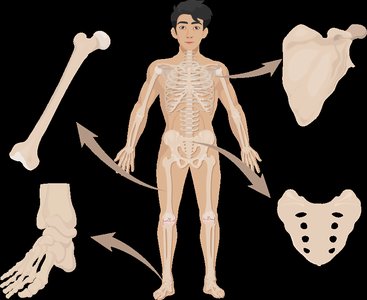
Gross Anatomy of Bone
Compact and Spongy Bone
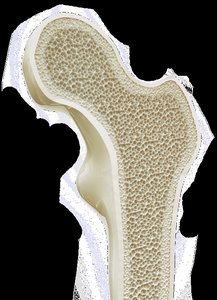
All bones contain two main types of osseous tissue:
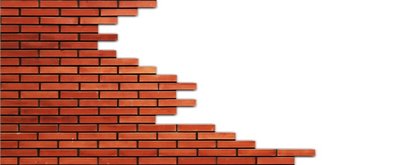
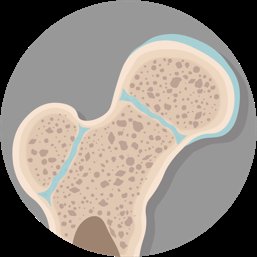
Compact Bone: Dense and solid, forming the outer layer of all bones; provides strength and resistance to bending.
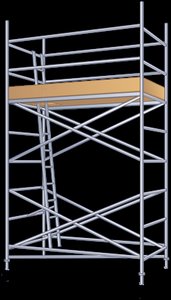
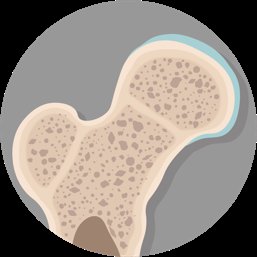
Spongy Bone (Cancellous Bone): Porous, lattice-like structure found inside bones; reduces bone weight and contains marrow.
Analogy: Compact bone is like a brick wall (strong and solid), while spongy bone is like scaffolding (lightweight but supportive).
Periosteum and Endosteum
Bone surfaces are covered by specialized connective tissue membranes:
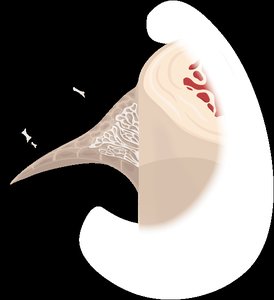
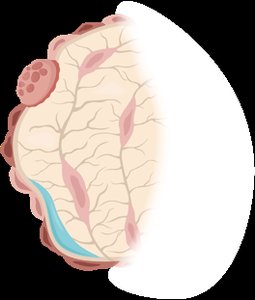
Periosteum: A double-layered membrane covering the external surface of bones (except at joints). The outer fibrous layer is dense irregular connective tissue; the inner osteogenic layer contains bone stem cells.
Endosteum: A thin membrane lining the internal surfaces of bones, including the medullary cavity and trabeculae of spongy bone; contains osteogenic cells.
Bone Marrow
There are two types of bone marrow:
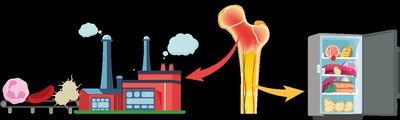
Red Marrow: Site of hematopoiesis (blood cell formation); found mainly in spongy bone of flat bones and the epiphyses of long bones in adults.
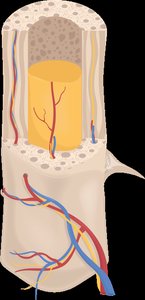
Yellow Marrow: Stores fat (triglycerides); found in the medullary cavity of long bones in adults. Can convert to red marrow if necessary (e.g., severe blood loss).
Structure of Long, Short, Flat, and Irregular Bones
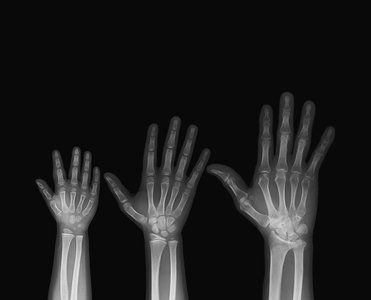
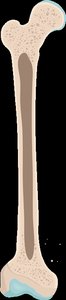
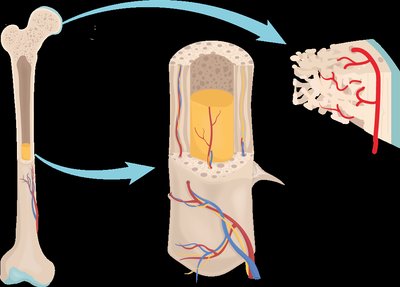
Long Bones: Consist of a shaft (diaphysis), two ends (epiphyses), and a metaphysis (region between diaphysis and epiphysis containing the epiphyseal plate/line).
Short, Flat, and Irregular Bones: Thin plates of compact bone on the outside with spongy bone inside; no shaft or epiphyses.

Nutrient Foramina, Blood, and Nerve Supply
Bones are highly vascularized and innervated:
Nutrient Foramen: Small openings in the diaphysis for blood vessels and nerves to enter and exit the bone.
Nutrient Artery and Vein: Supply and drain blood from the medullary cavity and bone tissue.
Microscopic Anatomy of Bone
Bone Matrix
The extracellular matrix of bone consists of two main components:
Inorganic Matrix: Mainly hydroxyapatite crystals (calcium phosphate); provides hardness and strength (about 65% of bone mass).
Organic Matrix (Osteoid): Collagen fibers and ground substance; provides flexibility and tensile strength (about 35% of bone mass).
Equation for Hydroxyapatite:
Bone Cells
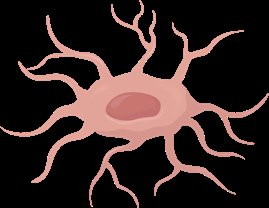
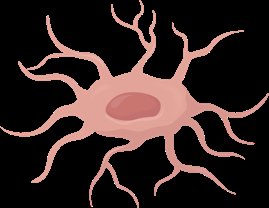
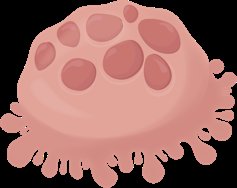
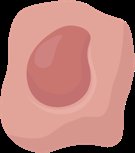
Osteoprogenitor (Osteogenic) Cells: Stem cells that differentiate into osteoblasts.
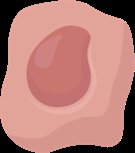
Osteoblasts: Bone-forming cells; secrete osteoid (organic matrix).
Osteocytes: Mature bone cells; maintain bone matrix and communicate via canaliculi.
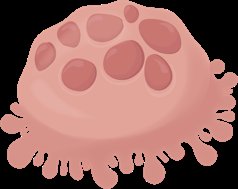
Osteoclasts: Large, multinucleated cells; break down bone matrix (bone resorption).
The Osteon (Haversian System)
The structural unit of compact bone is the osteon:
Central Canal (Haversian Canal): Contains blood vessels and nerves.
Lamellae: Concentric rings of bone matrix.
Lacunae: Small spaces housing osteocytes.
Canaliculi: Tiny channels connecting lacunae for nutrient and signal exchange.
Perforating (Volkmann's) Canals: Run perpendicular to central canals, connecting blood and nerve supply.
Spongy Bone and Trabeculae
Spongy bone consists of trabeculae—thin, bony struts aligned along lines of stress. It contains lamellae, osteocytes, and canaliculi but lacks osteons and central canals. Nutrients reach osteocytes via canaliculi from capillaries in the endosteum.
The Skeleton: Axial and Appendicular Divisions
Axial Skeleton
Composed of the skull, vertebral column, and rib cage (80 bones).
Functions: Supports and protects organs of the head, neck, and trunk.
Appendicular Skeleton
Composed of the limbs and girdles (pectoral and pelvic) that attach them to the axial skeleton (126 bones).
Functions: Facilitates movement and manipulation of objects.
The Skull
Cranial and Facial Bones
Cranial Bones: Enclose and protect the brain (e.g., frontal, parietal, occipital, temporal, sphenoid, ethmoid).
Facial Bones: Form the structure of the face (e.g., maxilla, mandible, zygomatic, nasal, lacrimal, palatine, vomer, inferior nasal conchae).
Sinuses and Cavities
Paranasal Sinuses: Air-filled spaces in the frontal, ethmoid, sphenoid, and maxillary bones; lighten the skull, warm and moisten air, and enhance vocal resonance.
Orbital and Nasal Cavities: Formed by contributions from multiple bones; house the eyes and nasal structures.
The Vertebral Column (Spine)
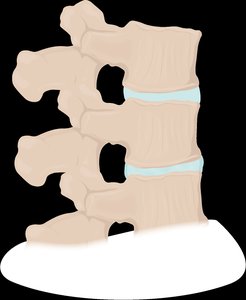
Composed of 24 vertebrae, the sacrum, and the coccyx.
Regions: Cervical (7), thoracic (12), lumbar (5), sacrum (5 fused), coccyx (3-5 fused).
Functions: Protects the spinal cord, supports the head, and provides attachment points for ribs and muscles.
Curvatures: Cervical, thoracic, lumbar, and sacral curves increase resilience and flexibility.
Intervertebral Discs: Pads of fibrocartilage between vertebrae (absent between C1 and C2, and in the sacrum and coccyx).
The Thoracic Cage
Composed of the thoracic vertebrae, ribs, and sternum.
Ribs: 12 pairs—true ribs (1-7, direct attachment to sternum), false ribs (8-12, indirect or no attachment), floating ribs (11-12, no sternal attachment).
Sternum: Manubrium, body, and xiphoid process.
Function: Protects thoracic organs and supports shoulder girdles and upper limbs.
The Appendicular Skeleton
Pectoral Girdle
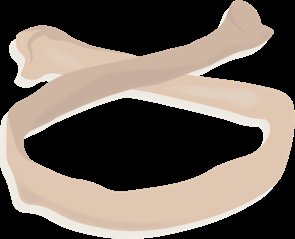
Composed of the clavicle (collarbone) and scapula (shoulder blade).
Attaches the upper limbs to the axial skeleton and allows for a wide range of motion.
Upper Limb
Arm: Humerus (single bone of the upper arm).
Forearm: Radius (lateral) and ulna (medial).
Hand: Carpals (8 wrist bones), metacarpals (5 palm bones), phalanges (14 finger bones).
Pelvic Girdle
Composed of two coxal (hip) bones, each formed by the fusion of the ilium, ischium, and pubis.
Attaches the lower limbs to the axial skeleton and supports pelvic organs.
Acetabulum: Deep socket for the head of the femur.
Lower Limb
Thigh: Femur (largest and strongest bone in the body).
Patella: Sesamoid bone in the quadriceps tendon (kneecap).
Leg: Tibia (medial, weight-bearing) and fibula (lateral, non-weight-bearing).
Foot: Tarsals (7 ankle bones, including talus and calcaneus), metatarsals (5), phalanges (14).
Sexual Dimorphism in the Pelvis
Female pelvis: Wider, lighter, larger pelvic inlet and outlet, broader pubic arch—adapted for childbirth.
Male pelvis: Narrower, heavier, smaller pelvic inlet, more acute pubic arch.
Joints (Articulations)
Classification of Joints
Joints are classified by structure and function:
Structural Classification:
Fibrous Joints: Bones joined by dense connective tissue; immovable or slightly movable (e.g., sutures, syndesmoses, gomphoses).
Cartilaginous Joints: Bones joined by cartilage; immovable or slightly movable (e.g., synchondroses, symphyses).
Synovial Joints: Bones separated by a fluid-filled cavity; freely movable (e.g., knee, shoulder, hip).
Functional Classification:
Synarthrosis: Immovable joint.
Amphiarthrosis: Slightly movable joint.
Diarthrosis: Freely movable joint.
Synovial Joints
Most joints in the body are synovial joints, characterized by a synovial cavity, articular cartilage, articular capsule (fibrous and synovial layers), synovial fluid, ligaments, nerves, and blood vessels.
Weeping Lubrication: Synovial fluid is squeezed out of articular cartilage during compression and reabsorbed during decompression, reducing friction and nourishing cartilage.
Additional Features: Bursae (fluid-filled sacs), tendon sheaths, fatty pads, and articular discs (menisci) may be present in some synovial joints to reduce friction and absorb shock.
Summary Table: Bone Types and Examples
Bone Type | Shape | Examples |
|---|---|---|
Long | Longer than wide | Femur, humerus, phalanges |
Short | Cube-shaped | Carpals, tarsals |
Flat | Thin, flat, curved | Sternum, ribs, cranial bones |
Irregular | Complex shapes | Vertebrae, pelvis |
Sesamoid | Within tendons | Patella |
Key Equations and Concepts
Hydroxyapatite (bone mineral):
Bone Remodeling: Balance between osteoblast (formation) and osteoclast (resorption) activity maintains bone strength and calcium homeostasis.
Additional info: This guide covers the essential structure and function of the skeletal system, including bone types, anatomy, and joint classification, as outlined in a typical college-level Anatomy & Physiology curriculum.
