 Back
BackUnit 16: The Endocrine System – Structure, Function, and Histology
Study Guide - Smart Notes
 Tailored notes based on your materials, expanded with key definitions, examples, and context.
Unit 16: The Endocrine System
Overview of the Endocrine System
The endocrine system is a network of glands that secrete hormones directly into the bloodstream to regulate various physiological processes. These hormones control growth, metabolism, reproduction, and homeostasis. The system includes both primary endocrine organs and neuroendocrine organs that interact closely with the nervous system.
Endocrine glands: Ductless glands that release hormones into the blood.
Hormones: Chemical messengers that act on target cells to elicit specific responses.
Neuroendocrine organs: Structures like the hypothalamus that integrate neural and endocrine functions.
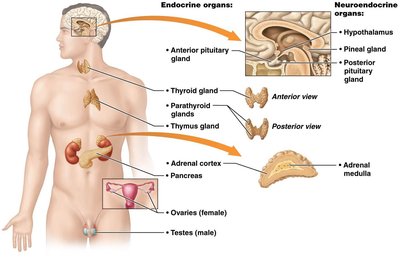
Major Endocrine Organs and Their Hormones
Each endocrine gland produces specific hormones that regulate distinct physiological functions. The following table summarizes the main glands, their hormones, and primary actions:
Gland | Hormone(s) | Main Function(s) |
|---|---|---|
Hypothalamus | Releasing & inhibiting hormones, Oxytocin, ADH | Regulates pituitary; water balance; uterine contractions |
Pituitary (Anterior) | TSH, GH, Prolactin, ACTH, LH, FSH | Stimulates thyroid, growth, lactation, adrenal cortex, gonads |
Pituitary (Posterior) | Stores Oxytocin, ADH | Does not produce hormones; releases those made by hypothalamus |
Pineal | Melatonin | Regulates sleep-wake cycles |
Thyroid | Thyroxine (T4), Triiodothyronine (T3), Calcitonin | Metabolic rate, calcium homeostasis |
Parathyroid | PTH | Increases blood calcium |
Thymus | Thymosin, Thymopoietin | T cell development |
Adrenal Cortex | Mineralocorticoids, Glucocorticoids, Gonadocorticoids | Electrolyte balance, stress response, sex hormones |
Adrenal Medulla | Epinephrine, Norepinephrine | Fight or flight response |
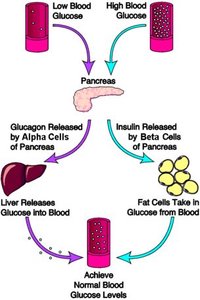
Pancreas | Insulin, Glucagon | Blood glucose regulation |
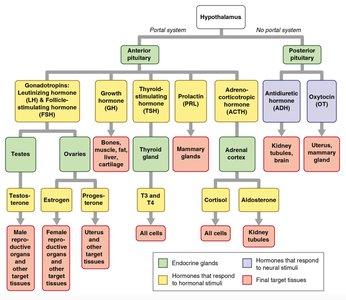
Hormonal Regulation and Feedback Loops
Hormone secretion is tightly regulated by negative feedback mechanisms to maintain homeostasis. A stimulus triggers hormone release, which acts on target cells to correct the disturbance. Once balance is restored, hormone secretion decreases.
Negative feedback: The end product inhibits its own production by suppressing the initial stimulus.
Example: Blood glucose regulation by insulin and glucagon.
Endocrine Histology
Pituitary Gland
The pituitary gland is divided into anterior (adenohypophysis) and posterior (neurohypophysis) lobes. The anterior pituitary contains hormone-secreting cells, while the posterior stores and releases hormones produced by the hypothalamus.
Anterior pituitary: Densely packed cells, stains darker.
Posterior pituitary: Contains nerve fibers, stains lighter.
Thyroid Gland
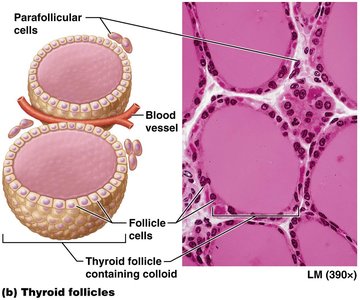
The thyroid gland is composed of spherical follicles filled with colloid. Follicle cells produce thyroid hormones, while parafollicular cells secrete calcitonin.
Thyroid follicles: Spheres lined by follicle cells, filled with colloid (thyroglobulin).
Parafollicular cells: Located between follicles, secrete calcitonin.
Adrenal Gland
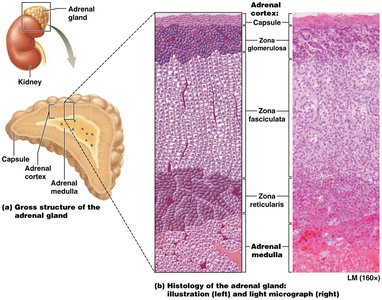
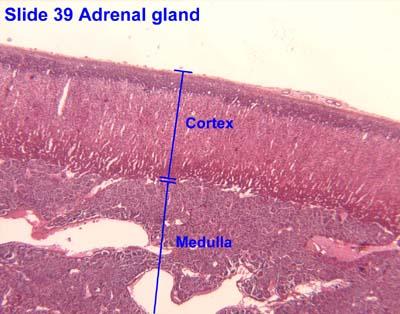
The adrenal gland consists of an outer cortex and inner medulla. The cortex is divided into three zones, each producing different steroid hormones.
Zona glomerulosa: Produces mineralocorticoids (e.g., aldosterone).
Zona fasciculata: Produces glucocorticoids (e.g., cortisol).
Zona reticularis: Produces gonadocorticoids (sex hormones).
Medulla: Produces catecholamines (epinephrine, norepinephrine).
Pancreas
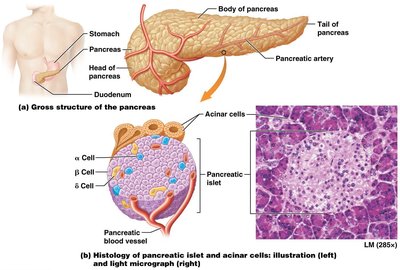
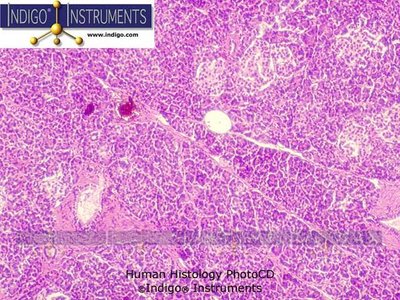
The pancreas contains both exocrine (acinar cells) and endocrine (islets of Langerhans) tissue. The islets secrete insulin and glucagon to regulate blood glucose.
Acinar cells: Secrete digestive enzymes (exocrine function).
Pancreatic islets: Contain alpha cells (glucagon) and beta cells (insulin).
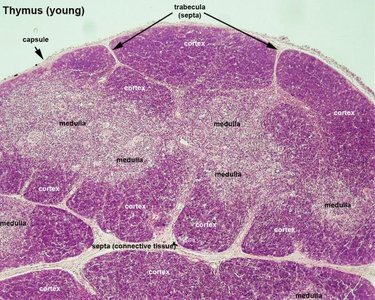
Thymus
The thymus is prominent in children and is the site of T cell maturation. It contains lobules with an outer cortex and inner medulla.
Cortex: Densely packed with developing T cells.
Medulla: Contains fewer, more mature T cells.
Summary Table: Key Endocrine Glands and Hormones
Gland | Hormone(s) | Main Target(s) | Main Effect(s) |
|---|---|---|---|
Hypothalamus | Releasing/inhibiting hormones, ADH, Oxytocin | Pituitary, kidneys, uterus | Pituitary regulation, water retention, uterine contraction |
Pituitary (Ant.) | TSH, GH, ACTH, LH, FSH, Prolactin | Thyroid, bones, adrenals, gonads, mammary glands | Growth, metabolism, stress, reproduction, lactation |
Pituitary (Post.) | ADH, Oxytocin | Kidneys, uterus, mammary glands | Water retention, labor, milk ejection |
Thyroid | T3, T4, Calcitonin | All cells, bones | Metabolism, lowers blood calcium |
Parathyroid | PTH | Bones, kidneys, intestines | Raises blood calcium |
Adrenal Cortex | Aldosterone, Cortisol, Androgens | Kidneys, all cells | Electrolyte balance, stress response, sex traits |
Adrenal Medulla | Epinephrine, Norepinephrine | Many tissues | Fight or flight response |
Pancreas | Insulin, Glucagon | Liver, muscle, fat | Blood glucose regulation |
Thymus | Thymosin, Thymopoietin | T cells | T cell maturation |
Additional info: The pineal gland (melatonin), ovaries (estrogen, progesterone), and testes (testosterone) are also important endocrine organs but are not the main focus of this unit.
