 Back
BackViral Replication and Prion Diseases: Study Notes for ANP College
Study Guide - Smart Notes
 Tailored notes based on your materials, expanded with key definitions, examples, and context.
Viral Replication and Prion Diseases
Overview
This study guide covers the mechanisms of viral replication, differences between bacteriophage and animal virus replication, virus entry mechanisms, synthesis and assembly of viral genomes and proteins, release of viruses, and prion diseases. These topics are directly relevant to ANP college courses, particularly chapters on cell biology, histology, and the nervous system.
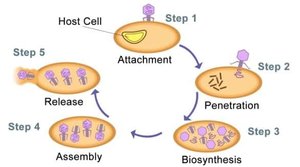
Five Major Steps of Viral Replication
General Steps
Viruses replicate through a series of well-defined steps, which are essential for their propagation and infection of host cells.
Attachment: Virus binds to specific receptors on the host cell surface.
Entry (Penetration): Viral genome enters the host cell, either by direct penetration, endocytosis, or membrane fusion.
Synthesis (Biosynthesis): Viral genome is replicated, and viral proteins are synthesized using host or viral enzymes.
Assembly: Newly synthesized viral genomes and proteins are assembled into new virus particles.
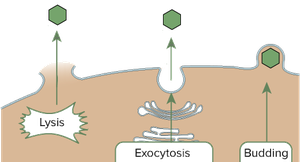
Release: New viruses exit the host cell, either by lysis, exocytosis, or budding.
Bacteriophage Replication Mechanisms
Lytic Replication
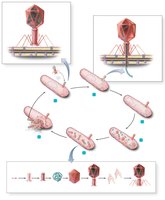
The lytic cycle is a mechanism by which bacteriophages (viruses that infect bacteria) rapidly produce new viral particles, leading to destruction of the host cell.
Unique Step: Bacterial chromosome is destroyed during biosynthesis.
Cell Lysis: Host cell bursts, releasing new phages.
No Envelope: Lytic phages are non-enveloped.
Scientific Importance: Animal virus replication studies often use bacteriophage models.
Lysogenic Replication
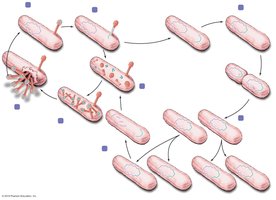
Some bacteriophages can integrate their genome into the host chromosome, entering a lysogenic cycle. This allows silent replication and can later trigger a lytic cycle.
Genome Integration: Viral genome becomes a provirus (similar to HIV).
Silent Replication: Virus replicates with host cell without causing immediate harm.
Induction: Environmental triggers can activate the lytic cycle, producing many new viruses.
Mechanisms of Virus Entry
Entry Strategies
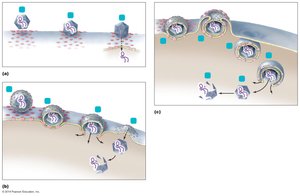
Viruses use different mechanisms to enter host cells, depending on their structure and the host cell type.
Direct Penetration: Non-enveloped viruses inject their genome directly into the cell (e.g., poliovirus).
Endocytosis: Host cell engulfs the virus, forming a vesicle (e.g., adenovirus, herpesvirus).
Membrane Fusion: Enveloped viruses fuse with the host cell membrane, releasing their genome (e.g., measles virus, HIV).
Synthesis and Assembly of Viral Genomes and Proteins
DNA Animal Viruses
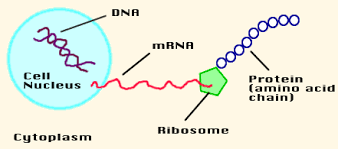
DNA viruses utilize host cell machinery for genome replication and protein synthesis.
Genome Replication: Cell DNA polymerase replicates viral DNA in the nucleus.
Protein Synthesis: Host RNA polymerase transcribes viral DNA to RNA (nucleus), ribosomes translate RNA to proteins (cytoplasm).
RNA Animal Viruses
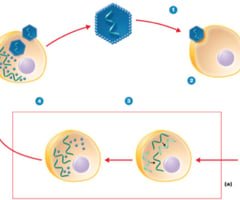
RNA viruses require viral RNA polymerase for genome replication, as their genome does not resemble host DNA.
Genome Replication: Viral RNA polymerase replicates viral RNA in the cytoplasm.
Protein Synthesis: Ribosomes translate viral RNA to proteins in the cytoplasm.
Assembly of New Viral Genomes and Proteins
Assembly occurs in different cellular compartments depending on the type of virus.
DNA Viruses: Assembly in the nucleus.
RNA Viruses: Assembly in the cytoplasm.
Release of Newly Assembled Viruses
Mechanisms of Release
Viruses exit the host cell through various mechanisms, which differ between non-enveloped and enveloped viruses.
Non-enveloped Viruses: Released by cell lysis (rupture) or exocytosis (fusion of vesicle with plasma membrane).
Enveloped Viruses: Released by budding, where the virus acquires its envelope from the host cell membrane.
Prion Diseases
Definition and Characteristics
Prions are misfolded proteins that cause fatal neurodegenerative diseases known as spongiform encephalopathies.
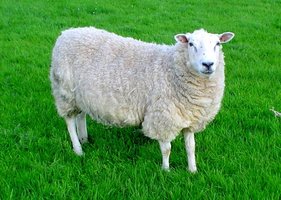
Diseases: Scrapie (sheep), Mad cow disease (cows), Kuru (humans), Creutzfeldt-Jakob disease (humans).
Transmission: Ingestion, transplantation, or contact with infected nervous tissue.
Destruction: Prions are destroyed by incineration or autoclaving in concentrated sodium hydroxide.
No Cure: Prion diseases are incurable, with long incubation periods (5–40 years) and rapid illness progression (12–14 months).
Disease | Host | Transmission |
|---|---|---|
Scrapie | Sheep | Spontaneous/transmitted |
Mad cow disease | Cow | Ingestion/contact |
Kuru | Human | Ingestion (cannibalism) |
Creutzfeldt-Jakob | Human | Spontaneous/transmitted |

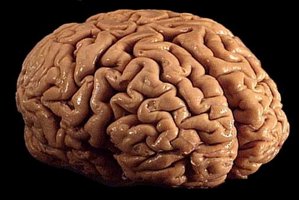
Prion Replication and Pathogenesis
Prions propagate by converting normal cellular proteins into the misfolded prion form, leading to accumulation and neuronal death.
Conversion: Prion "infects" brain cell, converting normal protein into misfolded form.
Accumulation: Prions build up, causing neuronal death and formation of large vacuoles and plaques.
Pathogenesis: Results in fatal neurodegenerative disease.
Summary Table: Viral Replication Steps
Step | Description |
|---|---|
Attachment | Virus binds to host cell receptors |
Entry | Viral genome enters host cell |
Synthesis | Viral genome and proteins are produced |
Assembly | New viral particles are assembled |
Release | Viruses exit the host cell |
Key Terms and Definitions
Bacteriophage: Virus that infects bacteria.
Lytic Cycle: Viral replication cycle resulting in host cell destruction.
Lysogenic Cycle: Viral genome integrates into host chromosome, replicates silently.
Prion: Misfolded protein causing neurodegenerative disease.
Enveloped Virus: Virus with a lipid membrane derived from host cell.
Non-enveloped Virus: Virus lacking a lipid membrane.
Relevant Equations
Central Dogma of Molecular Biology:
Viral Genome Replication (DNA virus):
Viral Genome Replication (RNA virus):
Additional info: Academic context was added to clarify mechanisms, definitions, and disease examples for completeness.
