 Back
BackCh. 8: Inequalities and Absolute Value – Review of Linear Inequalities in One Variable
Study Guide - Smart Notes
 Tailored notes based on your materials, expanded with key definitions, examples, and context.
Ch. 8: Inequalities and Absolute Value
8.1 Review of Linear Inequalities in One Variable
This section reviews the process of solving linear inequalities in one variable, including the rules for manipulating inequalities, the use of interval notation, and the graphical representation of solution sets. It also introduces compound inequalities and the concept of set intersection.
Definition and Properties of Inequalities
Inequality: A mathematical statement that compares two expressions using symbols such as < (less than), > (greater than), ≤ (less than or equal to), or ≥ (greater than or equal to).
Key Property: When multiplying or dividing both sides of an inequality by a negative number, the direction of the inequality sign must be reversed.
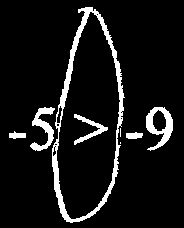
Example: To make a true statement, multiply both sides by and reverse the sign: .
Solving Linear Inequalities
Solve inequalities using the same steps as equations, with the additional rule for multiplying/dividing by negatives.
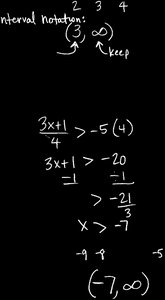
Example: Solve .

Step 1: Multiply both sides by 4:
Step 2: Subtract 1:
Step 3: Divide by 3:
Solution in interval notation:
Interval Notation and Number Lines
Interval Notation: Uses parentheses ( ) for strict inequalities (<, >) and brackets [ ] for inclusive inequalities (≤, ≥).
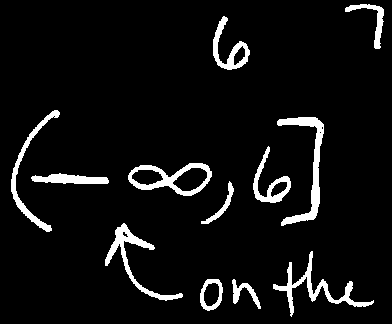
Infinity Symbols: for positive infinity, for negative infinity. Always use parentheses with infinity.
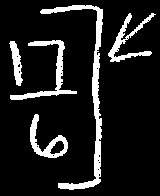
Example: is written as .
Example: is written as .



Solving and Graphing Compound Inequalities
Compound Inequality: An inequality that combines two simple inequalities, often using the word "and" or "or".
Example: is written as in interval notation.
Graph the solution on a number line and rewrite in interval notation.
![Interval notation (11, 15]](https://static.studychannel.pearsonprd.tech/study_guide_files/beginning-intermediate-algebra/sub_images/d832134d_image_4.png)
Special Cases in Inequalities
If the variable is eliminated and a true statement remains (e.g., ), the solution is all real numbers ().
If the variable is eliminated and a false statement remains (e.g., ), there is no solution ().


Solving Chains of Inequalities
A chain of inequalities (e.g., ) can be solved as two separate inequalities and then combined.
Express the solution set in both graph and interval form.
Example:
Step 1: Divide all parts by 3:
Interval notation:
![Interval notation (3, 19/3]](https://static.studychannel.pearsonprd.tech/study_guide_files/beginning-intermediate-algebra/sub_images/d832134d_image_29.png)
Intersection of Sets and Compound Inequalities
The intersection of two sets and , written , is the set of elements common to both $A$ and $B$.
For compound inequalities with "and", the solution is the intersection of the solution sets.
Example: , , then
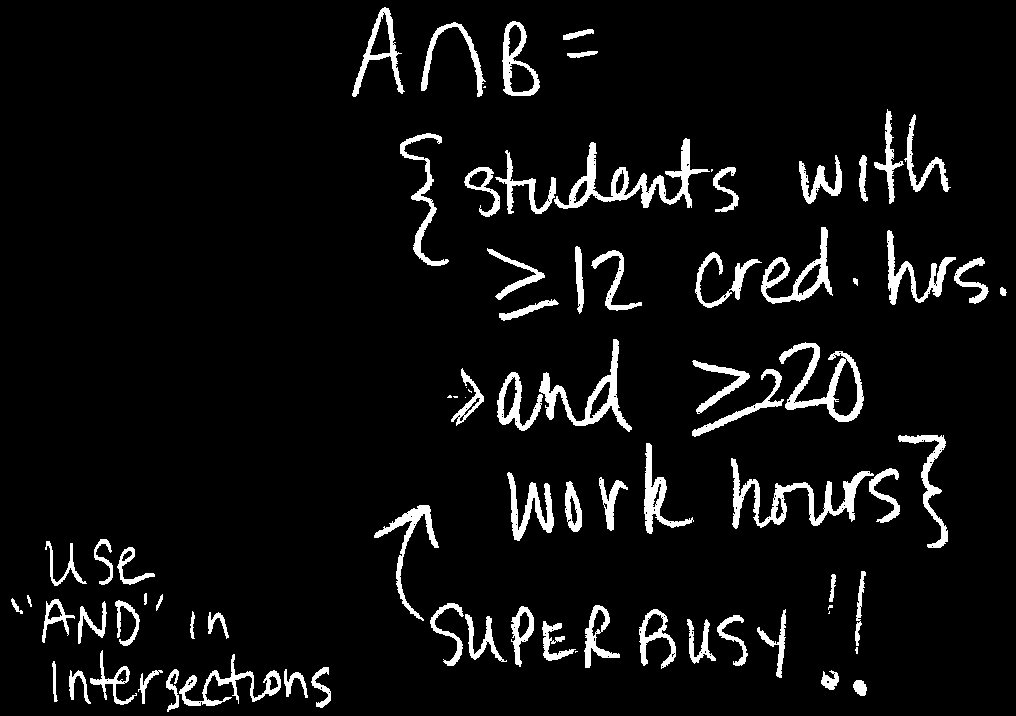
Use "AND" for intersections.


Application Example: Students with Multiple Criteria
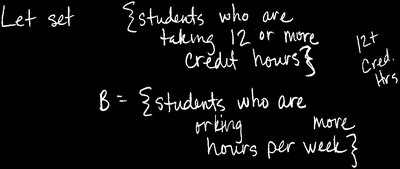
Let set be students taking 12 or more credit hours.
Let set be students working 20 or more hours per week.
The intersection is students who meet both criteria ("super busy").
Summary Table: Interval Notation Symbols
Inequality | Interval Notation | Graphical Representation |
|---|---|---|
Open circle at , arrow right | ||
Closed circle at , arrow right | ||
Open circle at , arrow left | ||
Closed circle at , arrow left | ||
Open at , closed at |
Additional info: This table summarizes the correspondence between inequality symbols, interval notation, and their graphical representation on a number line.
Key Points to Remember
Always reverse the inequality sign when multiplying or dividing by a negative number.
Use interval notation to express solution sets.
Compound inequalities with "and" represent intersections of sets.
Check for special cases: all real numbers or no solution.
