 Back
BackExponents and Polynomials: Rules, Properties, and Applications
Study Guide - Smart Notes
 Tailored notes based on your materials, expanded with key definitions, examples, and context.
Ch. 4 - Exponents and Polynomials
Product Rule for Exponents
The Product Rule for Exponents is a fundamental property used to simplify expressions involving exponents. When multiplying terms with the same base, you add their exponents.
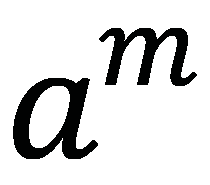
Definition: For any real number a and integers m and n,
Key Point: The base must be the same for the rule to apply.
Example:
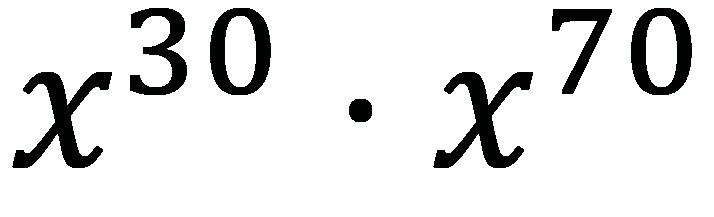
Example:
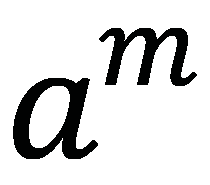
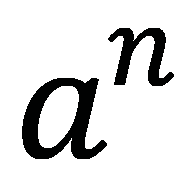
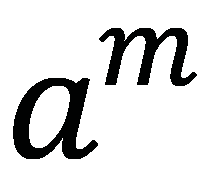
Example:

Example:
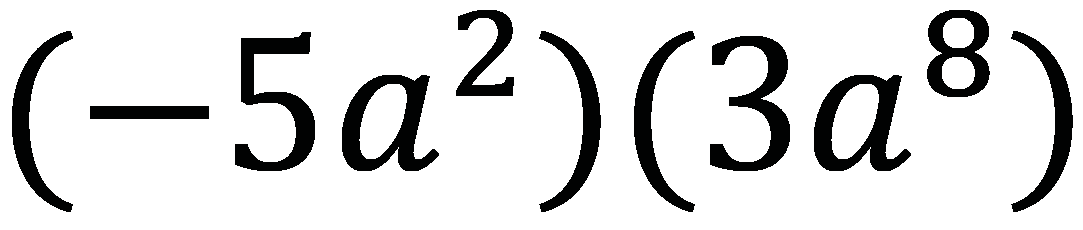
Example:
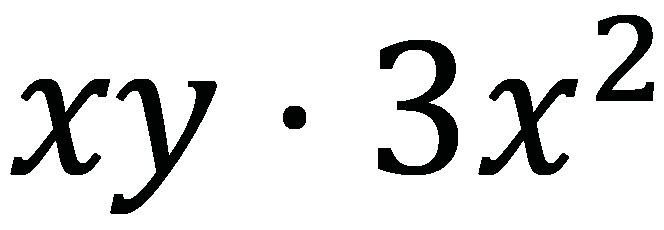
Quotient Rule for Exponents
The Quotient Rule for Exponents is used when dividing terms with the same base. Subtract the exponent in the denominator from the exponent in the numerator.
Definition: For any real number a (except 0) and integers m and n,
Key Point: The base must be the same for the rule to apply.
Example:
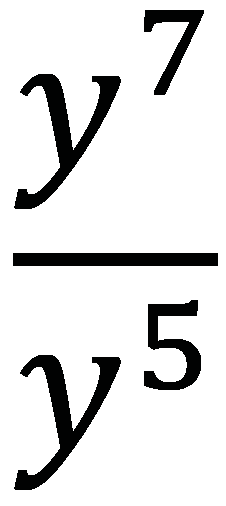
Example:
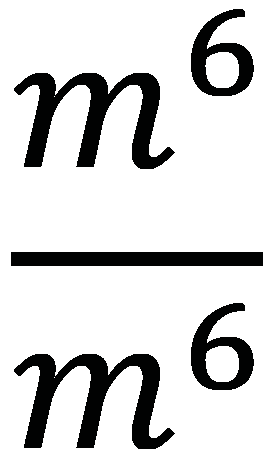
Example:
Example:
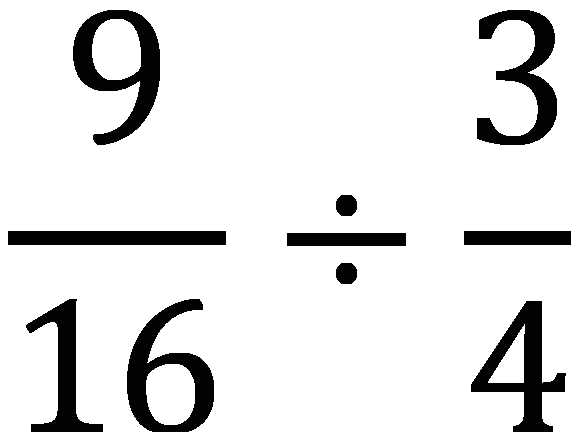
Example:

General Rule:
Zero Exponent Rule
The Zero Exponent Rule states that any nonzero base raised to the zero power is equal to 1.
Definition: For any nonzero real number a,
Example: (for )
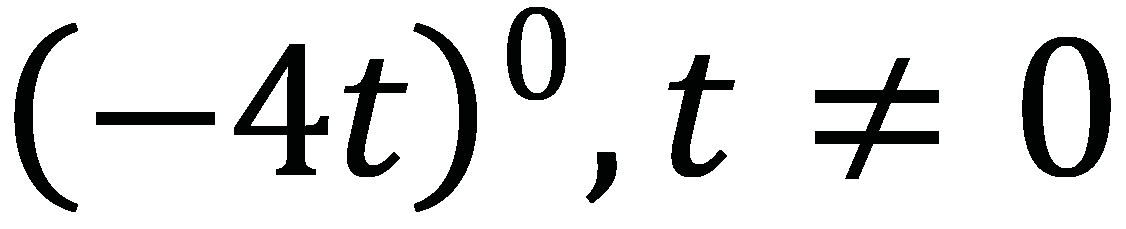
Example:
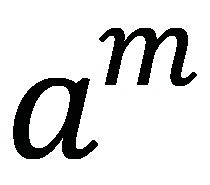
Power Rule for Exponents
The Power Rule for Exponents is used when raising a power to another power. Multiply the exponents.
Definition: For any real number a and integers m and n,
Example:

Example:
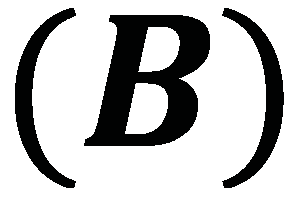
General Rule:
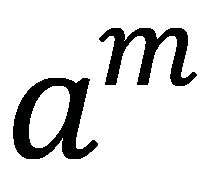
Power of a Product Rule
The Power of a Product Rule (also called the product to a power rule) allows you to distribute an exponent to each factor inside parentheses.
Definition: For any real numbers a and b, and integer m,
Example:
Example:
Simplifying Exponential Expressions Using All Exponent Rules
To fully simplify exponential expressions, you may need to use multiple exponent rules. The typical process involves working from the innermost expressions outward and applying the following checklist:
No powers raised to other powers (apply power rules)
No parentheses (apply power of a product rule)
No same bases multiplied or divided (apply product and quotient rules)
No zero exponents (apply zero exponent rule)
No negative exponents (apply negative exponent rule: )
All numbers with exponents evaluated
All operations (multiplication, division, addition, subtraction) performed
Example: Simplify
Example: Simplify
Polynomials: Definitions and Classification
Introduction to Polynomials
A polynomial is an algebraic expression where variables have only whole number exponents (no negatives, no fractions). Polynomials are classified by the number of terms:
Monomial: One term (e.g., )
Binomial: Two terms (e.g., )
Trinomial: Three terms (e.g., )
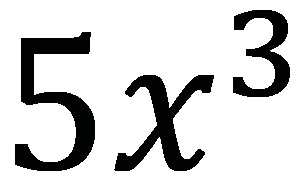
To determine if an expression is a polynomial, check for whole number exponents and count the number of terms.
Multiplying Polynomials
Multiplying Polynomials by Monomials
To multiply a polynomial by a monomial (single term), use the distributive property:
Example:
Multiplying Binomials Using the FOIL Method
When multiplying two binomials, use the FOIL method (First, Outer, Inner, Last) to ensure all terms are multiplied correctly:
First: Multiply the first terms in each binomial.
Outer: Multiply the outer terms.
Inner: Multiply the inner terms.
Last: Multiply the last terms.
Example:
Multiplying Polynomials with More Than Two Terms
For polynomials with more than two terms, distribute each term of the shorter expression to every term of the longer expression, then combine like terms.
Example:
Summary Table: Exponent Rules
Name | Rule | Description |
|---|---|---|
Product Rule | Multiply terms with same base: add exponents | |
Quotient Rule | Divide terms with same base: subtract exponents | |
Zero Exponent Rule | Any nonzero base to zero power is 1 | |
Power Rule | Power to another power: multiply exponents | |
Power of a Product Rule | Distribute exponent to each factor in parentheses |
