 Back
BackMetric Measurement: Length, Area, Volume, Weight, and Temperature
Study Guide - Smart Notes
 Tailored notes based on your materials, expanded with key definitions, examples, and context.
Metric Measurement
Introduction to the Metric System
The metric system, also known as the International System of Units (SI), is a decimal-based system of measurement used worldwide. It is essential for scientific, educational, and everyday applications, providing standardized units for length, area, volume, weight, and temperature. Understanding the metric system allows for easy comparison, conversion, and application of measurements in various contexts.
The Metric System
Units of Measurement in the Metric System
Length: The base unit is the meter (m). Other common units include kilometer (km), centimeter (cm), and millimeter (mm).
Area: The base unit is the square meter (m2).
Volume: The base unit is the cubic meter (m3), but the liter (L) is commonly used for liquids.
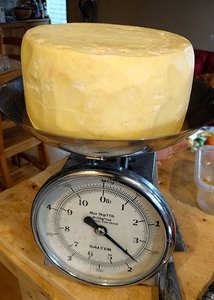
Weight (Mass): The base unit is the gram (g), with kilogram (kg) and milligram (mg) as common multiples.
Temperature: Measured in degrees Celsius (°C).
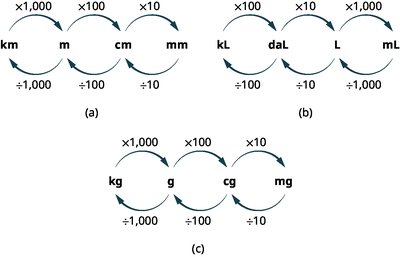
Metric units are related by powers of ten, making conversions straightforward.
Metric Prefixes
Metric prefixes indicate the magnitude of a unit. The most common prefixes are:
Kilo- (k): 1,000 times the base unit
Hecto- (h): 100 times the base unit
Deca- (da): 10 times the base unit
Deci- (d): 0.1 times the base unit
Centi- (c): 0.01 times the base unit
Milli- (m): 0.001 times the base unit
Mnemonic: King Henry Died From Drinking Chocolate Milk helps remember the order from largest to smallest.
Converting Metric Units
Conversions within the metric system use multiplication or division by powers of ten. For example, to convert kilometers to meters, multiply by 1,000; to convert milliliters to liters, divide by 1,000.
Measuring Area
Understanding Area
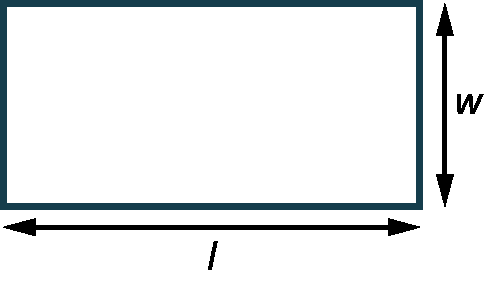
Area measures the size of a surface and is expressed in square units. The area of a rectangle is calculated by multiplying its length by its width:
Converting Units of Area
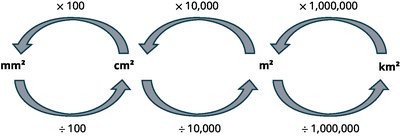
Area conversions are exponential because area is a two-dimensional measure. For example, 1 m2 = 10,000 cm2. Use the following conversion factors:
Application Problems Involving Area
To solve real-world area problems, ensure all measurements are in the same units before applying area formulas. For complex surfaces, subtract areas not included in the calculation.
Measuring Volume
Understanding Volume
Volume measures the space occupied by a three-dimensional object and is expressed in cubic units. The volume of a rectangular prism is:
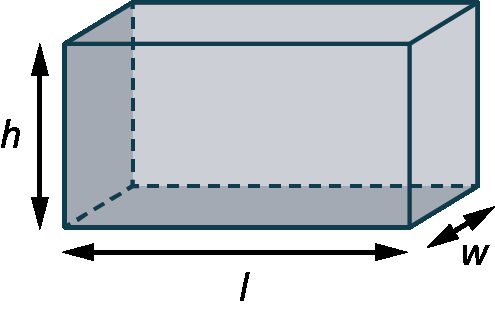
Converting Units of Volume
Volume conversions are also exponential. For example, 1 m3 = 1,000,000 cm3. Use the following conversion factors:
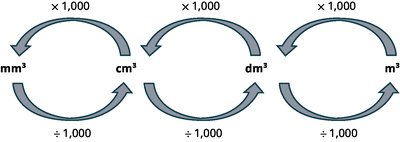
Application Problems Involving Volume
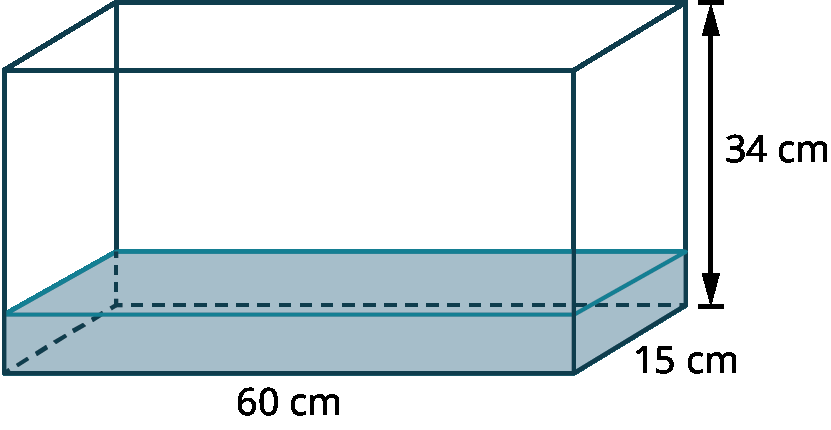
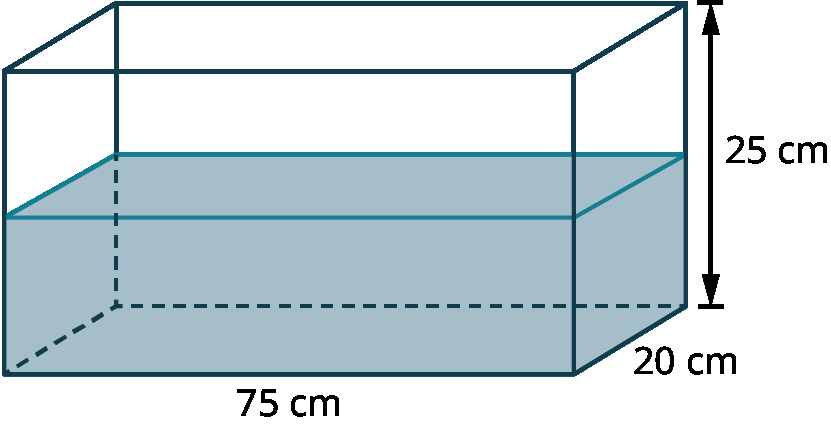
When solving volume problems, ensure all dimensions are in the same units. For liquid volumes, remember that 1 L = 1 dm3 and 1 mL = 1 cm3.
Measuring Weight
Understanding Weight and Mass
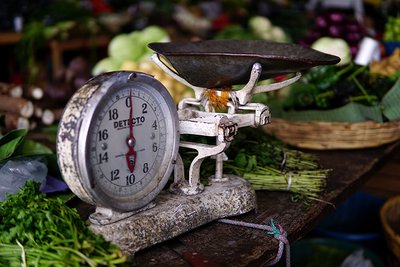
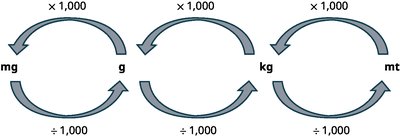
Weight in the metric system is typically measured in grams (g) or kilograms (kg). 1 kg = 1,000 g. The metric ton (mt) is used for very large masses (1 mt = 1,000 kg). In scientific contexts, mass and weight are distinct, but in everyday use, they are often used interchangeably.
Converting Units of Weight
To convert between metric weight units, use multiplication or division by powers of ten. For example, to convert kilograms to grams, multiply by 1,000.
Measuring Temperature
Understanding Temperature
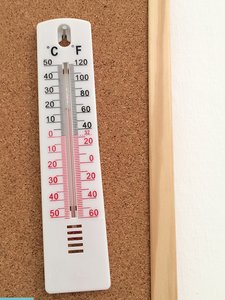
Temperature is a measure of the average kinetic energy of particles in a substance. In the metric system, temperature is measured in degrees Celsius (°C). Water freezes at 0 °C and boils at 100 °C.
Converting Between Fahrenheit and Celsius
To convert from Celsius to Fahrenheit:
To convert from Fahrenheit to Celsius:
Summary Table: Metric Conversion Factors
Quantity | Base Unit | Common Prefixes | Conversion Factor |
|---|---|---|---|
Length | meter (m) | km, cm, mm | 1 km = 1,000 m; 1 m = 100 cm; 1 cm = 10 mm |
Area | square meter (m2) | km2, cm2, mm2 | 1 m2 = 10,000 cm2; 1 km2 = 1,000,000 m2 |
Volume | cubic meter (m3), liter (L) | cm3, mm3, mL | 1 m3 = 1,000 L; 1 L = 1,000 mL; 1 cm3 = 1 mL |
Weight | gram (g) | kg, mg, mt | 1 kg = 1,000 g; 1 g = 1,000 mg; 1 mt = 1,000 kg |
Temperature | degree Celsius (°C) | — | 0 °C = 32 °F; 100 °C = 212 °F |
Additional info: The notes above include expanded academic context, definitions, and examples to ensure completeness and clarity for beginning-intermediate algebra students. All images included are directly relevant to the adjacent explanations and reinforce the educational content.
