 Back
BackStep-by-Step Guidance for Intermediate Algebra Practice Exam (Ch 7, 8)
Study Guide - Smart Notes
 Tailored notes based on your materials, expanded with key definitions, examples, and context.
Q1. Is (4, −1) a solution to the equation ? How many solutions does this equation have?
Background
Topic: Solutions to Linear Equations in Two Variables
This question tests your ability to check whether a given point satisfies a linear equation and to understand the nature of solutions for such equations.
Key Terms and Formulas:
Linear equation in two variables:
Solution: An ordered pair that makes the equation true when substituted.
Step-by-Step Guidance
Substitute and into the equation .
Calculate and simplify the expression.
Compare your result to 9 to determine if is a solution.
Recall that a linear equation in two variables represents a line, which has infinitely many solutions unless it is inconsistent.
Try solving on your own before revealing the answer!
Final Answer:
No, (4, -1) is not a solution. The equation has infinitely many solutions, as it represents a line in the plane.
Substituting gives .
Q2. What does the graph of a linear equation in two variables represent?
Background
Topic: Graphs of Linear Equations
This question is about understanding the geometric meaning of a linear equation in two variables.
Key Terms:
Linear equation: An equation of the form .
Graph: The set of all points that satisfy the equation.
Step-by-Step Guidance
Recall that a linear equation in two variables forms a straight line when graphed.
Think about what each point on the line represents: a solution to the equation.
Consider the infinite nature of the line—every point on the line is a solution.
Try answering on your own before revealing the answer!
Final Answer:
The graph represents the pattern of all the infinite solutions to the equation; it is a straight line in the coordinate plane.
Q3. Graph each linear equation. List the x- and y-intercepts. Use a straightedge. Be exact!
Background
Topic: Graphing Linear Equations and Finding Intercepts
This question tests your ability to graph linear equations and identify their intercepts.
Key Terms and Formulas:
x-intercept: The point where the line crosses the x-axis ().
y-intercept: The point where the line crosses the y-axis ().
Standard form:
Step-by-Step Guidance
For , set to find the x-intercept, and to find the y-intercept.
Solve for and for to get the intercepts.
For , rewrite as (slope-intercept form).
Set to find the y-intercept, and to find the x-intercept.
Plot both lines using the intercepts and a straightedge for accuracy.
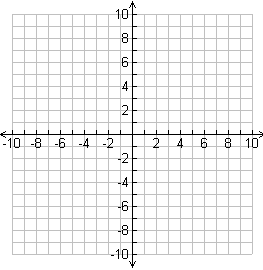
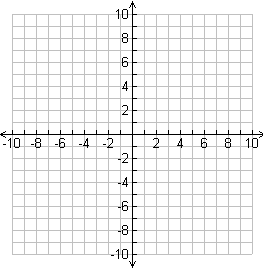
Try graphing and finding the intercepts before checking the answer!
Final Answer:
For : x-intercept , y-intercept . For : x-intercept , y-intercept $(0, 0)$ (the line passes through the origin).
Q4. Find the slope of each line and then determine whether the lines are parallel, perpendicular, or neither. Explain your answer.
Background
Topic: Slopes and Relationships Between Lines
This question tests your ability to find slopes and determine relationships between lines (parallel, perpendicular, or neither).
Key Terms and Formulas:
Slope-intercept form:
Slope (): The rate of change of with respect to .
Parallel lines: Same slope.
Perpendicular lines: Slopes are negative reciprocals.
Step-by-Step Guidance
Rewrite in slope-intercept form by solving for .
Identify the slope from the equation.
Rewrite in slope-intercept form by dividing both sides by 3.
Identify the slope from the equation.
Compare the slopes to determine if the lines are parallel, perpendicular, or neither.
Try finding the slopes and relationship before checking the answer!
Final Answer:
Both lines have a slope of ; the lines are parallel.
