 Back
BackStudy Guide: Developmental Mathematics (Math 0421) Syllabus and Course Overview
Study Guide - Smart Notes
 Tailored notes based on your materials, expanded with key definitions, examples, and context.
Course Overview
Introduction to Developmental Mathematics
This course is designed to support students in developing the skills, strategies, and reasoning needed to succeed in mathematics at the college level. The curriculum covers foundational topics in algebra, including the study of numeracy, real numbers, algebraic operations, notation, and mathematical models. Emphasis is placed on quantitative relationships, mathematical models, and problem solving.
Course Information
Course Title and Description
Course Title: Developmental Mathematics (Math 0421)
Department: Mathematics
Semester Hour Credit: 3
Weekly Contact Hours: 3 (Lecture), 0 (Lab), 0 (External)
Prerequisites/Co-requisites: TSI Requirements
The course catalog description highlights the development of skills in symbolic notation, algebraic concepts, and the use of technology for mathematical modeling and problem solving.
Course Subject Matter Outline
Major Topics Covered
Section 1–8: Exponents and Order of Operations
Chapter 2: Linear Equations and Inequalities in One Variable
Chapter 3: Linear Equations in Two Variables
Chapter 5: Exponents and Polynomials
Chapter 6: Factoring Polynomials
These topics align with the foundational chapters of a beginning-intermediate algebra course, focusing on core algebraic skills and concepts.
Student Learning Outcomes
Key Competencies Developed
Symbolic Notation: Use appropriate symbolic notation and vocabulary to communicate, interpret, and explain mathematical concepts.
Real Numbers: Define, represent, and perform operations on real numbers, applying numeric reasoning to investigate and describe quantitative relationships and solve real-world problems.
Algebraic Reasoning: Solve problems involving ratios, rates, percentages, and proportions using multiple representations.
Expressions and Equations: Manipulate expressions and equations to solve real-world problems.
Data Analysis: Use graphs, tables, and technology to analyze, interpret, and compare data sets. Construct and use mathematical models in various forms to solve problems and make predictions.
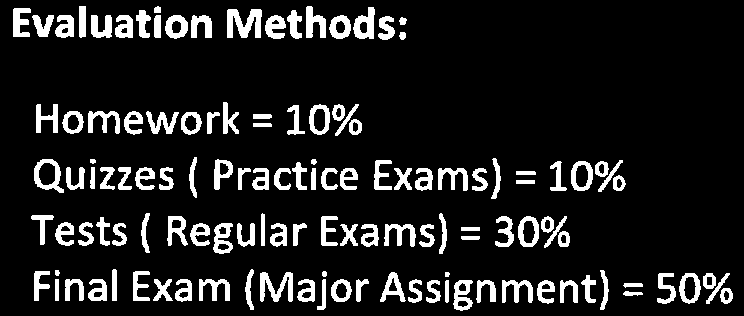
Evaluation Methods and Grading
Assessment Breakdown
Component | Percentage |
|---|---|
Homework | 10% |
Quizzes (Practice Exams) | 10% |
Tests (Regular Exams) | 30% |
Final Exam (Major Assignment) | 50% |
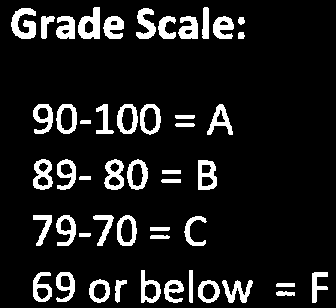
Grade Scale
Score Range | Letter Grade |
|---|---|
90–100 | A |
89–80 | B |
79–70 | C |
69 or below | F |
Required Materials and Technology
Textbook and Tools
Textbook: Introductory and Intermediate Algebra for College Students, Author: Blitzer, Publisher: Pearson, Edition: 5th
Calculator: TI-30X IIS scientific calculator (no higher calculator allowed)
Technology: Desktop or laptop with webcam and microphone, internet access
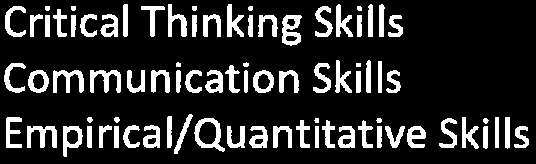
Course Competencies and Skills
General Education and Marketable Skills
Science & Technology Literacy
Analytical Reasoning
Critical Thinking Skills
Communication Skills
Empirical/Quantitative Skills

Course Policies and Support
Attendance, Conduct, and Support Services
Attendance Policy: Refer to individualized instructor policies and college guidelines.
Tutoring Services: Free academic support, including individual and group tutoring, is available to all enrolled students.
Library Resources: Access to the Grady C. Hogue Learning Resource Center and other campus libraries.
Disability Services: Accommodations available for qualified students with disabilities.
Contact Information
Campus Locations and Support
Location | Address | Phone |
|---|---|---|
Beeville | 3800 Charco Road, Beeville, TX 78102 | 1-866-722-2838 |
Alice | 704 Coyote Trail, Alice, TX 78332 | 1-866-891-2981 |
Kingsville | 1814 Brahma Blvd., Kingsville, TX 78363 | 1-866-262-1615 |
Pleasanton | 1411 Bensdale, Pleasanton, TX 78064 | 1-866-361-4222 |

Additional Information
Students are expected to comply with all college policies regarding academic honesty, intellectual property, and classroom conduct.
Further details on course policies, ADA accommodations, and support services are available through the college website and student handbook.
Additional info: This syllabus provides a comprehensive overview of the course structure, requirements, and support resources for students enrolled in Developmental Mathematics. The topics and outcomes align with the foundational chapters of a beginning-intermediate algebra curriculum, preparing students for further study in mathematics.
