Back

Glycogen Metabolism 2 definitions

Control buttons has been changed to "navigation" mode.
1/15
  • Glycogen Phosphorylase

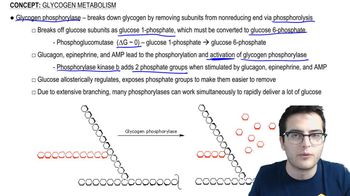
    Enzyme that removes glucose units from glycogen as glucose 1-phosphate, activated by phosphorylation for rapid energy mobilization.
  • Glycogen Synthase

    Enzyme responsible for glycogen synthesis, activated when dephosphorylated, ensuring energy storage during high glucose conditions.
  • Phosphoglucomutase

    Isomerase that interconverts glucose 1-phosphate and glucose 6-phosphate, facilitating both glycogen synthesis and breakdown.
  • Glucose 1-Phosphate

    Phosphorylated glucose released from glycogen, serving as an intermediate for further conversion and energy production.
  • Glucose 6-Phosphate

    Cellular glucose form that can enter glycolysis or be converted for glycogen synthesis, central to carbohydrate metabolism.
  • Phosphorylase Kinase

    Enzyme that adds phosphate groups to glycogen phosphorylase, activating it in response to hormonal signals.
  • Debranching Enzyme

    Protein that transfers sugar units and releases free glucose at branch points, ensuring efficient glycogenolysis.
  • Insulin

    Hormone elevated by high blood glucose, promoting glycogen synthesis and reducing breakdown to maintain energy balance.
  • Glucagon

    Hormone released during low blood glucose, stimulating glycogen breakdown and gluconeogenesis for energy supply.
  • Glycogenolysis

    Process of breaking down glycogen to release glucose, regulated to meet cellular energy demands.
  • Branch Point

    Location in glycogen where chains diverge, providing multiple sites for rapid glucose mobilization.
  • Non-Reducing End

    Terminal region of glycogen where enzymes attach to add or remove glucose units, enabling efficient metabolism.
  • Phosphorylation

    Addition of phosphate groups to enzymes, altering their activity and regulating metabolic pathways.
  • Dephosphorylation

    Removal of phosphate groups from enzymes, often leading to activation or deactivation in metabolic regulation.
  • Futile Cycle

    Simultaneous operation of opposing metabolic pathways, prevented by coordinated enzyme regulation to conserve energy.