Back

Introduction to Biosignaling definitions

Control buttons has been changed to "navigation" mode.
1/18
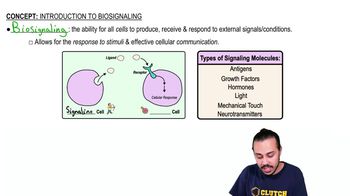
  • Biosignaling

    Cellular communication system enabling detection and response to external stimuli, crucial for maintaining homeostasis and coordinating cell activities.
  • Signal Transduction

    Conversion of extracellular cues into intracellular changes, involving a series of molecular events that culminate in a cell response.
  • Ligand

    Small molecule that binds specifically to a biomolecule, initiating a signaling cascade by forming a complex with a receptor.
  • Receptor

    Integral membrane protein that undergoes conformational change upon ligand binding, triggering downstream signaling events.
  • Target Cell

    Cell possessing the appropriate receptor for a specific ligand, enabling it to respond to signaling molecules.
  • Effector Enzyme

    Protein activated during signal transduction, responsible for generating secondary messengers and propagating the cellular response.
  • Secondary Messenger

    Intracellular molecule produced by effector enzymes, amplifying and distributing the signal within the cell.
  • Specificity

    Feature ensuring that receptors interact only with particular ligands, allowing precise cellular responses.
  • Amplification

    Process where a single receptor-ligand interaction leads to multiple downstream effects, increasing the signal's impact.
  • Modularity

    Characteristic of signaling systems allowing components to be modified, resulting in diverse cellular outcomes.
  • Adaptation

    Ability of signaling systems to adjust responses through feedback regulation, maintaining balance in changing conditions.
  • Integration

    Coordination of multiple signaling pathways to produce a unified and appropriately scaled cellular response.
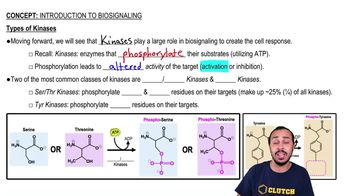
  • Kinase

    Enzyme catalyzing phosphorylation of substrates, altering target protein activity and driving signal transduction.
  • Serine/Threonine Kinase

    Kinase class phosphorylating serine or threonine residues, representing a significant portion of cellular kinases.
  • Tyrosine Kinase

    Kinase class targeting tyrosine residues for phosphorylation, often associated with receptor-mediated signaling.
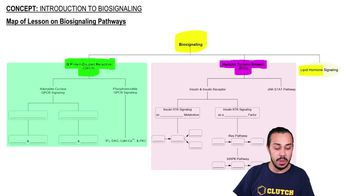
  • G Protein-Coupled Receptor

    Integral membrane protein initiating signaling via association with G proteins, mediating diverse cellular responses.
  • Receptor Tyrosine Kinase

    Membrane receptor with intrinsic kinase activity, triggering phosphorylation cascades upon ligand binding.
  • Lipid Hormone

    Signaling molecule capable of diffusing through membranes, activating intracellular pathways distinct from protein-based receptors.