Back

Primary Active Membrane Transport definitions

Control buttons has been changed to "navigation" mode.
1/15
  • Primary Active Transport

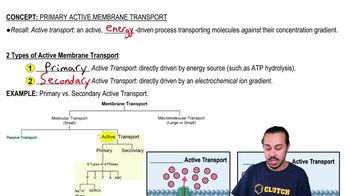
    Direct movement of molecules across membranes against concentration gradients, powered by ATP hydrolysis.
  • ATP Hydrolysis

    Chemical reaction releasing energy from ATP, enabling transport of molecules against their concentration gradient.
  • ATPase

    Enzyme catalyzing ATP hydrolysis, facilitating active transport of molecules across cellular membranes.
  • P-type ATPase

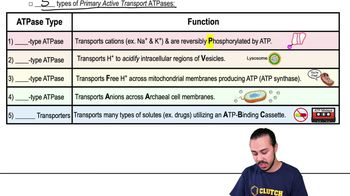
    Transporter reversibly phosphorylated during function, moving cations like sodium and potassium across membranes.
  • V-type ATPase

    Enzyme acidifying vesicles by moving hydrogen ions, crucial for lysosome formation and function in animal cells.
  • F-type ATPase

    Mitochondrial enzyme producing ATP by transporting hydrogen ions, also known as ATP synthase.
  • A-type ATPase

    Transporter moving anions across archaeal cell membranes, distinct from other ATPase types.
  • ABC Transporter

    Protein using an ATP binding cassette to move diverse solutes, including drugs and toxins, across membranes.
  • Electrochemical Gradient

    Difference in ion concentration and charge across a membrane, driving secondary active transport.
  • Cation

    Positively charged ion, such as sodium or potassium, often transported by P-type ATPases.
  • Anion

    Negatively charged ion, transported across archaeal membranes by A-type ATPases.
  • Lysosome

    Acidic vesicle in animal cells, formed and maintained by V-type ATPases, responsible for material recycling.
  • ATP Binding Cassette

    Structural domain in ABC transporters, enabling ATP-driven movement of solutes across membranes.
  • Mitochondrial Membrane

    Cellular barrier where F-type ATPases generate ATP by moving hydrogen ions.
  • Passive Transport

    Movement of molecules across membranes without energy input, following concentration gradients.