Back

Protein Purification definitions

Control buttons has been changed to "navigation" mode.
1/14
  • Protein Purification

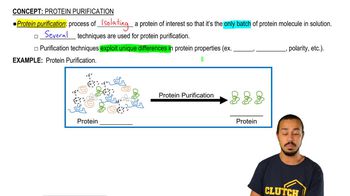
    Process of isolating a single protein from a mixture, exploiting unique differences in properties like size, charge, and affinity.
  • Protein Extraction

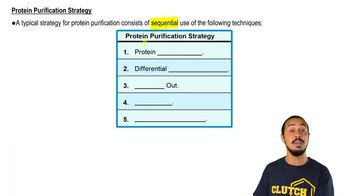
    Initial step where proteins are removed from cells, forming a mixture containing various proteins for further separation.
  • Differential Centrifugation

    Technique using a spinning machine to separate unwanted components based on their physical properties.
  • Salting Out

    Method that utilizes differences in protein solubility to separate proteins from a mixture.
  • Dialysis

    Procedure that removes small molecules and salts from a protein solution, leaving larger proteins behind.
  • Chromatography

    Highly effective technique that separates proteins based on their physical and chemical properties.
  • Binding Affinity

    Characteristic describing how strongly a protein interacts with specific molecules or substrates.
  • Polarity

    Property reflecting the distribution of electrical charge within a protein, influencing its interactions and solubility.
  • Charge

    Attribute of proteins determined by their amino acid composition, affecting separation during purification.
  • Size

    Physical dimension of a protein, often exploited in purification techniques to distinguish between different proteins.
  • Solubility

    Ability of a protein to dissolve in a solution, a key factor in separation methods like salting out.
  • Centrifuge

    Machine that spins samples at high speed to facilitate separation of components based on density.
  • Protein Mixture

    Collection of various proteins present together before purification, requiring separation to isolate the target.
  • Purified Protein

    Final product of purification, consisting of only the protein of interest in solution.