Back

Secondary Active Membrane Transport definitions

Control buttons has been changed to "navigation" mode.
1/15
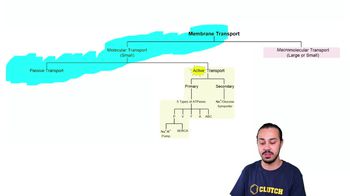
  • Membrane Transport

    Movement of molecules across biological barriers, crucial for cellular homeostasis and nutrient uptake.
  • Passive Transport

    Molecular movement across membranes without energy input, driven by concentration gradients.
  • Active Transport

    Process requiring energy to move molecules against their concentration gradients across membranes.
  • Primary Active Transport

    Direct use of ATP hydrolysis to move molecules from low to high concentration, establishing ion gradients.
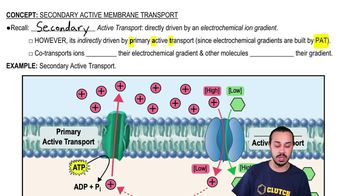
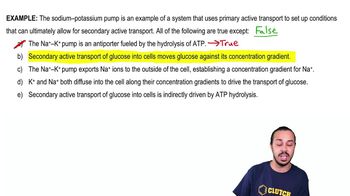
  • Secondary Active Transport

    Utilizes energy from ion gradients, indirectly relying on ATP, to move molecules against their gradients.
  • ATP Hydrolysis

    Chemical reaction releasing energy by breaking phosphate bonds, fueling cellular processes.
  • Electrochemical Gradient

    Combined effect of concentration and electrical charge differences across a membrane, driving ion movement.
  • Co-transport

    Simultaneous movement of two molecules across a membrane, often coupling passive and active processes.
  • Exergonic Process

    Spontaneous reaction releasing energy, such as ions moving down their gradients.
  • Endergonic Process

    Non-spontaneous reaction requiring energy input, like transporting molecules against gradients.
  • Concentration Gradient

    Difference in molecule concentration across a membrane, driving passive or active transport.
  • Sodium-Glucose Symporter

    Protein facilitating simultaneous sodium and glucose transport, exemplifying secondary active transport.
  • Ion Diffusion

    Movement of charged particles across membranes, often down electrochemical gradients.
  • Homeostasis

    Maintenance of stable internal conditions, supported by regulated membrane transport.
  • Amino Acid Transport

    Movement of amino acids across membranes, often requiring energy and specific transport mechanisms.