 Back
Chapter 1: Introduction to Biochemistry – Principles, Molecules, and Cells
Study Guide - Smart Notes
 Tailored notes based on your materials, expanded with key definitions, examples, and context.
Introduction to Biochemistry
Overview of Biochemistry
Biochemistry is the study of the chemical processes and substances that occur within living organisms. It bridges biology and chemistry, focusing on the molecular mechanisms underlying life. - Biochemistry investigates the structure, function, and interactions of biomolecules. - It is foundational for understanding cellular processes, metabolism, and genetic information flow.
Vitalism and the Birth of Modern Biochemistry
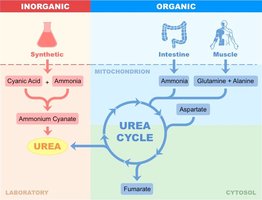
Historically, the doctrine of vitalism claimed that organic molecules could only be synthesized by living systems due to a "vital force." This was disproven by Friedrich Wöhler's synthesis of urea from inorganic compounds, marking the beginning of modern biochemistry. - Vitalism: The belief in a non-physical element required for organic synthesis. - Wöhler's Experiment: Urea was synthesized from ammonium cyanate, showing that organic molecules can be made from inorganic substances. 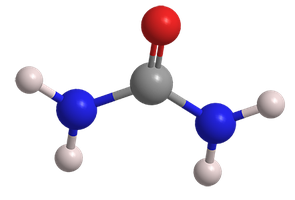
Buchner Experiment and Fermentation
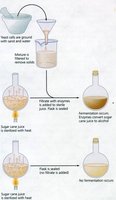
Eduard Buchner demonstrated that fermentation could occur without living yeast cells, identifying the protein zymase as the catalyst. This experiment established that enzymes, not whole cells, drive biochemical reactions. - Fermentation: Conversion of sugars to alcohol by enzymes. - Zymase: The protein responsible for fermenting activity. 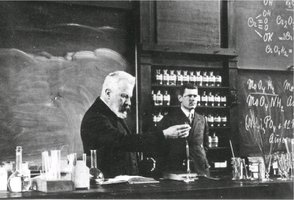
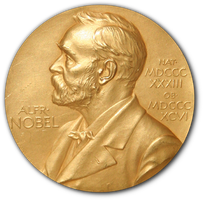
Fermented Foods
Fermented foods are produced by microbial action, often involving enzymes. They are valued for their flavors, preservation, and health benefits. - Examples include kimchi, yogurt, and sauerkraut. 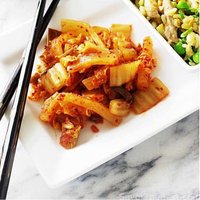
Breakthroughs in Biochemistry
Enzymes as Catalysts
Enzymes are biological catalysts that accelerate chemical reactions in living organisms. They are essential for metabolism and cellular function. - Enzyme: A protein that speeds up biochemical reactions without being consumed. 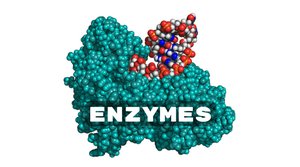
Nucleic Acids as Information Molecules
Nucleic acids (DNA and RNA) store and transmit genetic information. They are polymers of nucleotide monomers. - DNA: Deoxyribonucleic acid, carrier of genetic information. - RNA: Ribonucleic acid, involved in protein synthesis. 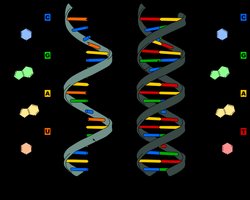
Central Dogma of Protein Synthesis
The central dogma describes the flow of genetic information: DNA is transcribed to RNA, which is translated into protein. - Replication: DNA → DNA - Transcription: DNA → RNA - Translation: RNA → Protein 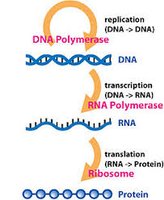
Chemical Elements of Life
Essential Elements
Living cells are composed of a limited set of elements, primarily carbon, hydrogen, nitrogen, oxygen, phosphorus, and sulfur (CHNOPS). - CHNOPS: The six most abundant elements in biomolecules. - Essential ions and trace elements are also required for cellular function.
Biomolecules: Structure and Function
Proteins and Amino Acids
Proteins are polymers of 20 common amino acids, each containing a carboxylate group, amino group, and a unique side chain (R group). - Amino Acid Structure: Central carbon, amino group (-NH2), carboxylate group (-COO-), and side chain (R). - Peptide Bond: Linkage between amino acids forming polypeptides. 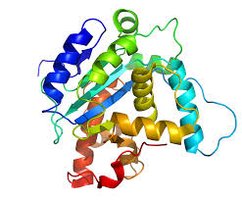
Carbohydrates and Polysaccharides
Carbohydrates are composed of carbon, hydrogen, and oxygen. Polysaccharides are polymers of saccharide monomers, such as glucose and cellulose. - Glycosidic Bond: Connects sugar residues in polysaccharides.
Nucleic Acids
Nucleic acids are polymers of nucleotide monomers, each consisting of a five-carbon sugar, a nitrogenous base, and phosphate group(s). - DNA: Contains deoxyribose, lacks hydroxyl at C-2. - RNA: Contains ribose. - Purines: Adenine (A), Guanine (G) - Pyrimidines: Cytosine (C), Thymine (T), Uracil (U)
Lipids and Membranes
Lipids are hydrophobic molecules rich in carbon and hydrogen. Fatty acids are the simplest lipids and are components of membrane lipids. - Glycerophospholipids: Major constituents of biological membranes. - Lipid Bilayer: Structural basis of cell membranes, with hydrophilic heads and hydrophobic tails.
Energetics and Metabolism
Free Energy and Reaction Direction
The change in free energy () determines whether a reaction will proceed spontaneously. - - Enthalpy (): Heat content of a system. - Entropy (): Measure of disorder. - If , the reaction is spontaneous. - If , the reaction requires energy input.
Cells: The Basic Unit of Life
Prokaryotic vs. Eukaryotic Cells
Cells are classified as prokaryotic or eukaryotic. Prokaryotes lack a nucleus, while eukaryotes possess a membrane-bound nucleus and complex organelles. - Prokaryotes: Bacteria, single-celled, DNA in nucleoid region. - Eukaryotes: Plants, animals, fungi, protists; have nucleus and organelles. 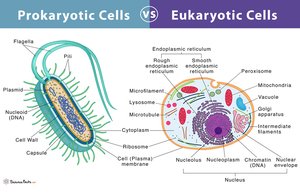
Cellular Organelles
Eukaryotic cells contain specialized organelles: - Nucleus: Contains chromosomes. - Endoplasmic Reticulum: Network for protein and lipid synthesis. - Golgi Apparatus: Modifies and sorts biomolecules. - Mitochondria: Main site of energy transduction in aerobic cells. - Chloroplasts: Site of photosynthesis in plants and algae. 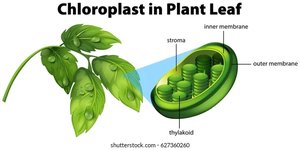
Specialized Vesicles and Cytoskeleton
- Lysosomes: Digestive enzymes. - Peroxisomes: Oxidative reactions. - Vacuoles: Storage of water, ions, nutrients. - Cytoskeleton: Protein scaffold for support and movement; includes actin filaments and microtubules.
Biochemistry and Evolution
Evolutionary Context
Prokaryotes and eukaryotes evolved from a common ancestor. Biochemistry provides insight into evolutionary processes and the molecular basis of life.
Biochemistry as a Multidisciplinary Science
Biochemistry integrates concepts from physics, chemistry, genetics, physiology, cell biology, and evolution to understand the molecular basis of life.
Summary Table: Key Biomolecules
Biomolecule | Monomer | Main Elements | Function |
|---|---|---|---|
Protein | Amino acid | C, H, O, N, S | Catalysis, structure, signaling |
Carbohydrate | Monosaccharide | C, H, O | Energy, structure |
Nucleic Acid | Nucleotide | C, H, O, N, P | Information storage, transfer |
Lipid | Fatty acid | C, H, O | Membranes, energy storage |
Key Equations
Free Energy Change: Molecular Mass (Mr): Central Dogma: DNA RNA Protein ----------------------------------------
