After S phase, what makes up a single chromosome? a. Two daughter chromosomes b. A double-stranded DNA molecule c. Two single-stranded DNA molecules d. Two sister chromatids
Verified step by step guidance
1
Understand the context of the S phase in the cell cycle. The S phase, or synthesis phase, is the part of the cell cycle in which DNA replication occurs, resulting in the duplication of the cell's genetic material.
Recognize that after the S phase, each chromosome consists of two identical copies of DNA. These copies are known as sister chromatids.
Recall that a single chromosome before the S phase is made up of one double-stranded DNA molecule. After the S phase, this molecule is replicated, forming two identical double-stranded DNA molecules.
Identify that these two identical double-stranded DNA molecules are held together at a region called the centromere, forming what is known as sister chromatids.
Conclude that after the S phase, a single chromosome is composed of two sister chromatids, which are identical copies of the original chromosome.
Verified video answer for a similar problem:
This video solution was recommended by our tutors as helpful for the problem above
Video duration:
2m
Play a video:
Was this helpful?
Key Concepts
Here are the essential concepts you must grasp in order to answer the question correctly.
S Phase of the Cell Cycle
The S phase, or synthesis phase, is a part of the cell cycle where DNA replication occurs. During this phase, each chromosome is duplicated, resulting in two identical copies called sister chromatids. These chromatids are crucial for ensuring that each daughter cell receives an exact copy of the genetic material during cell division.
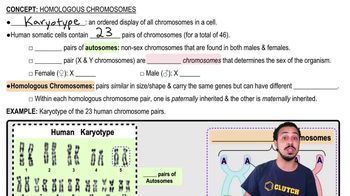
A chromosome is a long DNA molecule with part or all of the genetic material of an organism. After the S phase, each chromosome consists of two sister chromatids, which are identical copies of the original chromosome. These chromatids are joined together at a region called the centromere, forming the characteristic X-shape seen during cell division.
Sister chromatids are the two identical halves of a duplicated chromosome, formed during the S phase of the cell cycle. They are connected by a centromere and are eventually separated during mitosis or meiosis to ensure that each daughter cell receives an identical set of chromosomes. This duplication and separation are essential for genetic consistency across cell generations.