 Back
BackCellular Respiration and Fermentation
 01:53
01:53
Terms in this set (20)
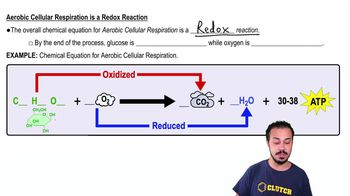
Cellular respiration is the process by which cells convert glucose and oxygen into energy (ATP), carbon dioxide, and water.
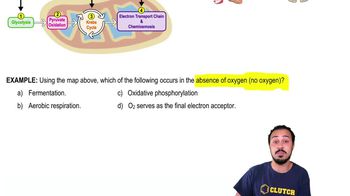
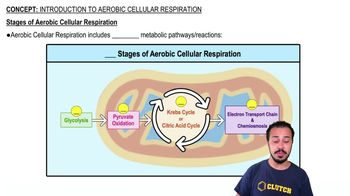
The main stages are glycolysis, the citric acid cycle (Krebs cycle), and oxidative phosphorylation.
Glycolysis occurs in the cytoplasm of the cell.
Glycolysis produces 2 ATP, 2 NADH, and 2 pyruvate molecules per glucose molecule.
Pyruvate enters the mitochondria and is converted to acetyl-CoA to enter the citric acid cycle.
The citric acid cycle is a series of chemical reactions in the mitochondrial matrix that produce NADH, FADH2, and ATP by oxidizing acetyl-CoA.
Per glucose, the cycle produces 6 NADH, 2 FADH2, 2 ATP, and releases 4 CO2.
Oxidative phosphorylation uses electrons from NADH and FADH2 to create a proton gradient that drives ATP synthesis in the mitochondria.
It occurs across the inner mitochondrial membrane.
The ETC transfers electrons from NADH and FADH2 to oxygen, pumping protons to create a gradient for ATP synthesis.
Oxygen is the final electron acceptor, forming water when it combines with electrons and protons.
Approximately 30-32 ATP molecules are produced per glucose molecule.
Fermentation is an anaerobic process that regenerates NAD+ by converting pyruvate into other products, allowing glycolysis to continue without oxygen.
Two common types are lactic acid fermentation and alcoholic fermentation.
Pyruvate is converted into lactic acid, regenerating NAD+ for glycolysis.
Yeasts and some bacteria use alcoholic fermentation, producing ethanol and CO2.
It allows glycolysis to continue producing ATP when oxygen is absent by maintaining the supply of NAD+.
Fermentation yields only 2 ATP per glucose, while cellular respiration yields about 30-32 ATP.
Substrate-level phosphorylation is the direct synthesis of ATP from ADP during glycolysis and the citric acid cycle.
Chemiosmosis is the process where ATP synthase uses a proton gradient to produce ATP during oxidative phosphorylation.