 Back
BackCellular Respiration and Metabolism - General Biology
 01:53
01:53
Terms in this set (28)
Cellular respiration is the process by which cells convert biochemical energy from nutrients into ATP, releasing waste products.
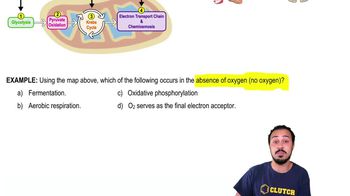
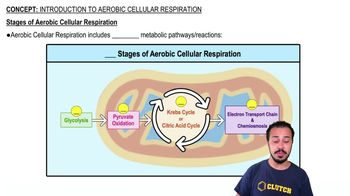
The main stages are glycolysis, the Krebs cycle (citric acid cycle), and oxidative phosphorylation via the electron transport chain.
Glycolysis is the breakdown of glucose into two molecules of pyruvate, producing a net gain of 2 ATP and 2 NADH molecules.
Glycolysis occurs in the cytoplasm of the cell.
Pyruvate is transported into the mitochondria and converted into acetyl CoA, which enters the Krebs cycle.
The Krebs cycle completes the oxidation of organic molecules, producing NADH, FADH2, and ATP by substrate-level phosphorylation.
It takes place in the mitochondrial matrix.
Oxidative phosphorylation couples electron transport to ATP synthesis using a proton gradient across the inner mitochondrial membrane.
The ETC is a series of protein complexes in the inner mitochondrial membrane that transfer electrons and pump protons to create a proton gradient.
Electrons transferred through the ETC provide energy to pump protons from the mitochondrial matrix to the intermembrane space, creating an electrochemical gradient.
Chemiosmosis is the process where protons flow back through ATP synthase, driving the synthesis of ATP from ADP and inorganic phosphate.
ATP synthase is a protein complex that synthesizes ATP using the energy from the proton-motive force generated by the ETC.
ATP production directly from a phosphorylated intermediate transferring a phosphate group to ADP, occurring in glycolysis and the Krebs cycle.
NAD+ and FAD are electron carriers that accept electrons during oxidation reactions, becoming NADH and FADH2.
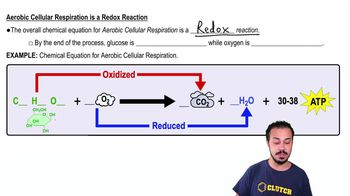
Redox reactions involve the transfer of electrons; oxidation is loss of electrons, and reduction is gain of electrons.
Fermentation is an anaerobic process that regenerates NAD+ by transferring electrons from NADH to organic molecules, allowing glycolysis to continue.
Alcohol fermentation produces ethanol and CO2; lactic acid fermentation produces lactate.
Anaerobic respiration uses an electron transport chain with a final electron acceptor other than oxygen, while fermentation does not use an ETC.
Carbohydrates, fats, and proteins can be broken down into intermediates that enter glycolysis or the Krebs cycle for energy extraction.
The proton-motive force is the electrochemical gradient of protons across the membrane that drives ATP synthesis.
Approximately \(30-32\) ATP molecules are produced per glucose molecule.
It houses the ETC and ATP synthase and maintains the proton gradient essential for ATP production.
Electrons combine with oxygen and protons to form water, the final electron acceptor in aerobic respiration.
Oxygen acts as the final electron acceptor, allowing the ETC to continue functioning and ATP to be produced efficiently.
Cytochromes are electron carriers with heme groups that transfer electrons between complexes in the ETC.
Cells regulate respiration by controlling enzyme activity and substrate availability, adjusting ATP production to demand.
Beta oxidation is the process of breaking down fatty acids into acetyl CoA units that enter the Krebs cycle.
They carry high-energy electrons to the ETC, fueling proton pumping and ATP synthesis.