 Back
BackGeneral Biology: Cellular Processes and Cell Structure
 01:53
01:53
Terms in this set (20)
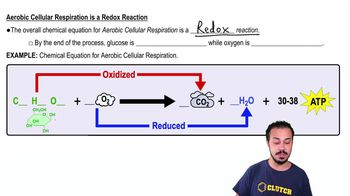
Glucose and oxygen are used to produce carbon dioxide, water, and ATP. The overall reaction converts chemical energy in glucose to usable energy in ATP.
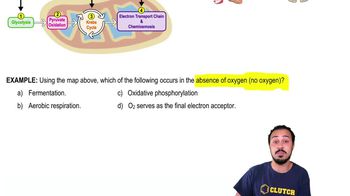
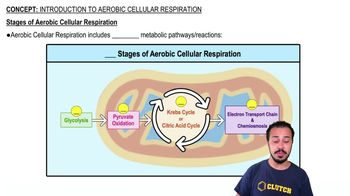
Glycolysis, pyruvate oxidation, citric acid cycle, and oxidative phosphorylation. Each stage uses or produces specific molecules like NADH, FADH2, ATP, CO2, and H+ gradients.
They carry electrons to the electron transport chain, where their energy is used to create a proton gradient for ATP synthesis.
Substrate-level phosphorylation directly forms ATP during glycolysis and the citric acid cycle; oxidative phosphorylation uses the proton gradient from the electron transport chain to produce ATP.
Allows ATP production without oxygen by regenerating NAD+ from NADH, enabling glycolysis to continue. Produces less ATP per glucose than aerobic respiration.
Lactic acid fermentation (e.g., muscle cells, some bacteria) and ethanol fermentation (e.g., yeast).
Uses light energy, water, and CO2 to produce glucose and oxygen. Light reactions produce ATP and NADPH; Calvin cycle uses these to fix carbon into sugars.
Light energy is converted to chemical energy in ATP and NADPH during light reactions, then used to synthesize sugars in the Calvin cycle.
C4 and CAM photosynthesis minimize water loss and photorespiration, advantageous in dry environments compared to C3 photosynthesis.
Prokaryotes lack membrane-bound organelles; eukaryotes have nucleus and organelles like mitochondria and endoplasmic reticulum.
Includes organelles like ER, Golgi apparatus, lysosomes; responsible for protein and lipid synthesis, modification, and transport within the cell.
G1 (growth), S (DNA synthesis), G2 (preparation for mitosis), and M (mitosis). Cells grow, replicate DNA, and divide during these phases.
Prophase: chromosomes condense; Metaphase: chromosomes align; Anaphase: sister chromatids separate; Telophase: nuclei reform; Cytokinesis divides the cell.
Enables growth, tissue repair, and asexual reproduction by producing genetically identical daughter cells.
Involves helicase unwinding DNA, primase laying RNA primers, DNA polymerases synthesizing new strands, ligase joining fragments, and proofreading for errors.
Leading strand is synthesized continuously; lagging strand is synthesized in Okazaki fragments that are later joined.
Protect chromosome ends from degradation and prevent loss of genetic information during replication, especially in germ cells.
Nucleotide triphosphates provide energy for forming phosphodiester bonds during DNA synthesis.
DNA polymerase proofreading and excision repair correct replication errors to maintain genome integrity.
Leads to mutations and diseases like xeroderma pigmentosum, which causes sensitivity to UV light and increased cancer risk.