 Back
BackGeneral Biology - Foundations and Key Concepts
 04:26
04:26
Terms in this set (31)
Unequal sharing of electrons creates a polar covalent bond with partial charges (δ+ and δ−). Equal sharing results in a nonpolar covalent bond.
Each water molecule can form up to four hydrogen bonds (2 as donor, 2 as acceptor), giving it high cohesion, surface tension, and specific heat.
Polar molecules cannot pass the hydrophobic core formed by nonpolar tails; only nonpolar, small molecules cross freely by simple diffusion.
Water enters the cells by osmosis in a hypotonic environment, causing the organism to swell and burst.
Protein may lose function, fail to reach correct location, cause diseases like prions, or fail to bind necessary molecules.
False. Nucleic acids do not have R groups; only amino acids have R groups.
Lysosomal enzymes fold properly only at low pH (~4.5), the acidic environment inside lysosomes.
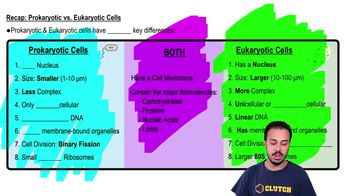
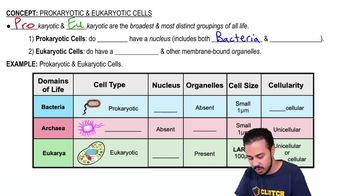
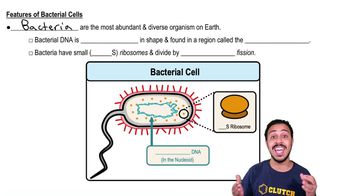
Fimbriae are only found in prokaryotes, so staining them confirms prokaryotic presence.
Fish synthesize more unsaturated phospholipids with kinked tails to maintain membrane fluidity at low temperatures.
Ribosome → Rough ER → Vesicle → Golgi apparatus → Vesicle → Cell exterior.
To oxidize NADH back to NAD⁺, allowing glycolysis to continue producing ATP without oxygen.
Oxygen released comes from splitting water (H₂O), not from CO₂.
ETC creates a proton (H⁺) gradient used by ATP synthase to produce ATP.
GPCR activates a guanine nucleotide exchange factor (GEF) that exchanges GDP for GTP on the G-protein, turning it ON.
A phosphatase removes phosphates from the receptor, deactivating the signal.
PIP₂ is cleaved into DAG (membrane-bound) and IP₃ (releases Ca²⁺ from ER), diverging the signal into two pathways.
Leading strand is synthesized continuously toward the replication fork; lagging strand is synthesized discontinuously away from the fork as Okazaki fragments.
Because DNA polymerase cannot fully replicate the 5' end of the lagging strand; insufficient telomerase activity causes shortening.
Cdks, when bound to cyclins, form an active kinase complex that regulates cell cycle progression.
Crossing over during prophase I and independent assortment during metaphase I.
Autosomal traits show equal phenotype ratios in males and females; sex-linked traits show different ratios between sexes.
Map distance (cM) = (number of recombinant offspring / total offspring) × 100.
General transcription factors bind to the core promoter and recruit RNA polymerase to the correct strand.
Start codon is AUG, which codes for methionine (Met).
A protein release factor binds the A site and hydrolyzes the bond between the polypeptide and tRNA, releasing the protein.
Alternative splicing allows one gene to produce multiple protein isoforms by including or excluding different exons.
A mutation that creates a premature stop codon, resulting in a truncated protein.
A DNA sequence that can be located thousands of base pairs away and increases transcription when bound by transcription factors.
No selection, random mating, no mutation, no migration, and large population size; allele frequencies remain constant.
Random changes in allele frequencies, stronger in small populations, can fix or eliminate alleles and reduce genetic variation.
Geographic barrier formation → genetic divergence → reproductive isolation.