 Back
BackA Tour of the Cell: Structure and Function of Cellular Components
Study Guide - Smart Notes
 Tailored notes based on your materials, expanded with key definitions, examples, and context.
Introduction to the Cell
Overview of Cellular Biology
Cells are the fundamental units of life, forming the basis of all living organisms. The study of cells reveals their complex structure and diverse functions, which are essential for the maintenance and propagation of life.
Microscopes Reveal the World of the Cell
Types of Microscopes and Their Applications
- Light microscopes allow observation of living cells and tissues, providing moderate magnification and resolution. - Electron microscopes (scanning and transmission) offer much greater magnification and resolution, revealing cellular ultrastructure. - Magnification is the increase in an object's image size compared to its actual size. - Resolution is the clarity of an image, or the ability to distinguish two nearby objects as separate. Cell theory states that all living things are composed of cells and all cells arise from pre-existing cells. 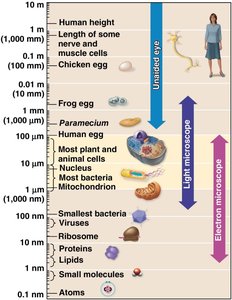
The Small Size of Cells Relates to the Need to Exchange Materials Across the Plasma Membrane
Surface-to-Volume Ratio and Membrane Structure
- Most cells are microscopic to maximize their surface-to-volume ratio, facilitating efficient exchange of materials. - The plasma membrane is a phospholipid bilayer with embedded proteins. - Channel proteins shield ions and hydrophilic molecules as they pass through the hydrophobic membrane center. - Pump proteins use energy to actively transport molecules. 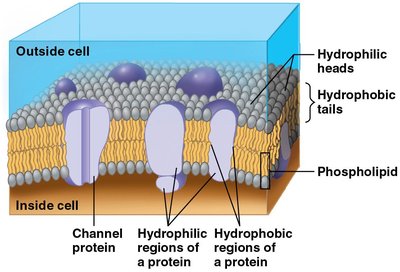
Prokaryotic Cells Are Structurally Simpler Than Eukaryotic Cells
Comparison of Prokaryotic and Eukaryotic Cells
- All cells possess a plasma membrane, DNA, ribosomes, and cytosol. - Bacteria and Archaea are prokaryotic, lacking a membrane-enclosed nucleus and organelles. - Eukaryotic cells (domain Eukarya) have a nucleus and many membrane-bound organelles. - Prokaryotic cells are generally smaller and structurally simpler. 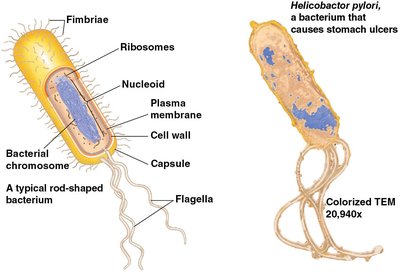
Eukaryotic Cells Are Partitioned into Functional Compartments
Organization of Eukaryotic Cell Structures
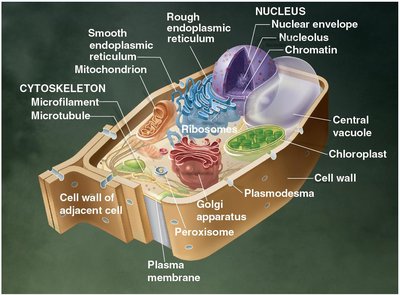
Eukaryotic cells contain membrane-enclosed organelles that compartmentalize cellular activities. These organelles are grouped by function: 1. Nucleus and ribosomes: Genetic control 2. Endoplasmic reticulum, Golgi apparatus, lysosomes, vacuoles, peroxisomes: Manufacture, distribution, and breakdown of molecules 3. Mitochondria and chloroplasts: Energy processing 4. Cytoskeleton, plasma membrane, cell wall: Structural support, movement, and communication 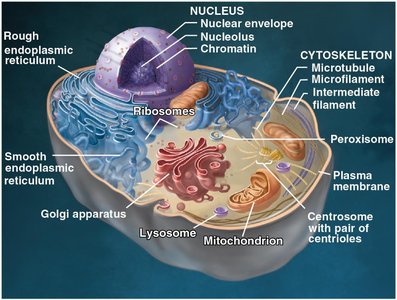
The Nucleus and Ribosomes
The Nucleus Contains the Cell’s Genetic Instructions
- The nucleus houses DNA, which directs protein synthesis via messenger RNA (mRNA). - The nucleolus assembles ribosomal subunits. 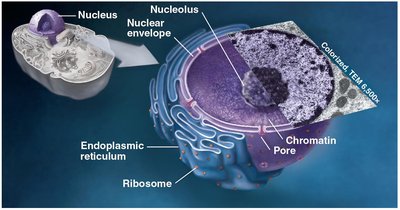
Ribosomes Make Proteins for Use in the Cell and Export
- Ribosomes are composed of ribosomal RNA and proteins. - They synthesize proteins according to instructions from DNA. - Cells with high protein production have numerous ribosomes. 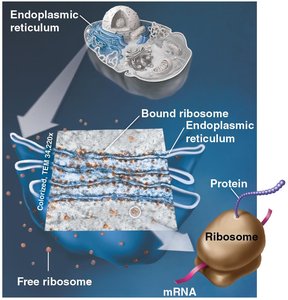
The Endomembrane System
Interconnected Organelles and Their Functions
- The endomembrane system includes the nuclear envelope, endoplasmic reticulum (ER), Golgi apparatus, lysosomes, vacuoles, and plasma membrane. - These organelles interact in the synthesis, distribution, storage, and export of molecules.
The Endoplasmic Reticulum: A Biosynthetic Workshop
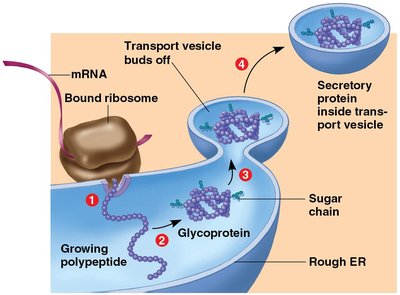
- The ER is a network of tubes and sacs. - Smooth ER synthesizes lipids and processes toxins. - Rough ER produces membranes; ribosomes on its surface make membrane and secretory proteins. 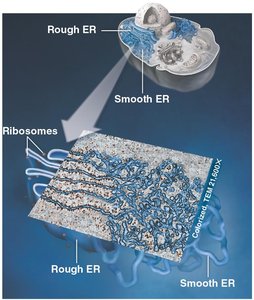
The Golgi Apparatus Modifies, Sorts, and Ships Cell Products
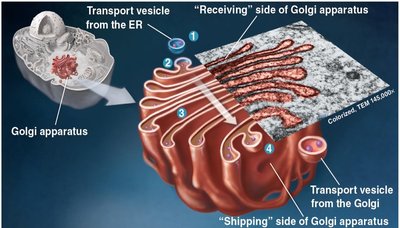
- The Golgi apparatus consists of stacks of sacs where ER products are processed and sent to other organelles or the cell surface. 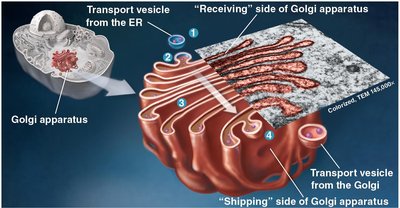
Lysosomes Are Digestive Compartments Within a Cell
- Lysosomes contain enzymes that break down ingested substances and damaged organelles, functioning as the cell's recycling center.
Vacuoles Function in the General Maintenance of the Cell
- Vacuoles are large vesicles with diverse functions. - Some protists have contractile vacuoles; plant cells have a central vacuole for storage and growth.
Review of Structures Involved in Manufacturing and Breakdown
- The organelles of the endomembrane system are interconnected both structurally and functionally. - Peroxisomes are metabolic compartments not derived from the endomembrane system. 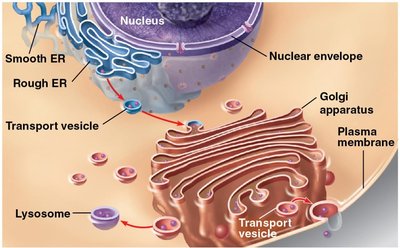
Energy-Converting Organelles
Mitochondria Harvest Chemical Energy from Food
- Mitochondria carry out cellular respiration in eukaryotic cells. - They have two internal compartments: the intermembrane space and the mitochondrial matrix (containing DNA, ribosomes, and enzymes). - Cellular respiration is the process of converting chemical energy from food into ATP. 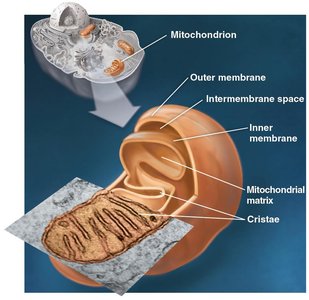
Chloroplasts Convert Solar Energy to Chemical Energy
- Photosynthesis converts light energy into the chemical energy of sugars. - Chloroplasts are the photosynthesizing organelles of plants and algae. 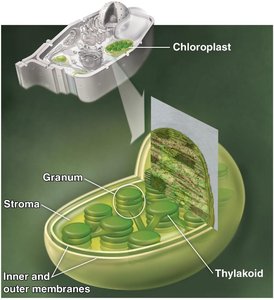
Evolution Connection: Mitochondria and Chloroplasts Evolved by Endosymbiosis
- The endosymbiont theory proposes that mitochondria and chloroplasts originated as prokaryotes living within larger cells. 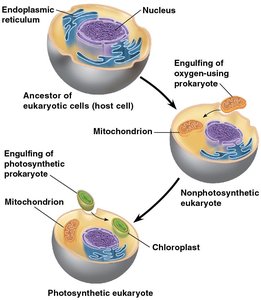
The Cytoskeleton and Cell Surfaces
The Cell’s Internal Skeleton Helps Organize Its Structure and Activities
- The cytoskeleton consists of microfilaments, intermediate filaments, and microtubules. - Functions include maintenance of cell shape, organelle movement, amoeboid movement, and muscle contraction. 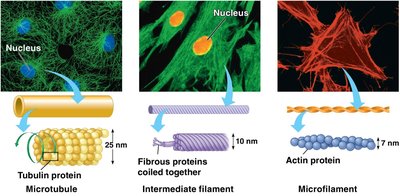
Cilia and Flagella Move When Microtubules Bend
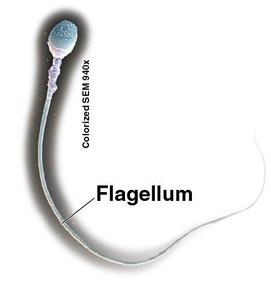
- Cilia and flagella are locomotor appendages made of microtubules in a "9 + 2" arrangement. - Flagella are longer and move with a whiplike motion; cilia move like coordinated oars. 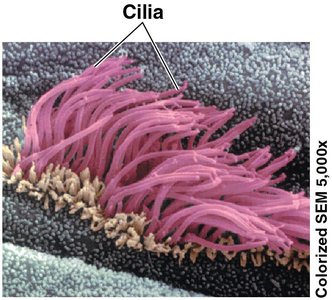
The Extracellular Matrix of Animal Cells Functions in Support and Regulation
- The extracellular matrix (ECM) binds tissue cells, supports the plasma membrane, and communicates with the cytoskeleton. - ECM attaches to cells via glycoproteins and integrins. 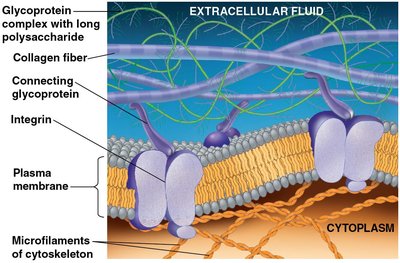
Three Types of Cell Junctions Are Found in Animal Tissues
- Tight junctions bind cells to form leakproof sheets. - Anchoring junctions rivet cells into strong tissues. - Gap junctions allow ions and small molecules to flow between cells.
Cell Walls Enclose and Support Plant Cells
- Plant cells have a rigid cell wall composed primarily of cellulose, providing protection and support. - Plasmodesmata are cell junctions that allow plant tissues to share water, nutrients, and chemical messages.
Review: Eukaryotic Cell Structures Can Be Grouped on the Basis of Four Main Functions
Functional Grouping of Eukaryotic Cell Structures
Eukaryotic cell structures are grouped by function: 1. Genetic control 2. Manufacturing, distribution, and breakdown of materials 3. Energy processing 4. Structural support, movement, and intercellular communication Example: The nucleus and ribosomes control genetic information; the ER and Golgi apparatus manage manufacturing and distribution; mitochondria and chloroplasts process energy; the cytoskeleton and cell wall provide support and communication.
