 Back
BackA Tour of the Cell: Structure, Function, and Membrane Dynamics
Study Guide - Smart Notes
 Tailored notes based on your materials, expanded with key definitions, examples, and context.
Chapter 4: A Tour of the Cell
Introduction to Cells
Cells are the fundamental units of life, forming the basis for all living organisms. The study of cells and their structures is essential for understanding biological processes and the diversity of life forms.
Cell Theory: All living things are composed of cells, and all cells arise from pre-existing cells.
Microscopy: Microscopes are essential tools for studying cells. Light microscopes (LM) use visible light to magnify specimens up to 1,000 times, while electron microscopes (EM) provide much higher resolution for observing subcellular structures.
Key Parameters of Microscopy:
Magnification: Ratio of image size to actual size.
Resolution: Clarity of the image; minimum distance between two distinguishable points.
Contrast: Difference in brightness between parts of the image.
Cell Fractionation: Technique to separate cellular components for functional analysis using centrifugation.
Cell Size and Surface-to-Volume Ratio
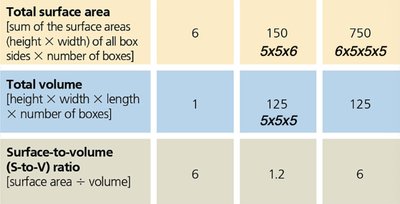
Cell size is limited by the need for efficient exchange of materials with the environment. The surface-to-volume ratio is a critical factor influencing cell function.
Small cells have a higher surface-to-volume ratio, facilitating efficient nutrient uptake and waste removal.
As cells increase in size, volume grows faster than surface area, reducing efficiency.
Small Box | Medium Box | Large Box | |
|---|---|---|---|
Total surface area | 6 | 150 | 750 |
Total volume | 1 | 125 | 125 |
Surface-to-volume ratio | 6 | 1.2 | 6 |
Types of Cells: Prokaryotic vs. Eukaryotic
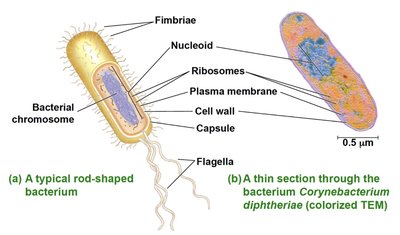
Cells are classified as prokaryotic or eukaryotic based on structural differences.
Prokaryotic Cells: Found in Bacteria and Archaea. Lack a nucleus and membrane-bound organelles. DNA is located in the nucleoid region.
Eukaryotic Cells: Found in protists, fungi, animals, and plants. Possess a nucleus and various membrane-bound organelles.
Generalized Animal and Plant Cells
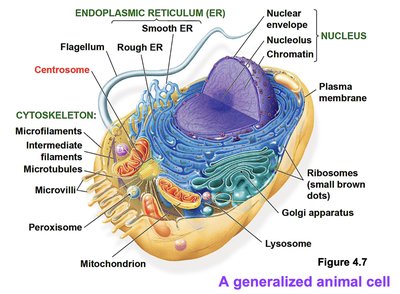
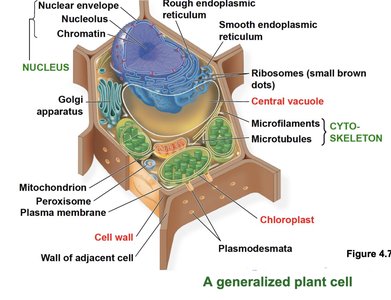
Eukaryotic cells contain specialized organelles that perform distinct functions. Animal and plant cells share many organelles but also have unique features.
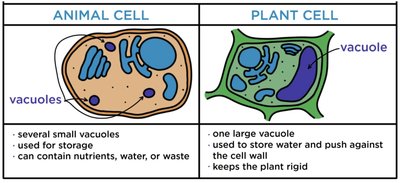
Animal Cells: Contain lysosomes, centrosomes, and small vacuoles.
Plant Cells: Have a cell wall, chloroplasts, and a large central vacuole.
Cellular Organelles and Their Functions
Nucleus
The nucleus is the control center of the cell, containing most of the genetic material (DNA) and directing cellular activities.
Nuclear Envelope: Double membrane with nuclear pores for selective transport.
Chromatin: DNA-protein complex that condenses into chromosomes during cell division.
Nucleolus: Site of ribosomal RNA (rRNA) synthesis.
Ribosomes
Ribosomes are complexes of rRNA and protein that synthesize proteins. They can be free in the cytosol or bound to the endoplasmic reticulum (ER).
Endomembrane System
The endomembrane system includes the nuclear envelope, ER, Golgi apparatus, lysosomes, vacuoles, and plasma membrane. It is involved in synthesis, modification, and transport of cellular materials.
Endoplasmic Reticulum (ER):
Rough ER: Studded with ribosomes; synthesizes proteins and membranes.
Smooth ER: Lacks ribosomes; synthesizes lipids, detoxifies drugs, and stores calcium ions.
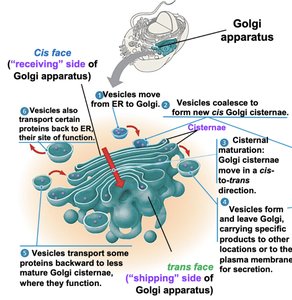
Golgi Apparatus: Modifies, sorts, and packages proteins and lipids for secretion or delivery to other organelles.
Lysosomes and Vacuoles
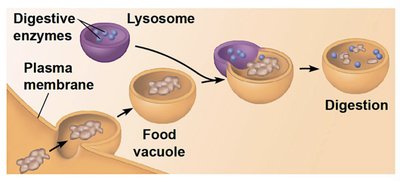
Lysosomes are digestive organelles containing hydrolytic enzymes. Vacuoles are storage organelles with diverse functions in different cell types.
Lysosomes: Digest macromolecules, recycle cellular components (autophagy), and fuse with food vacuoles for intracellular digestion.
Vacuoles:
Central vacuole (plants): Stores water, nutrients, and waste; maintains turgor pressure.
Food vacuoles: Formed by phagocytosis.
Contractile vacuoles: Expel excess water in protists.
Peroxisomes
Peroxisomes are single-membrane organelles involved in lipid metabolism and detoxification. They produce hydrogen peroxide and convert it to water.
Energy-Transforming Organelles
Mitochondria
Mitochondria are the sites of cellular respiration, generating ATP from organic molecules using oxygen. They have a double membrane and their own DNA and ribosomes.
Structure: Outer membrane, highly folded inner membrane (cristae), intermembrane space, and matrix.
Function: ATP production via oxidative phosphorylation.
Chloroplasts
Chloroplasts are found in plants and algae and are the sites of photosynthesis. They contain chlorophyll and have a double membrane.
Function: Convert solar energy into chemical energy (glucose) and produce oxygen.
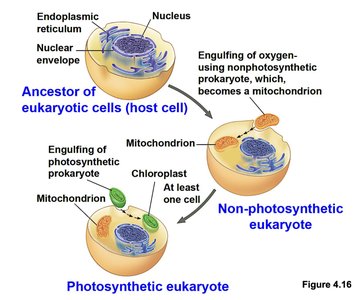
Endosymbiont Theory
This theory proposes that mitochondria and chloroplasts originated as free-living prokaryotes engulfed by ancestral eukaryotic cells, forming a symbiotic relationship.
The Cytoskeleton
Structure and Function
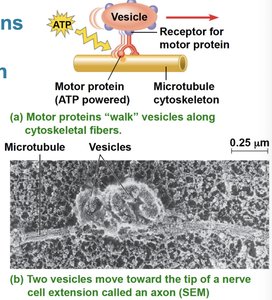
The cytoskeleton is a dynamic network of protein fibers that provides structural support, facilitates cell movement, and organizes cellular components.
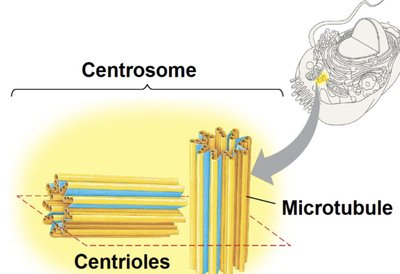
Microtubules: Hollow tubes made of tubulin; maintain cell shape, guide organelle movement, and separate chromosomes during cell division.
Microfilaments (Actin Filaments): Thin rods of actin; support cell shape, enable muscle contraction, and drive cell motility.
Intermediate Filaments: Rope-like fibers; reinforce cell shape and anchor organelles.
Cilia and Flagella
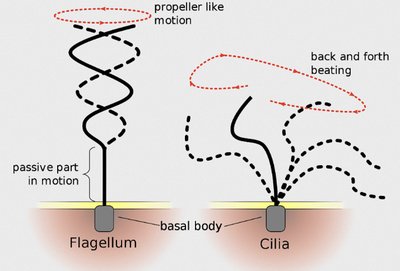
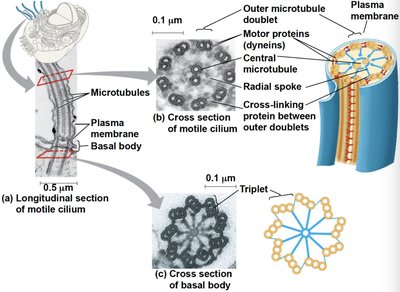
Cilia and flagella are motile structures composed of microtubules. They differ in number and beating patterns but share a common structural arrangement.
Cilia: Short, numerous, move with a back-and-forth motion.
Flagella: Longer, usually one or a few per cell, move with a propeller-like motion.
Cell Junctions and the Extracellular Matrix
Cell Junctions
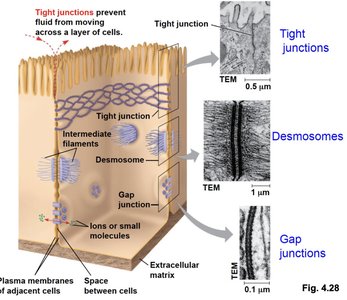
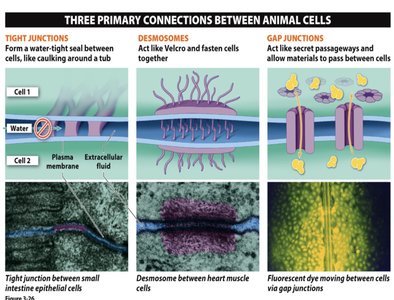
Cell junctions are specialized structures that connect adjacent cells, facilitating communication and maintaining tissue integrity.
Plasmodesmata (plants): Channels that connect plant cells, allowing the passage of water, ions, and small molecules.
Tight Junctions (animals): Form water-tight seals between cells.
Desmosomes (animals): Fasten cells together like Velcro.
Gap Junctions (animals): Allow ions and small molecules to pass between cells for communication.
Extracellular Matrix (ECM)
The ECM is a network of glycoproteins and other molecules outside animal cells that provides structural support and mediates cell signaling.
Main Components: Collagen, proteoglycans, fibronectin.
Integrins: Cell-surface receptors that connect the ECM to the cytoskeleton.
Summary Table: Key Differences Between Prokaryotic and Eukaryotic Cells
Feature | Prokaryotic Cells | Eukaryotic Cells |
|---|---|---|
Nucleus | Absent | Present |
Membrane-bound Organelles | Absent | Present |
Cell Size | Small (1-10 μm) | Larger (10-100 μm) |
Examples | Bacteria, Archaea | Plants, Animals, Fungi, Protists |
