 Back
A Tour of the Cell: Structure and Function of Eukaryotic and Prokaryotic Cells
Study Guide - Smart Notes
 Tailored notes based on your materials, expanded with key definitions, examples, and context.
Chapter 6: A Tour of the Cell
Introduction to Cell Structure and Function
Cells are the fundamental units of structure and function in all living organisms. Understanding the internal organization of cells is essential for grasping how life operates at the microscopic level. Cells are classified as either prokaryotic or eukaryotic, each with distinct structural features and functions.
Comparing Prokaryotic and Eukaryotic Cells
Basic Features of All Cells
Plasma membrane: A selective barrier that regulates the passage of materials.
Cytosol: The semifluid substance within the cell where organelles are suspended.
Chromosomes: Structures that carry genetic information (DNA).
Ribosomes: Complexes that synthesize proteins.
Prokaryotic Cells
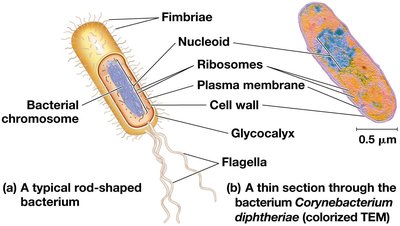
Include Bacteria and Archaea.
Lack a nucleus; DNA is located in a region called the nucleoid.
Do not have membrane-bound organelles.
Have a plasma membrane, cell wall, and ribosomes.
Eukaryotic Cells
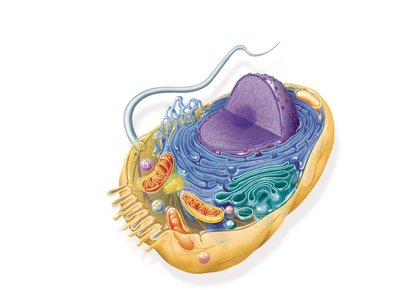
Include Protists, Plants, Animals, and Fungi.
DNA is enclosed within a double-membrane nucleus.
Contain membrane-bound organelles (e.g., mitochondria, endoplasmic reticulum).
Generally larger and more complex than prokaryotic cells.
The Plasma Membrane
Structure and Function
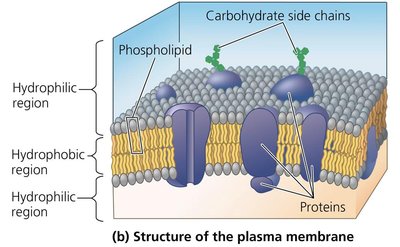
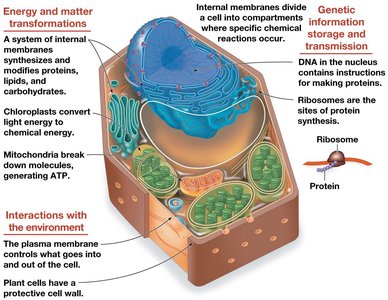
The plasma membrane is a phospholipid bilayer with embedded proteins and carbohydrate side chains. It acts as a selective barrier, allowing the cell to maintain a stable internal environment by regulating the movement of substances in and out.
Phospholipid bilayer: Provides fluidity and flexibility.
Proteins: Serve as channels, receptors, and enzymes.
Carbohydrates: Involved in cell recognition and signaling.
Internal Membranes and Compartmentalization
Membrane-Bound Organelles
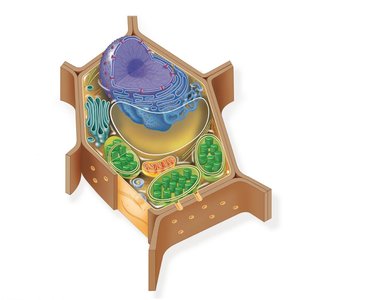
Eukaryotic cells contain internal membranes that divide the cell into compartments, each specialized for specific functions. This compartmentalization allows for greater efficiency and complexity in cellular processes.
Nucleus: Stores genetic information and coordinates cell activities.
Endoplasmic Reticulum (ER): Synthesizes proteins and lipids.
Golgi Apparatus: Modifies, sorts, and packages proteins and lipids.
Lysosomes: Digest and recycle cellular waste.
Vacuoles: Storage and maintenance compartments, especially prominent in plant cells.
Mitochondria: Sites of cellular respiration and ATP production.
Chloroplasts (plants and algae): Sites of photosynthesis.
The Nucleus and Ribosomes
Nucleus: Information Central
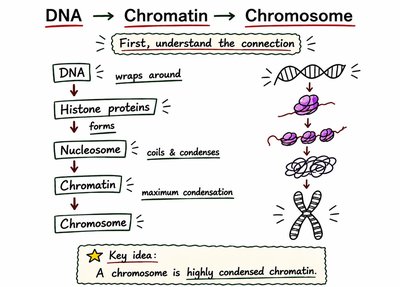
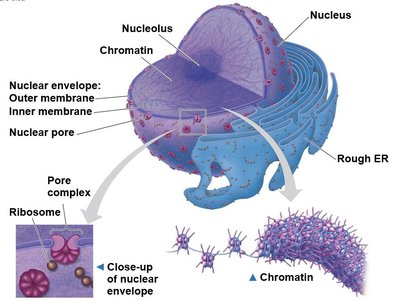
Contains most of the cell's DNA, organized as chromatin.
Surrounded by a double membrane called the nuclear envelope with nuclear pores for molecular transport.
The nucleolus is the site of ribosomal RNA (rRNA) synthesis and ribosome assembly.

Ribosomes: Protein Factories
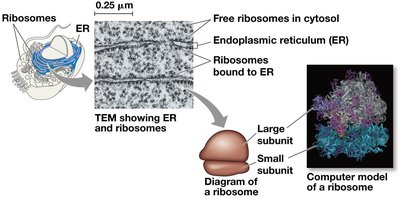
Composed of rRNA and proteins.
Sites of protein synthesis.
Located either free in the cytosol or bound to the rough ER or nuclear envelope.
The Endomembrane System
Components and Functions
The endomembrane system is a network of membranes inside eukaryotic cells that regulates protein traffic and performs metabolic functions.
Nuclear envelope
Endoplasmic reticulum (ER): Rough ER (with ribosomes) synthesizes proteins; Smooth ER synthesizes lipids and detoxifies chemicals.
Golgi apparatus: Modifies and ships proteins and lipids.
Lysosomes: Contain digestive enzymes for breaking down macromolecules.
Vacuoles: Storage and maintenance compartments.
Plasma membrane

Endoplasmic Reticulum (ER)
Rough ER: Studded with ribosomes; synthesizes and processes proteins.
Smooth ER: Lacks ribosomes; synthesizes lipids, metabolizes carbohydrates, detoxifies drugs, and stores calcium ions.

Golgi Apparatus
Receives proteins and lipids from the ER.
Modifies, sorts, and packages them for delivery to various destinations.
Lysosomes
Membrane-bound sacs containing hydrolytic enzymes.
Digest materials taken in by phagocytosis and recycle cellular components via autophagy.
Vacuoles
Large vesicles derived from the ER and Golgi apparatus.
Types include food vacuoles (digestion), contractile vacuoles (water balance), and central vacuoles (storage and growth in plants).

Mitochondria and Chloroplasts: Energy Conversion
Mitochondria
Sites of cellular respiration, generating ATP from organic molecules.
Enclosed by a double membrane; inner membrane folded into cristae.
Contain their own DNA and ribosomes, supporting the endosymbiont theory.
Chloroplasts
Sites of photosynthesis in plants and algae.
Enclosed by a double membrane; contain thylakoids stacked into grana.
Also contain their own DNA and ribosomes.
Endosymbiont Theory
This theory proposes that mitochondria and chloroplasts originated as free-living prokaryotes that were engulfed by ancestral eukaryotic cells, forming a symbiotic relationship.
Evidence: Double membranes, own DNA, own ribosomes, independent replication.
The Cytoskeleton
Structure and Function
The cytoskeleton is a network of protein fibers that provides structural support, maintains cell shape, and facilitates cell movement and intracellular transport.
Microtubules: Hollow rods made of tubulin; involved in cell shape, organelle movement, and chromosome separation during cell division.
Microfilaments (Actin filaments): Thin rods made of actin; support cell shape, enable movement, and drive cytoplasmic streaming.
Intermediate filaments: Rope-like fibers; provide mechanical support and anchor organelles.
Extracellular Components and Cell Connections
Plant Cell Walls
Located outside the plasma membrane; composed mainly of cellulose.
Provide structural support, protection, and shape to plant cells.
Extracellular Matrix (ECM) of Animal Cells
Network of proteins (e.g., collagen) and carbohydrates outside animal cells.
Provides support and helps regulate cell behavior.
Cell Junctions
Tight junctions: Seal neighboring cells together to prevent leakage.
Desmosomes: Anchor cells together for mechanical stability.
Gap junctions: Allow communication between animal cells.
Plasmodesmata: Channels between plant cells for transport and communication.
Integration of Cellular Functions
Coordination Among Organelles
Organelles in eukaryotic cells have specialized functions but work together as an integrated system. For example, the process of protein secretion involves the nucleus, ribosomes, rough ER, Golgi apparatus, vesicles, and the plasma membrane.
Summary Table: Comparison of Prokaryotic and Eukaryotic Cells
Feature | Prokaryotic Cells | Eukaryotic Cells |
|---|---|---|
Nucleus | Absent (DNA in nucleoid) | Present (DNA in nucleus) |
Membrane-bound organelles | Absent | Present |
Cell size | Generally smaller | Generally larger |
Examples | Bacteria, Archaea | Protists, Plants, Animals, Fungi |
