 Back
A Tour of the Cell: Structure and Function of Cellular Components
Study Guide - Smart Notes
 Tailored notes based on your materials, expanded with key definitions, examples, and context.
The Fundamental Units of Life
Introduction to Cells
All living organisms are composed of cells, which are the simplest units of life. Cells share common features but can differ greatly in structure and function. - Cell Theory: All organisms are made of cells; all cells arise from pre-existing cells. - Cell Diversity: Cells vary in size, shape, and function, but all have basic structural components.
Types of Cells
Prokaryotic vs. Eukaryotic Cells
Cells are classified as either prokaryotic or eukaryotic based on their internal structure. - Prokaryotic cells: Found in Bacteria and Archaea; lack a nucleus and membrane-bound organelles. - Eukaryotic cells: Found in Protists, Plants, Animals, and Fungi; have a nucleus and membrane-bound organelles.
Basic Features of All Cells
- Plasma membrane: Surrounds the cell, controlling entry and exit of substances. - Cytosol: Semifluid substance inside the cell. - Chromosomes: Carry genetic information. - Ribosomes: Synthesize proteins.
Prokaryotic Cell Structure
Prokaryotic cells lack a nucleus and membrane-bound organelles. Their DNA is located in the nucleoid region. - Nucleoid: Region where DNA is found, not enclosed by a membrane. - Cell wall: Provides structural support and protection. - Plasma membrane: Controls movement of substances. - Ribosomes: Sites of protein synthesis. - Flagella and fimbriae: Used for movement and attachment. 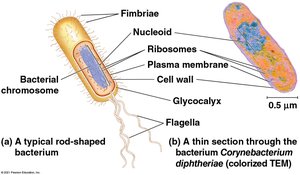
Eukaryotic Cell Structure
Eukaryotic cells are larger and more complex, with compartmentalized functions. - Nucleus: Contains DNA, surrounded by a double membrane. - Membrane-bound organelles: Specialized structures for various functions. - Cytoplasm: Region between plasma membrane and nucleus. 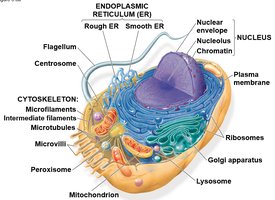
Cell Membrane Structure and Function
Plasma Membrane
The plasma membrane is a selective barrier, allowing passage of oxygen, nutrients, and waste. - Phospholipid bilayer: Composed of hydrophilic heads and hydrophobic tails. - Proteins: Embedded in the membrane, serve as channels, receptors, and enzymes. - Carbohydrate side chains: Involved in cell recognition. 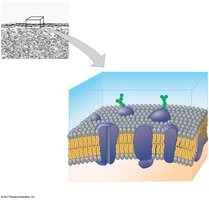
Surface Area to Volume Ratio
The surface area to volume ratio is critical for cell function, affecting the rate of exchange of materials. - Smaller cells: Have a higher surface area to volume ratio, facilitating efficient exchange. - Metabolic requirements: Set upper limits on cell size. 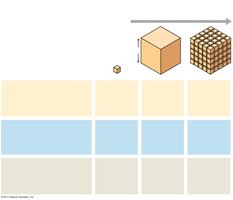
Nucleus and Ribosomes
Nucleus
The nucleus houses most of the cell's genetic material and is surrounded by a double membrane called the nuclear envelope. - Nuclear envelope: Double membrane with nuclear pores for transport. - Chromatin: DNA and associated proteins. - Nucleolus: Site of ribosomal RNA synthesis. 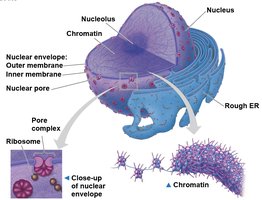
Ribosomes
Ribosomes are complexes of RNA and protein that synthesize proteins. - Free ribosomes: Located in cytosol, synthesize proteins for use within the cell. - Bound ribosomes: Attached to endoplasmic reticulum or nuclear envelope, synthesize proteins for export or membrane insertion. 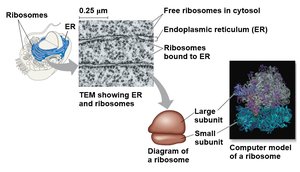
The Endomembrane System
Components of the Endomembrane System
The endomembrane system regulates protein traffic and performs metabolic functions. - Nuclear envelope - Endoplasmic reticulum (ER): Smooth and rough regions. - Golgi apparatus - Lysosomes - Vacuoles - Plasma membrane
Endoplasmic Reticulum (ER)
The ER is a biosynthetic factory with two distinct regions: - Smooth ER: Lacks ribosomes; synthesizes lipids, metabolizes carbohydrates, detoxifies drugs, stores calcium ions. - Rough ER: Studded with ribosomes; synthesizes proteins, distributes transport vesicles, produces membranes. 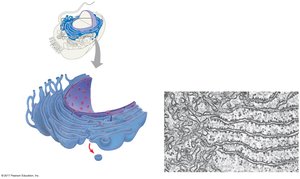
Golgi Apparatus
The Golgi apparatus modifies, sorts, and packages proteins and other products from the ER. - Cisternae: Flattened membranous sacs. - cis face: Receiving side. - trans face: Shipping side. 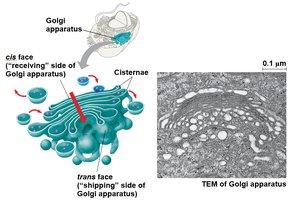
Lysosomes
Lysosomes are membranous sacs containing hydrolytic enzymes for digestion. - Phagocytosis: Digestion of ingested material. - Autophagy: Breakdown of damaged organelles. 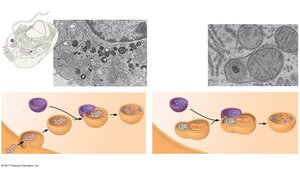
Vacuoles
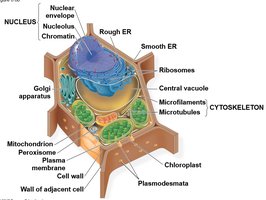
Vacuoles are large vesicles with diverse functions, including storage, waste disposal, and maintaining cell shape. - Central vacuole: Found in plant cells, stores water and maintains turgor pressure. 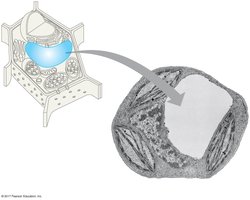
Endomembrane System Review
The endomembrane system is interconnected, facilitating the transport and processing of cellular products. 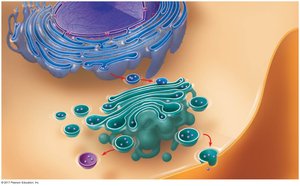
Mitochondria and Chloroplasts
Mitochondria
Mitochondria are the sites of cellular respiration, converting oxygen and nutrients into ATP. - Double membrane: Inner membrane has infoldings called cristae. - Matrix: Contains mitochondrial DNA and ribosomes. 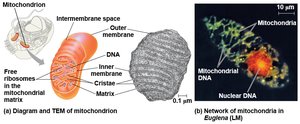
Chloroplasts
Chloroplasts are found in plants and algae and are the sites of photosynthesis. - Double membrane: Contains stroma and thylakoid membranes. - Grana: Stacks of thylakoids. 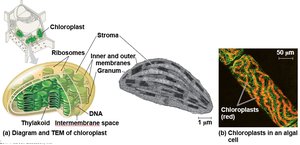
The Cytoskeleton
Structure and Function
The cytoskeleton is a network of fibers that organizes cell structure and activities. - Microfilaments, intermediate filaments, microtubules: Provide support, shape, and motility. 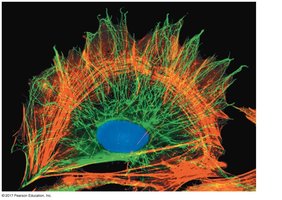
Support and Motility
The cytoskeleton interacts with motor proteins to produce movement. - Vesicle transport: Vesicles move along cytoskeletal tracks. 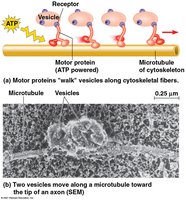
Extracellular Components and Cell Connections
Plant Cell Walls
Plant cells have rigid cell walls made of cellulose, providing structural support. - Primary and secondary cell walls: Layers for strength and flexibility. - Plasmodesmata: Channels for communication between cells. 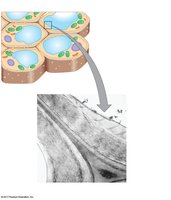
Extracellular Matrix (ECM) of Animal Cells
The ECM is composed of glycoproteins like collagen, proteoglycans, and fibronectin, providing structural and biochemical support. - Integrins: Membrane proteins that connect the ECM to the cytoskeleton. 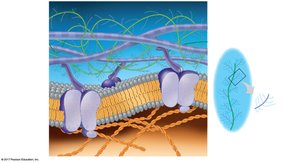
Cell Junctions in Animal Cells
Animal cells are connected by specialized junctions: - Tight junctions: Prevent fluid movement between cells. - Desmosomes: Provide mechanical strength. - Gap junctions: Allow passage of ions and small molecules. 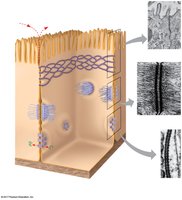
Summary Table: Cell Components and Functions
Major Cell Components
Cell Component | Structure | Function |
|---|---|---|
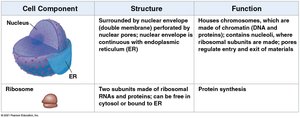
Nucleus | Surrounded by double membrane with pores; contains chromatin and nucleolus | Houses chromosomes; site of rRNA synthesis |
Ribosome | Two subunits made of rRNA and protein; free or bound | Protein synthesis |
Mitochondrion | Double membrane; inner membrane with cristae | Cellular respiration |
Chloroplast | Double membrane; contains thylakoids and stroma | Photosynthesis |
Peroxisome | Single membrane; contains enzymes | Breakdown of hydrogen peroxide |
Endoplasmic Reticulum | Network of membranous tubules; smooth and rough regions | Lipid synthesis, protein synthesis, detoxification |
Golgi Apparatus | Stacks of cisternae | Modification, sorting, packaging of proteins |
Lysosome | Membranous sac of enzymes | Digestion of macromolecules |
Vacuole | Large membrane-bound vesicle | Storage, waste disposal, growth |
Conclusion
Understanding cell structure and function is fundamental to biology. The compartmentalization of eukaryotic cells allows for specialized functions, while prokaryotic cells demonstrate the basic requirements for life. The plasma membrane, organelles, cytoskeleton, and extracellular components all contribute to the complexity and efficiency of cellular life.
