 Back
A Tour of the Cell: Structure, Diversity, and Function
Study Guide - Smart Notes
 Tailored notes based on your materials, expanded with key definitions, examples, and context.
Chapter 4: A Tour of the Cell
Introduction to Cells
Cells are the fundamental units of life, forming the basis of all living organisms. This chapter explores the diversity of cell types, their structures, and the functional implications of cellular organization.
General Features and Structures Common to All Cells
Universal Cellular Components
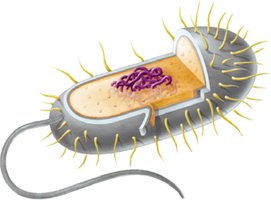
DNA: Stores genetic information necessary for cell function and inheritance.
Plasma Membrane: A phospholipid bilayer that encloses the cell, regulating the movement of substances in and out.
Cytosol: The fluid matrix inside the cell where metabolic reactions occur.
Ribosomes: Molecular machines that synthesize proteins by translating genetic information.
Flagella (optional): Structures that provide motility to some cells.
These features are highly conserved across all domains of life, reflecting their essential roles in cellular function.
Categories of Cells: Prokaryotes and Eukaryotes
Prokaryotic Cells
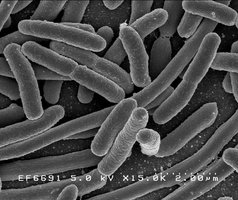
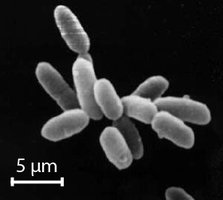
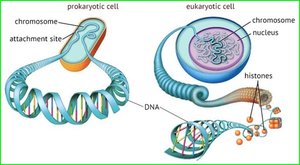
Prokaryotes include organisms in the domains Bacteria and Archaea. They are characterized by their simple structure and lack of membrane-bound organelles.
Typically single-celled and smaller than eukaryotes.
DNA is organized as a single, circular chromosome located in the nucleoid region.
Most have a rigid cell wall and may possess a protective capsule.
Some have flagella for movement.
Eukaryotic Cells
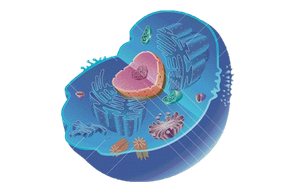
Eukaryotes include protists, fungi, plants, and animals. Their cells are generally larger and more complex than prokaryotes, containing numerous membrane-bound organelles.
DNA is organized into linear chromosomes within a membrane-bound nucleus.
Contain organelles such as mitochondria, endoplasmic reticulum, Golgi apparatus, and (in plants) chloroplasts.
May be single-celled or multicellular.
Comparing Prokaryotic and Eukaryotic Cells
Key Differences and Similarities
Feature | Prokaryotes | Eukaryotes |
|---|---|---|
Size | Smaller | Larger |
Cellularity | Single-celled | Single- or multicellular |
Chromosomes | Circular | Linear |
Nucleus | Absent (nucleoid region) | Present (membrane-bound) |
Membrane-bound organelles | Absent | Present |
Cell wall | Most have | Some have |
Types of Eukaryotic Cells: Animal vs. Plant Cells
Animal Cells
Contain lysosomes, centrosomes, and sometimes microvilli.
Have many small vacuoles.
Lack a cell wall and chloroplasts.
Plant Cells
Have a rigid cell wall, chloroplasts for photosynthesis, and a large central vacuole.
Lack lysosomes and centrosomes.
Shared Features
Both have a plasma membrane, nucleus, mitochondria, endoplasmic reticulum, Golgi apparatus, ribosomes, cytoskeleton, and peroxisomes.
Surface-Area-to-Volume Ratio (SAV Ratio)
Importance in Cell Structure and Function
The surface-area-to-volume ratio (SAV) is a critical factor influencing cell size and shape. It determines the efficiency of material exchange between the cell and its environment.
Surface Area: Affects the rate at which substances can enter or leave the cell.
Volume: Determines the amount of metabolic activity the cell can support.
Cells with a higher SAV ratio (e.g., irregular, folded shapes) are more efficient at exchanging materials.
As cells grow larger, their SAV ratio decreases, limiting their size and function.
Mathematically, the SAV ratio is expressed as:
Major Organelles and Their Functions
Key Eukaryotic Organelles
Nucleus: Stores genetic material and coordinates cell activities.
Ribosomes: Synthesize proteins.
Endomembrane System: Includes the endoplasmic reticulum, Golgi apparatus, vesicles, and lysosomes; involved in protein and lipid transport and metabolism.
Mitochondria: Site of cellular respiration, converting glucose and oxygen into ATP, water, and carbon dioxide.
Chloroplasts (in plants): Site of photosynthesis, converting light energy, carbon dioxide, and water into glucose and oxygen.
Cytoskeleton: Provides structural support and facilitates cell movement.
Cell Wall (in plants, fungi, and some protists): Provides rigidity and protection.
Energy Conversion: Mitochondria and Chloroplasts
Mitochondria
Mitochondria are the powerhouses of the cell, converting chemical energy from glucose and oxygen into ATP through cellular respiration.
Equation for cellular respiration:
Chloroplasts
Chloroplasts are found in plant cells and some protists. They capture light energy to synthesize glucose from carbon dioxide and water through photosynthesis.
Equation for photosynthesis:
Practice and Application
Identify which structures are found in all cells (DNA, plasma membrane, ribosomes, cytosol).
Predict the presence of organelles in different cell types based on their function and evolutionary history.
Apply the concept of SAV ratio to real-world problems, such as designing efficient containers or understanding cell adaptations.
Summary Table: Features of Prokaryotic and Eukaryotic Cells
Feature | Prokaryotic Cells | Eukaryotic Cells |
|---|---|---|
DNA Location | Nucleoid (no membrane) | Nucleus (membrane-bound) |
Chromosome Structure | Circular | Linear |
Organelles | Absent | Present |
Cell Wall | Most have | Some have |
Size | Small | Large |
