 Back
BackAbsorption Rates and Enzyme Activity in Digestion
Study Guide - Smart Notes
 Tailored notes based on your materials, expanded with key definitions, examples, and context.
Absorption and Enzyme Activity in Digestion
Rate of Absorption
The rate of absorption refers to how quickly nutrients, such as glucose, are taken up from the digestive tract into the bloodstream. This rate is important for understanding nutrient availability and metabolic responses.
Formula: Rate = amount absorbed ÷ time
Units: Commonly expressed as grams per hour (g h−1) or milligrams per minute (mg min−1).
Example Calculation: If 18 g of glucose is absorbed in 3 hours, the rate is 6 g h−1.
Practice Example: 24 g glucose absorbed in 4 hours: Rate = 24 ÷ 4 = 6 g h−1.
Factors Affecting Absorption
Several factors influence the rate at which nutrients are absorbed in the digestive system:
Surface Area (Villi): Increased surface area in the intestines (due to villi and microvilli) enhances absorption efficiency.
Nutrient Type: Different nutrients (e.g., carbohydrates, proteins, fats) are absorbed at different rates.
Gut Movement: Peristalsis and segmentation mix contents and move them along the gut, affecting absorption speed.
Intestinal Health: Healthy mucosa and absence of disease promote optimal absorption.
Rate of Enzyme Action: Faster enzymatic breakdown of food increases the availability of absorbable molecules.
Calculating Absorption and Concentration Rates
Absorption Rate:
Concentration Rate:
Percentage Absorbed:
Example: If concentration increases from 3.0 to 5.5 mmol dm−3 in 10 min, rate = (5.5 − 3.0) ÷ 10 = 0.25 mmol dm−3 min−1.
Example: 45 g absorbed from 60 g: Percentage = (45 ÷ 60) × 100 = 75%.
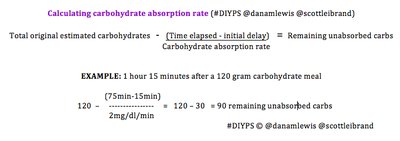
Carbohydrate Absorption Rate Calculation
To determine the rate at which carbohydrates are absorbed, the following formula is used:
Formula:
Example: After a 120 g carbohydrate meal, 1 hour 15 minutes later (75 min), with an initial delay of 15 min and an absorption rate of 2 mg/dl/min:
Time for absorption = 75 min − 15 min = 60 min
Absorbed = 2 mg/dl/min × 60 min = 120 mg/dl
Remaining unabsorbed = 120 g − 30 g = 90 g
Additional info: This calculation is useful in clinical and nutritional studies to estimate how much carbohydrate remains unabsorbed at a given time after a meal.
Enzyme Activity and Its Regulation
Factors Affecting Enzyme Activity
Enzymes are biological catalysts that speed up chemical reactions, including the breakdown of nutrients for absorption. Their activity is influenced by several factors:
Temperature: Each enzyme has an optimum temperature; too high or too low temperatures reduce activity.
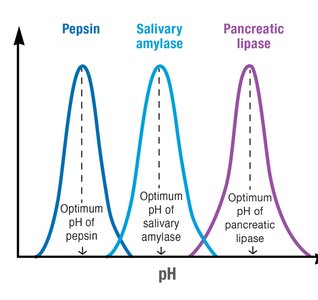
pH: Enzymes function best at specific pH values. For example, pepsin works best in acidic conditions, while pancreatic lipase prefers alkaline conditions.
Substrate Concentration: Increasing substrate concentration increases enzyme activity up to a saturation point.
Enzyme Concentration: Higher enzyme concentrations generally increase reaction rates, provided substrate is not limiting.
Link Between Enzyme Action and Absorption
Faster enzyme action leads to more rapid production of small, absorbable molecules, which in turn increases the rate of nutrient absorption. Efficient digestion and absorption are therefore closely linked to optimal enzyme activity.
Practice Problems: Enzyme and Absorption Calculations
Enzyme Rate:
Example: 40 mg product formed in 20 minutes: Rate = 40 ÷ 20 = 2 mg min−1.
Additional info: Understanding these calculations is essential for interpreting laboratory and clinical data related to digestion and metabolism.
