 Back
BackAcid-Base Equilibria: Mini-Textbook Study Guide for Biology Students
Study Guide - Smart Notes
 Tailored notes based on your materials, expanded with key definitions, examples, and context.
Acid-Base Equilibria
Properties and Structures of Acids
Acids are substances that exhibit characteristic properties and play essential roles in biological and chemical systems. Their behavior is determined by their molecular structure and their ability to donate protons (H+).
Sour taste and ability to dissolve many metals.
Neutralize bases and change blue litmus paper to red.
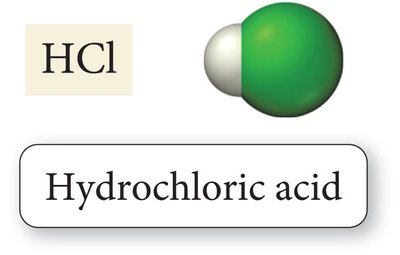
Binary acids have acid hydrogens attached to a nonmetal atom (e.g., HCl, HF).
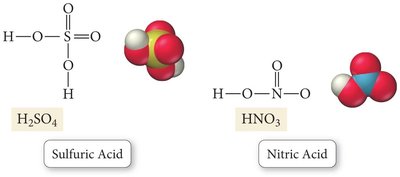
Oxyacids have acid hydrogens attached to an oxygen atom (e.g., H2SO4, HNO3).
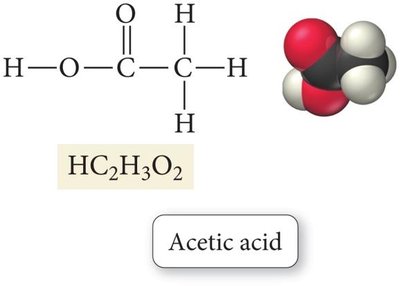
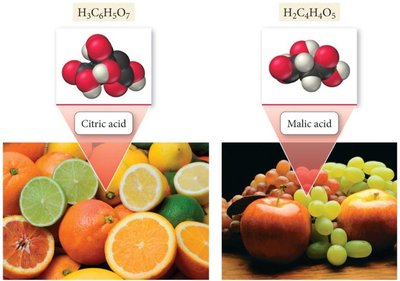
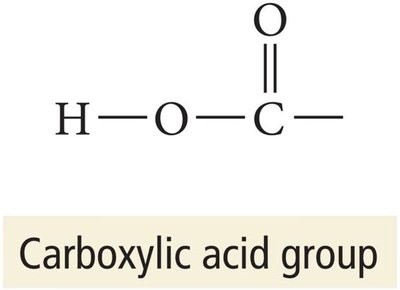
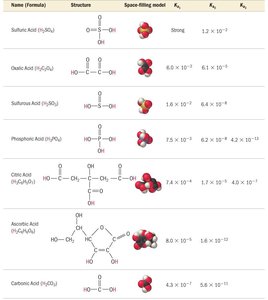
Carboxylic acids contain the COOH group; only the first H in the formula is acidic (e.g., HC2H3O2, H3C6H5O7).
Examples: Citric acid in citrus fruits, malic acid in apples and grapes.
Properties of Bases
Bases are substances that accept protons or produce hydroxide ions in solution. They are commonly found in household products and biological systems.
Bitter taste and slippery feel.
Turn red litmus paper blue and neutralize acids.
Examples: Ammonia, sodium hydroxide, and various cleaning products.

Definitions of Acids and Bases
There are three main definitions for acids and bases, each with its own scope and limitations:
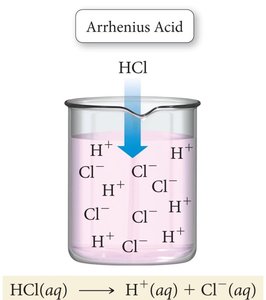
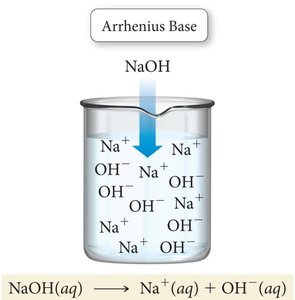
Arrhenius definition: Acids produce H+ ions, bases produce OH- ions in aqueous solution.
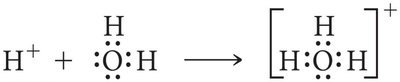
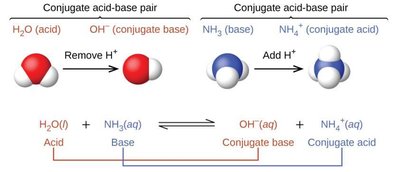
Brønsted–Lowry definition: Acids are H+ donors, bases are H+ acceptors.
Lewis definition: Acids accept electron pairs, bases donate electron pairs (not detailed here).
Brønsted–Lowry Acid–Base Theory
This theory expands the concept of acids and bases to include reactions outside aqueous solutions and those not involving OH- ions.
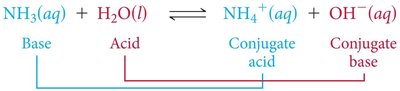
Acid: H+ donor
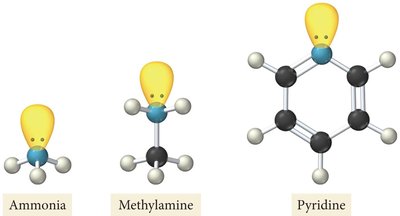
Base: H+ acceptor (must have a lone pair of electrons)
Amphoteric substances: Can act as either acid or base (e.g., water).
Conjugate acid–base pairs: Each acid and base forms a pair with its conjugate after the reaction.
Strengths of Acids and Bases
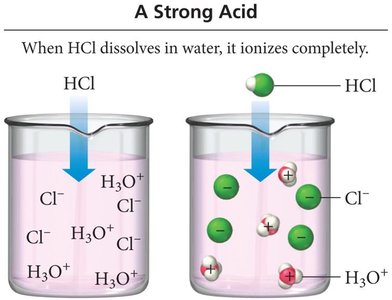
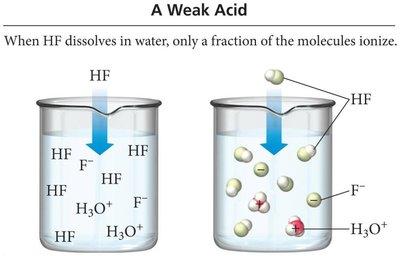
The strength of an acid or base is determined by its degree of ionization in water and its equilibrium constant.
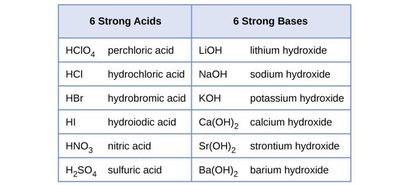
Strong acids: Nearly 100% ionized in water (e.g., HCl, HNO3, H2SO4).
Weak acids: Only a small fraction ionized (e.g., HF, acetic acid).
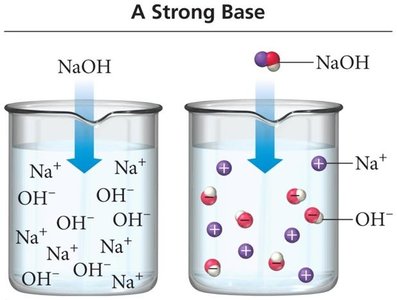
Strong bases: Nearly 100% dissociated (e.g., NaOH, KOH).
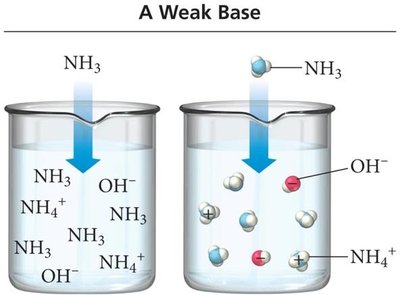
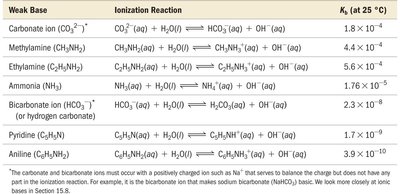
Weak bases: Only a small fraction dissociated (e.g., NH3).
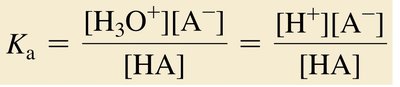
Equilibrium constants: Ka for acids, Kb for bases.

Autoionization of Water and pH
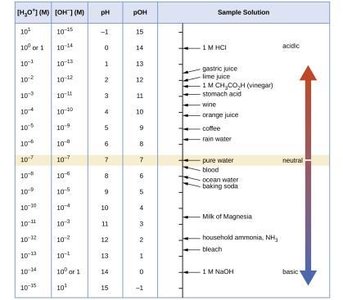
Water can ionize to form H3O+ and OH- ions, establishing a basis for the pH scale.
Ion product of water: at 25°C
pH:
pOH:
Relationship:
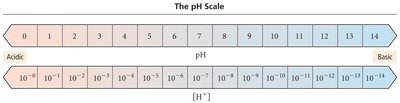
Acidic: pH < 7; Basic: pH > 7; Neutral: pH = 7
Acid-Base Equilibria and Calculations
Equilibrium calculations are essential for determining the concentrations of ions in solutions of weak acids and bases.
Ka: Acid ionization constant; larger Ka means stronger acid.
Kb: Base ionization constant; larger Kb means stronger base.
Percent ionization: Measures the fraction of acid/base molecules ionized.
Henderson–Hasselbalch equation: Used to calculate pH of buffer solutions.
Acid-Base Properties of Salts and Ions
Salts can produce acidic, basic, or neutral solutions depending on the nature of their constituent ions.
Basic salts: Cation from strong base, anion from weak acid (e.g., NaHCO3).
Acidic salts: Cation is conjugate acid of weak base, anion from strong acid (e.g., NH4Cl).
Neutral salts: Cation from strong base, anion from strong acid (e.g., NaCl).
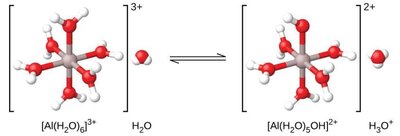
Metal cations: Small, highly charged metal ions can be weakly acidic.
Factors Affecting Acid and Base Strength
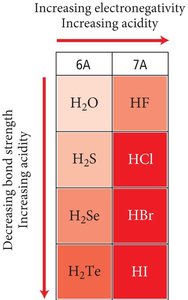
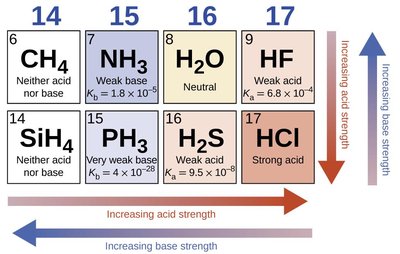
The strength of acids and bases is influenced by molecular structure, bond strength, electronegativity, and the number of oxygens attached to the central atom.
Binary acids: Strength increases across a period and down a group.
Oxyacids: Strength increases with electronegativity and number of oxygens.
Buffer Solutions
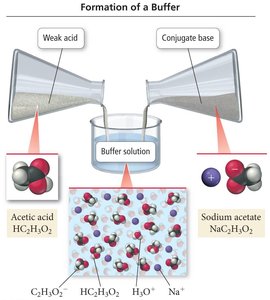
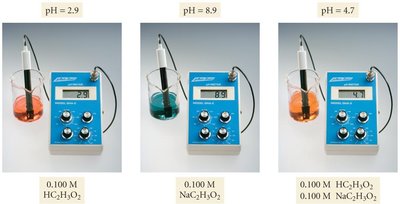
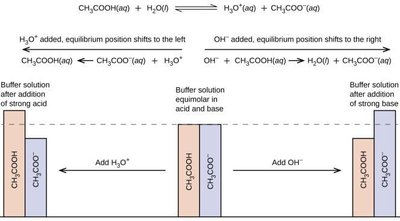
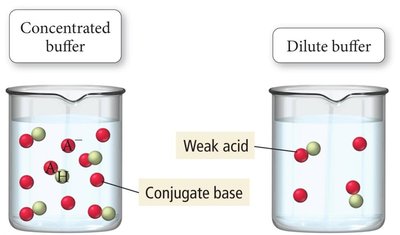
Buffers are solutions that resist changes in pH when small amounts of acid or base are added. They are crucial in biological systems, such as blood.
Composition: Significant amounts of a weak acid and its conjugate base, or a weak base and its conjugate acid.
Mechanism: Neutralize added acid or base by shifting equilibrium.
Common ion effect: Addition of a salt containing the conjugate base shifts equilibrium and affects pH.
Henderson–Hasselbalch equation:
Titration and Indicators
Titration is a method used to determine the concentration of an unknown solution by reacting it with a solution of known concentration. Indicators are used to detect the endpoint.
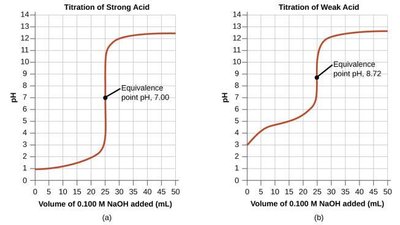
Equivalence point: Moles of acid equal moles of base.
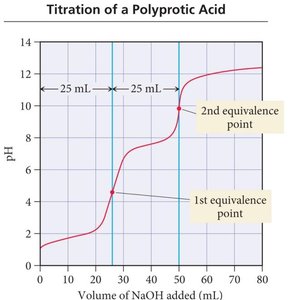
Titration curves: Show pH changes during titration; strong acid-strong base and weak acid-strong base titrations have different equivalence points.
Polyprotic acids: Have multiple equivalence points.
Indicators: Weak acids that change color depending on pH.
Additional info:
Acid-base equilibria are fundamental to many biological processes, including enzyme function, cellular respiration, and homeostasis.
Understanding buffer systems is essential for maintaining physiological pH in organisms.
