 Back
BackAcids, Bases, and pH: Biological Importance and Chemical Principles
Study Guide - Smart Notes
 Tailored notes based on your materials, expanded with key definitions, examples, and context.
Acids, Bases & pH
Introduction to Acids, Bases, and pH
Acids and bases are fundamental chemical compounds that play crucial roles in biological systems. The concept of pH is used to quantify the acidity or basicity of a solution, which is essential for maintaining proper cellular function and biochemical reactions.
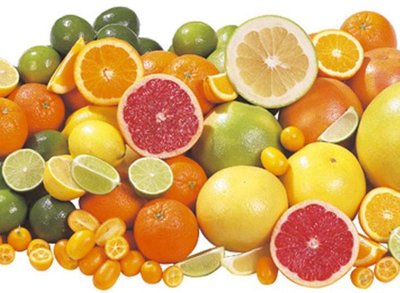
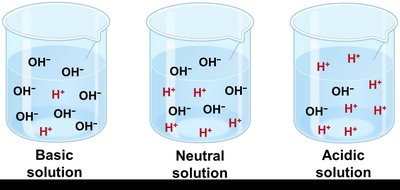
Acidic compounds taste sour and are found in many foods and substances.
Basic compounds (alkaline) often feel slippery and are common in cleaning products.
Neutral compounds have a pH of 7 and include pure water.






Definitions and Key Terminology
Acid: A substance that donates hydrogen ions (H+) to a solution.
Base: A substance that accepts hydrogen ions or releases hydroxide ions (OH-) into a solution.
pH: A measure of hydrogen ion concentration; quantifies acidity or basicity.
Hydronium ion (H3O+): Formed when an extra hydrogen ion combines with water.
Hydroxide ion (OH-): Formed when water loses a proton.
Buffer: A substance that resists changes in pH by absorbing or releasing H+ ions.
Neutralization: Reaction between an acid and a base, producing salt and water.
Chemical Reactions of Acids and Bases in Water
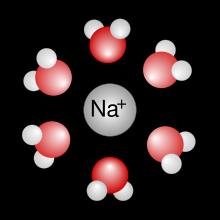
When acids and bases are added to water, they dissociate and interact with water molecules, affecting the concentration of H+ and OH- ions.
Acids: Increase [H+] by donating H+ ions.
Bases: Decrease [H+] by accepting H+ or releasing OH- ions.
Example Equations:
Hydrochloric acid:
Sulfuric acid:
Sodium hydroxide:
Ammonia:
The pH Scale
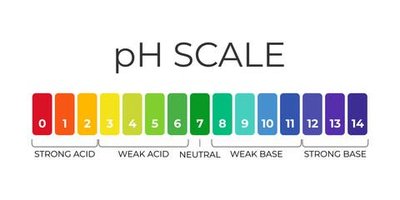
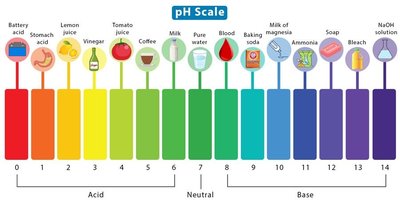
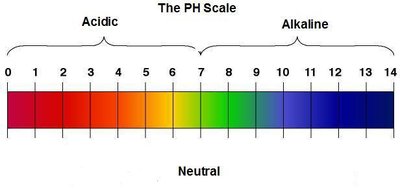
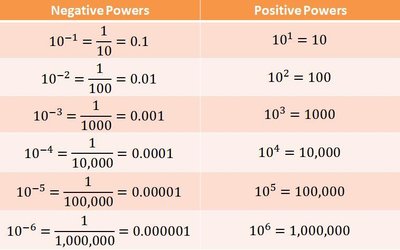
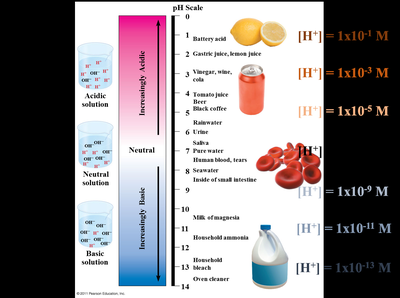
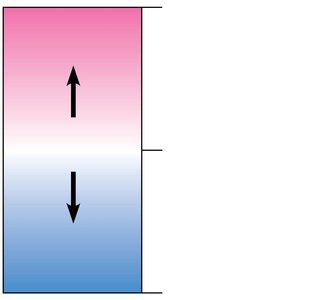
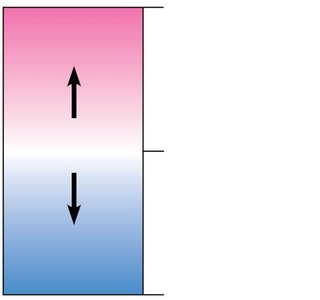
The pH scale ranges from 0 to 14, with lower values indicating higher acidity and higher values indicating greater basicity. The scale is logarithmic, meaning each unit change represents a tenfold difference in H+ concentration.
pH < 7: Acidic
pH = 7: Neutral
pH > 7: Basic
Formula:
Acids and Bases: Properties and Examples
Acids and bases are characterized by their ability to donate or accept hydrogen ions. Common examples include:
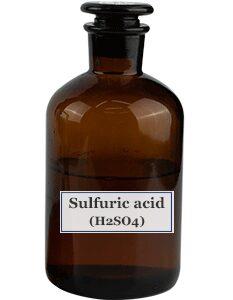
Acids: Sulfuric acid (H2SO4), hydrochloric acid (HCl), acetic acid (HC2H3O2), citric acid (found in citrus fruits).
Bases: Sodium hydroxide (NaOH), potassium hydroxide (KOH), ammonia (NH3).




Calculating pH and Ion Concentrations
The concentration of hydrogen ions in a solution determines its pH. The relationship between H+ and OH- concentrations is given by:
At equilibrium:
pH is calculated as:
Example: If , then .
Example: If , then and .
Neutralization Reactions
When an acid reacts with a base, the process is called neutralization. This reaction produces a salt and water.
Example:
Example:
Biological Importance of pH
Maintaining proper pH levels is vital for cellular function, as many biological molecules (such as proteins) are sensitive to changes in pH. Organisms use buffers to regulate pH and prevent harmful fluctuations.
Buffer: A mixture of a weak acid and its corresponding base that stabilizes pH.
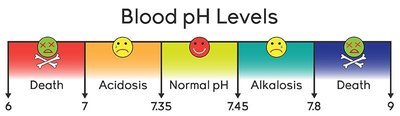
Blood pH: Maintained in the range of 7.35–7.45 by the bicarbonate buffer system.
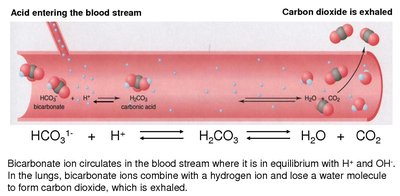
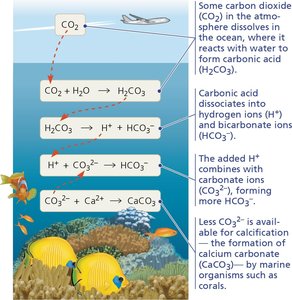
Buffer Reaction:
Summary Table: Acids, Bases, and pH
Type | Definition | Examples | pH Range |
|---|---|---|---|
Acid | Donates H+ ions | Lemon juice, vinegar, HCl, H2SO4 | 0–6.9 |
Neutral | Equal H+ and OH- ions | Pure water | 7 |
Base | Accepts H+ or releases OH- ions | Soap, bleach, NaOH, NH3 | 7.1–14 |
Key Terminologies to Memorize
Acid
Base
pH
Logarithmic
Linear
Hydronium ion
Hydroxide ion
Neutralization
Buffer
Ions
Additional info: The notes expand on the biological importance of pH, buffer systems, and provide chemical equations for acid/base dissociation and neutralization, as well as a summary table for quick reference.
