 Back
BIO 102 Chapter 43 Part 2b
Study Guide - Smart Notes
 Tailored notes based on your materials, expanded with key definitions, examples, and context.
Concept and Arms of Adaptive Immunity
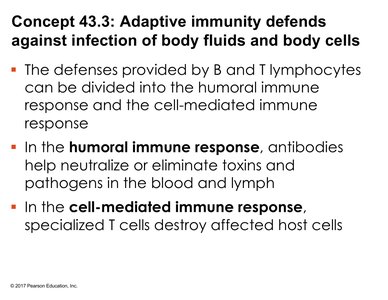
Adaptive immunity is a highly specific defense mechanism involving B and T lymphocytes. It is divided into two main arms: the humoral immune response and the cell-mediated immune response.
Humoral Immune Response: Antibodies produced by B cells neutralize or eliminate toxins and pathogens in blood and lymph.
Cell-Mediated Immune Response: Specialized T cells destroy affected host cells, particularly those infected by intracellular pathogens.
Helper T Cells: Activation and Function
Activation of Helper T Cells (CD4+)
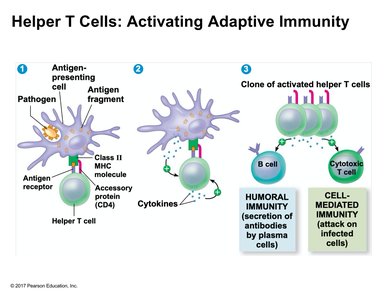
Helper T cells (CD4+) are central to adaptive immunity, activating both humoral and cell-mediated responses. Activation requires antigen presentation by antigen-presenting cells (APCs) via class II MHC molecules.
Antigen Presentation: APCs (e.g., dendritic cells, macrophages, B cells) ingest pathogens, process antigens, and present fragments on MHC II molecules.
Binding Events: Helper T cell receptors (TCR) bind to the antigen-MHC II complex, with CD4 acting as an accessory protein.
Cytokine Release: Both APCs and T cells release cytokines, stimulating helper T cell activation.
Clonal Expansion: Activated helper T cells proliferate, amplifying the immune response and activating B cells (humoral) and cytotoxic T cells (cell-mediated).
B Cells and Antibodies: Response to Extracellular Pathogens
B Cell Activation and Antibody Production
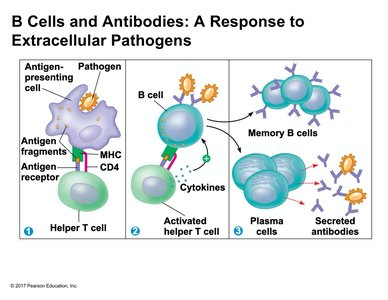
B cells are activated primarily by helper T cells, leading to the production of plasma cells and memory B cells.
Antigen Presentation: B cells can act as APCs, presenting antigens via MHC II to helper T cells.
Activation: Helper T cells stimulate B cells through cytokine release and co-stimulatory signals.
Clonal Selection: Activated B cells differentiate into plasma cells (antibody-secreting) and memory B cells (long-term immunity).
Antibody Production: Plasma cells produce antibodies that target specific pathogens.
Plasma Cells: Structure and Function
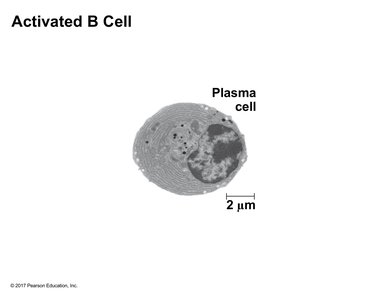
Plasma cells are effector B cells specialized for antibody secretion.
Rough Endoplasmic Reticulum: Plasma cells contain extensive rough ER to support high rates of protein (antibody) synthesis.
Form and Function: The abundance of rough ER reflects the cell's role in producing large quantities of antibodies.
Antibody Function and Classes
Mechanisms of Antibody Action
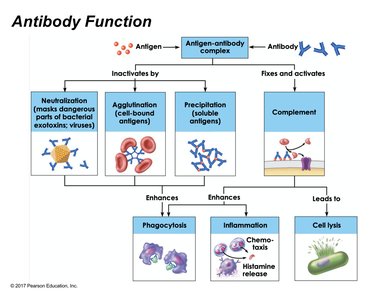
Antibodies defend against extracellular pathogens through several mechanisms:
Neutralization: Antibodies bind to toxins or viruses, preventing their interaction with host cells.
Agglutination: Antibodies cross-link cell-bound antigens, causing clumping (agglutination).
Precipitation: Antibodies bind soluble antigens, causing them to precipitate out of solution.
Complement Activation: Antibody-antigen complexes activate the complement system, leading to cell lysis.
Enhancement of Phagocytosis and Inflammation: Antibodies facilitate phagocytosis and recruit inflammatory mediators.
Antibody Classes (Immunoglobulins)
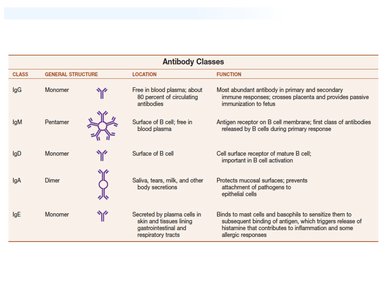
There are five major classes of immunoglobulins, each with distinct structure and function.
Class | Structure | Location | Function |
|---|---|---|---|
IgG | Monomer | Blood plasma | Most abundant; crosses placenta; provides passive immunity |
IgM | Pentamer | Surface of B cell, blood plasma | First antibody produced; efficient at complement activation |
IgD | Monomer | Surface of B cell | Cell surface receptor; important in B cell activation |
IgA | Dimer | Saliva, tears, milk, secretions | Protects mucosal surfaces |
IgE | Monomer | Plasma cells in tissues | Binds to mast cells; involved in allergic responses |
Cytotoxic T Cells: Response to Infected Cells
Activation and Function of Cytotoxic T Cells (CD8+)
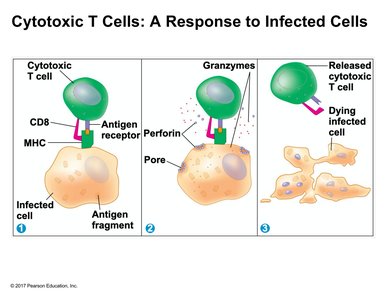
Cytotoxic T cells (CD8+) are activated by antigen presentation via MHC I molecules on infected cells.
Antigen Recognition: CD8+ T cell receptors bind to antigen-MHC I complexes on infected cells.
Destruction of Infected Cells: Activated cytotoxic T cells release perforin (creates pores) and granzymes (induces apoptosis), leading to cell death.
Specificity: CD8+ cells target only cells presenting non-self antigens via MHC I, not APCs presenting via MHC II.
Overview of Adaptive Immune Response
Integration of Humoral and Cell-Mediated Responses
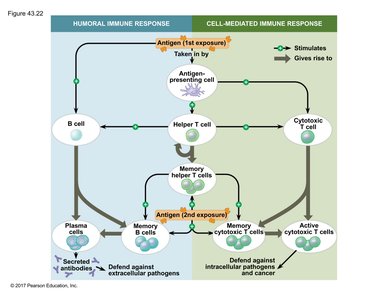
The adaptive immune response involves coordinated activation of B cells, helper T cells, and cytotoxic T cells.
Humoral Arm: B cells produce plasma cells and memory cells; plasma cells secrete antibodies to defend against extracellular pathogens.
Cell-Mediated Arm: Helper T cells activate cytotoxic T cells, which defend against intracellular pathogens and cancer.
Memory Cells: Both arms generate memory cells for rapid response upon subsequent exposure.
Active and Passive Immunity
Types and Mechanisms
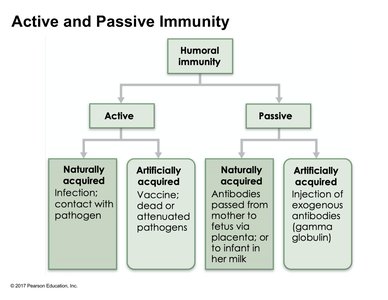
Immunity can be acquired actively or passively, either naturally or artificially.
Active Immunity: Involves activation of B cells and production of memory cells.
Natural: Infection and contact with pathogen.
Artificial: Vaccination with dead or attenuated pathogens.
Passive Immunity: Involves transfer of pre-formed antibodies.
Natural: Antibodies passed from mother to fetus via placenta or to infant via milk.
Artificial: Injection of exogenous antibodies (gamma globulin).
Immunization
Clinical Application and Schedule
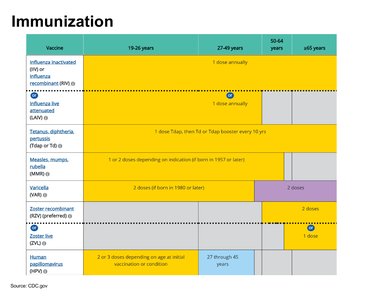
Immunization is a process of inducing active immunity through vaccination.
Active Immunization: Stimulates adaptive immune response and memory cell formation for long-term protection.
Schedule: Vaccines are administered at specific intervals to maintain immunity against various pathogens.
Antibodies as Tools
Scientific and Clinical Applications
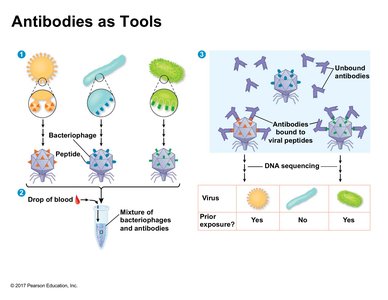
Antibodies can be used for diagnostic and therapeutic purposes.
Monoclonal Antibodies: Produced from a single clone of B cells; used for medical diagnosis, treatment, and research.
Phage Display: Bacteriophages engineered to display viral peptides can be used to detect prior exposure to viruses by testing for antibody binding.
Immune Rejection
MHC Molecules and Transplantation
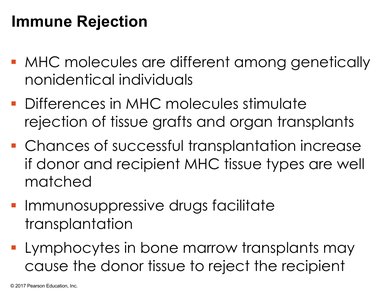
Differences in MHC molecules among individuals can lead to immune rejection of transplanted tissues and organs.
MHC Compatibility: Successful transplantation requires matching donor and recipient MHC types.
Immunosuppressive Drugs: Used to reduce immune response and facilitate transplantation.
Bone Marrow Transplants: Donor lymphocytes may reject recipient tissue if not properly matched.
Blood Groups and Typing
ABO System and Antibody-Antigen Compatibility
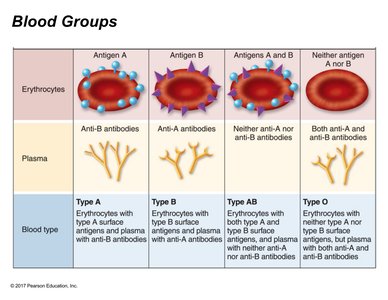
Blood groups are determined by antigens present on erythrocytes and antibodies in plasma.
Type A: A antigens on erythrocytes; anti-B antibodies in plasma.
Type B: B antigens on erythrocytes; anti-A antibodies in plasma.
Type AB: Both A and B antigens; no anti-A or anti-B antibodies.
Type O: No A or B antigens; both anti-A and anti-B antibodies.
Blood Typing and Transfusion Compatibility
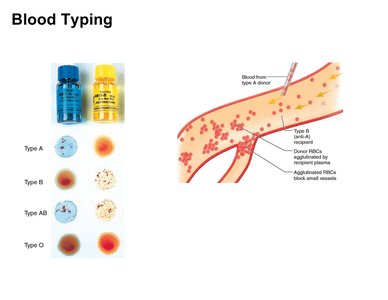
Blood typing involves mixing blood with anti-A and anti-B sera to detect agglutination.
Agglutination: Indicates presence of corresponding antigen.
Transfusion Reactions: Incompatible transfusions cause agglutination, blocking blood vessels and causing harm.
Rh Factor and Hemolytic Disease of the Newborn
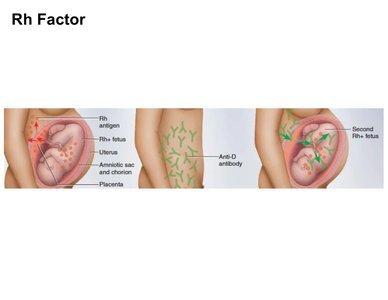
The Rh factor (D antigen) is another blood group antigen.
Rh Incompatibility: Rh-negative mothers can develop anti-D antibodies against Rh-positive fetuses, leading to hemolytic disease in subsequent pregnancies.
Prevention: Prophylactic treatment (e.g., Rogam) prevents sensitization and protects the fetus.
Disruptions in Immune System Function
Pathogen Evolution and Immune Evasion
Some pathogens, such as influenza, evolve rapidly, diminishing the effectiveness of host immune responses and necessitating regular vaccination. 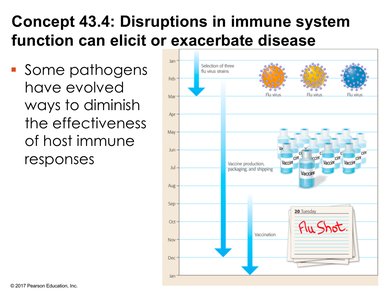
Hypersensitivity and Allergies
Allergic Reactions and Treatments
Hypersensitivity is an excessive immune response to allergens, often mediated by IgE antibodies.
IgE-Mediated Response: IgE binds to mast cells; allergen exposure triggers histamine release and allergic symptoms.
Treatments: Antihistamines (e.g., Benadryl) and epinephrine (EpiPen) are used to relieve symptoms and treat anaphylaxis.

Autoimmune Diseases
Examples and Mechanisms
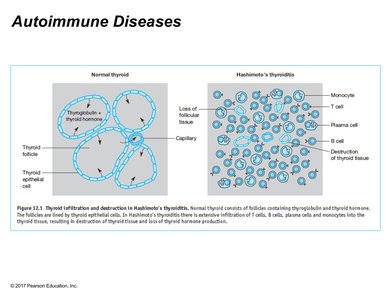
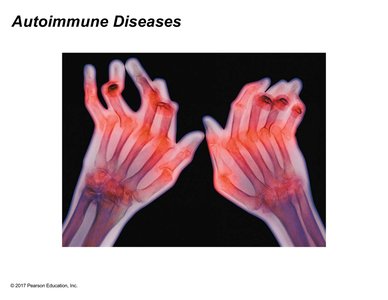
Autoimmune diseases occur when the immune system attacks self-tissues.
Hashimoto's Thyroiditis: Antibodies and T cells target thyroid antigens, leading to tissue destruction and impaired hormone production.
Rheumatoid Arthritis: Self-reactive T cells attack joint tissues, causing inflammation and tissue destruction.
Exertion, Stress, and the Immune System
Impact of Physical and Psychological Stress
Moderate Exercise: Improves immune function.
Excessive Exercise: Leads to increased susceptibility to infections.
Psychological Stress: Disrupts immune regulation via hormonal and nervous system interactions.
Rest: Sufficient rest is essential for optimal immune function.
Immunodeficiency
Inborn and Acquired Immunodeficiency
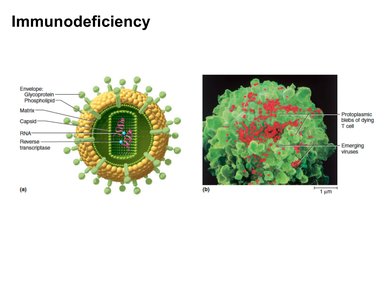
Immunodeficiency results from defects in innate or adaptive immunity.
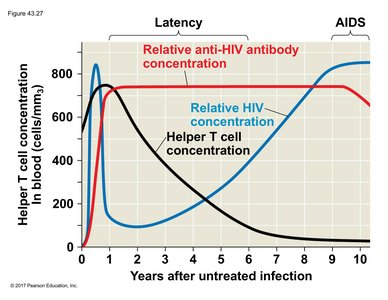
Acquired Immunodeficiency: HIV infects helper T cells (CD4+), leading to depletion and impaired adaptive immune response.
HIV Mechanism: HIV is a retrovirus; integrates into host DNA, mutates rapidly, and evades immune detection.
Progression of HIV Infection
Early Response: Initial spike in virus and helper T cells; anti-HIV antibodies produced.
Decline in Helper T Cells: Cytotoxic T cells destroy infected helper T cells, leading to loss of immune function.
Transition to AIDS: As helper T cell concentration drops, HIV concentration rises, and antibody levels eventually decline.
Opportunistic Infections: Immunocompromised individuals are susceptible to infections that would not affect healthy individuals.
Additional info:
Class switching in antibodies changes the constant region but not antigen specificity.
Monoclonal antibodies are used in diagnostics, therapeutics, and research.
Rh incompatibility is prevented by immunosuppressive treatment during pregnancy.
