 Back
BIO 102 Chapter 43 Pt 2a
Study Guide - Smart Notes
 Tailored notes based on your materials, expanded with key definitions, examples, and context.
Chapter 43 Part 2
Overview of Immune Responses
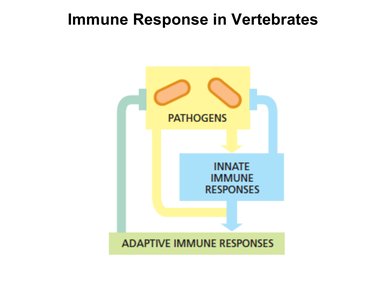
The immune system in vertebrates is composed of two main branches: innate and adaptive immunity. Innate immunity provides a rapid, non-specific response to pathogens, while adaptive immunity offers a highly specific and long-lasting defense. The adaptive immune response is mediated by lymphocytes—B cells and T cells—which recognize and respond to pathogens with remarkable specificity.
Major Characteristics of the Adaptive Immune System
Key Properties
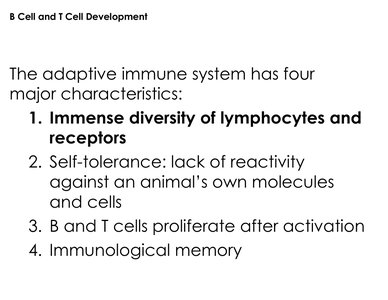
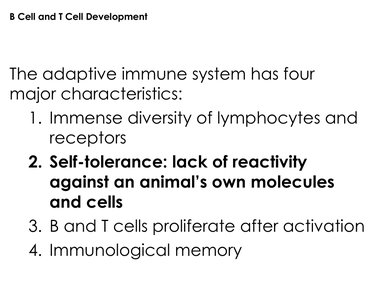
The adaptive immune system is defined by four major characteristics that distinguish it from innate immunity:
Immense diversity of lymphocytes and receptors: The system can recognize a vast array of antigens due to the diversity of antigen receptors.
Self-tolerance: Lymphocytes are tested to ensure they do not react against the body’s own molecules and cells.
Proliferation after activation: B and T cells rapidly divide after encountering their specific antigen.
Immunological memory: The system "remembers" previous encounters, enabling a faster and stronger response upon re-exposure to the same pathogen.
Lymphocytes: B Cells and T Cells
Types and Maturation
Lymphocytes are white blood cells central to adaptive immunity. There are two main types:
B cells: Mature in the bone marrow and are responsible for the humoral (antibody-mediated) response.
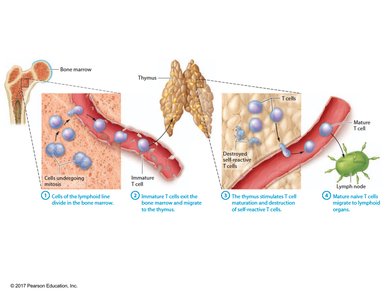
T cells: Mature in the thymus and are responsible for cell-mediated immunity.
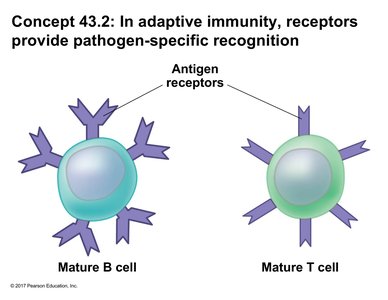
Both B and T cells express unique antigen receptors on their surfaces, allowing them to recognize specific antigens.
Development and Activation of Lymphocytes
Central and Peripheral Lymphoid Organs
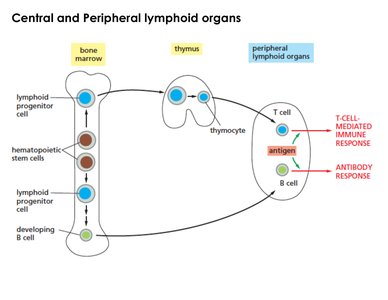
Lymphocytes originate from hematopoietic stem cells in the bone marrow. B cells mature in the bone marrow, while T cells migrate to the thymus for maturation. After maturation, both cell types circulate to peripheral lymphoid organs (e.g., lymph nodes, spleen), where they may encounter antigens and become activated.
Central lymphoid organs: Sites of lymphocyte development (bone marrow and thymus).
Peripheral lymphoid organs: Sites where mature lymphocytes encounter antigens and become activated.
Antigen Recognition by B Cells
B Cell Receptors (BCRs) and Antibodies
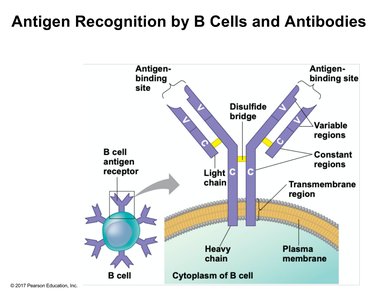
B cells express B cell antigen receptors (BCRs) on their surface. Each BCR is a membrane-bound immunoglobulin composed of two identical heavy chains and two identical light chains, held together by disulfide bonds. The BCR has:
Variable regions (V): Form the antigen-binding sites and confer specificity.
Constant regions (C): Determine the class and function of the antibody.
Upon activation, B cells differentiate into plasma cells that secrete soluble forms of the BCR, known as antibodies.
Antibody Diversity and Specificity
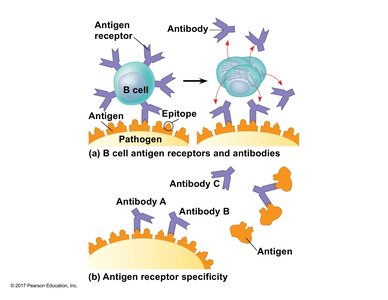
Each B cell produces a unique BCR, allowing the immune system to recognize a vast array of antigens. Antibodies can bind to specific regions (epitopes) on antigens. Pathogens often have multiple epitopes, and different antibodies may bind to different epitopes on the same pathogen.
Antigen Recognition by T Cells
T Cell Receptors (TCRs)
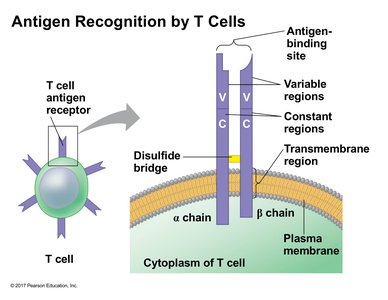
T cells express T cell receptors (TCRs), which are membrane-bound proteins composed of an alpha and a beta chain, each with variable and constant regions. Unlike BCRs, TCRs are never secreted and remain membrane-bound even after activation.
Antigen Presentation and MHC Molecules
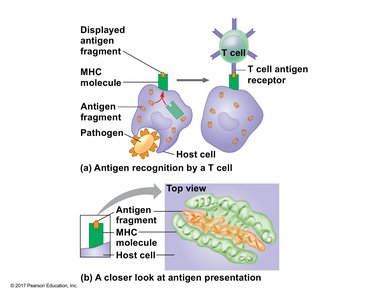
T cells recognize antigens only when they are presented as fragments bound to Major Histocompatibility Complex (MHC) molecules on the surface of host cells. There are two main classes of MHC molecules:
MHC I: Present on almost all nucleated cells; present antigens to cytotoxic T cells.
MHC II: Present on antigen-presenting cells (APCs) like dendritic cells, macrophages, and B cells; present antigens to helper T cells.
Generation of Lymphocyte Diversity
Genetic Mechanisms
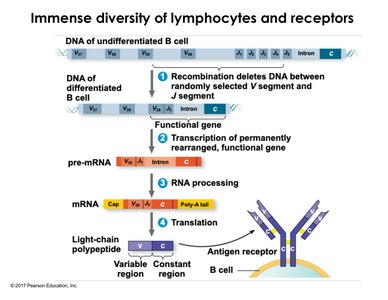
The immense diversity of BCRs and TCRs is generated through somatic recombination of gene segments (V, D, and J segments for heavy chains; V and J for light chains). This process occurs before exposure to antigens and involves:
Random recombination of gene segments
Junctional diversity (addition or deletion of nucleotides at joining sites)
Combination of different heavy and light chains (for BCRs)
Somatic hypermutation (for B cells, after antigen exposure)
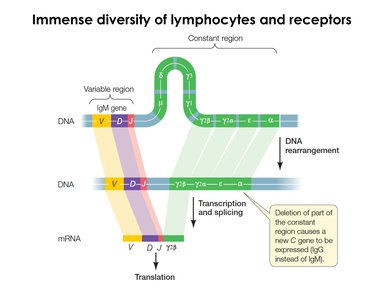
Class Switching
After activation, B cells can change the constant region of the antibody they produce (class switching), allowing the same antigen specificity to be associated with different antibody functions (e.g., IgM to IgG).
Self-Tolerance in Lymphocyte Development
Mechanisms of Self-Tolerance
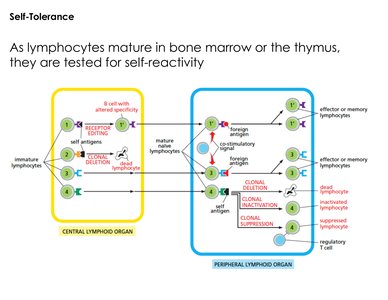
Self-tolerance ensures that lymphocytes do not attack the body’s own cells. This is achieved through two main processes:
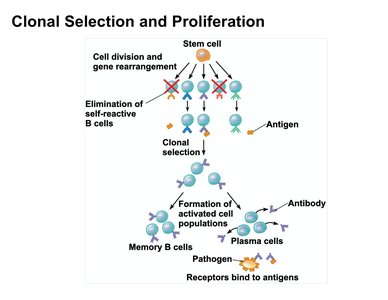
Central tolerance: Occurs during lymphocyte maturation in the bone marrow (B cells) or thymus (T cells). Self-reactive cells are eliminated (clonal deletion) or edited (receptor editing).
Peripheral tolerance: Occurs after lymphocytes enter peripheral tissues. Self-reactive cells can be inactivated (anergy), suppressed by regulatory T cells, or deleted.
Lymphocyte Maturation and Activation
Stages of Maturation
Lymphocytes progress from immature to mature, naive cells. Naive lymphocytes have not yet encountered their specific antigen. Upon encountering their antigen in peripheral lymphoid organs, they become activated and differentiate into effector and memory cells.
Clonal Selection and Proliferation
Clonal Selection Theory
When a lymphocyte encounters its specific antigen, it is selected for activation and undergoes rapid proliferation (clonal expansion). This produces a population of effector cells (which combat the pathogen) and memory cells (which provide long-term immunity).
Effector cells: Short-lived cells that actively respond to the antigen (e.g., plasma cells secrete antibodies).
Memory cells: Long-lived cells that respond rapidly upon re-exposure to the same antigen.
Immunological Memory
Primary and Secondary Immune Responses
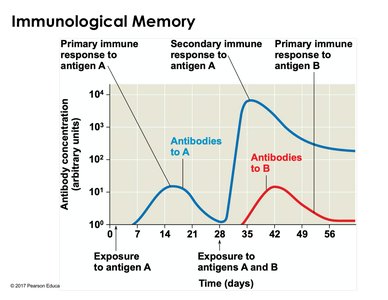
Immunological memory is the hallmark of adaptive immunity. The primary immune response occurs upon first exposure to an antigen and is relatively slow and weak. Upon subsequent exposures, the secondary immune response is faster, stronger, and more effective due to the presence of memory cells. This principle underlies the effectiveness of vaccines.
Primary response: Slow onset, lower antibody concentration.
Secondary response: Rapid onset, higher antibody concentration, increased affinity due to somatic hypermutation.
Additional info: The adaptive immune system’s ability to generate diversity, maintain self-tolerance, proliferate upon activation, and retain memory is essential for effective long-term immunity and underpins modern immunological therapies and vaccination strategies.
