 Back
BackAdaptive Immunity: Mechanisms and Applications
Study Guide - Smart Notes
 Tailored notes based on your materials, expanded with key definitions, examples, and context.
Adaptive Immunity: Defending Against Infection
Overview of Adaptive Immunity
Adaptive immunity is a highly specific defense mechanism that protects the body from pathogens by recognizing and responding to foreign molecules. It is mediated by lymphocytes—B cells and T cells—and is characterized by the ability to remember previous encounters with pathogens, leading to a more rapid and robust response upon subsequent exposures.
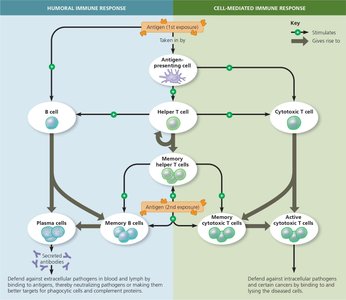
Humoral Immune Response: Involves B cells and the production of antibodies that neutralize or eliminate pathogens in body fluids (blood and lymph).
Cell-Mediated Immune Response: Involves T cells, particularly cytotoxic T cells, which destroy infected host cells.
Primary and Secondary Responses: The primary response occurs upon first exposure to an antigen, while the secondary response is faster and stronger due to memory cells.
Helper T Cells: Central Regulators of Adaptive Immunity
Activation and Function of Helper T Cells
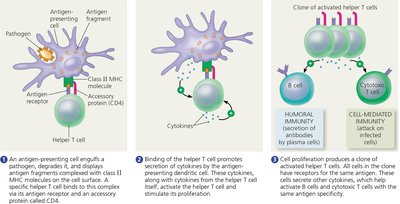
Helper T cells play a pivotal role in both humoral and cell-mediated immune responses. Their activation requires two conditions: recognition of a specific antigen and interaction with an antigen-presenting cell (APC) displaying the antigen on a class II MHC molecule.
Antigen Presentation: APCs (dendritic cells, macrophages, or B cells) display antigen fragments on class II MHC molecules.
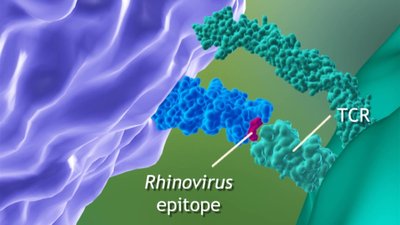
Recognition: Helper T cells recognize the antigen-MHC complex via their T cell receptor (TCR) and the CD4 accessory protein.
Cytokine Exchange: Interaction between the helper T cell and APC leads to the exchange of cytokines, stimulating the proliferation and differentiation of helper T cells.
Activation of Other Cells: Activated helper T cells stimulate B cells (for antibody production) and cytotoxic T cells (for killing infected cells).
B Cells and Antibodies: The Humoral Immune Response
Activation of B Cells
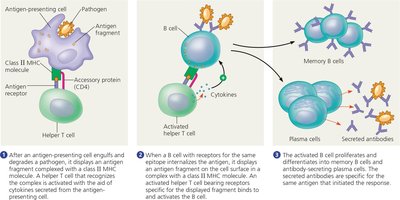
B cells are activated when they encounter their specific antigen and receive additional signals from helper T cells. This leads to their proliferation and differentiation into plasma cells and memory B cells.
Antigen Binding: B cells bind specific antigens via their surface receptors and internalize them.
Antigen Presentation: Processed antigen fragments are displayed on class II MHC molecules to helper T cells.
Cytokine Stimulation: Helper T cells provide cytokines that fully activate the B cell.
Clonal Expansion: Activated B cells proliferate into plasma cells (which secrete antibodies) and memory B cells.
Antibody Function
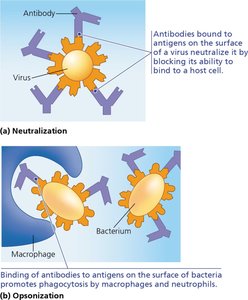
Antibodies, produced by plasma cells, do not directly kill pathogens but neutralize them or mark them for destruction by other immune cells.
Neutralization: Antibodies bind to viral or toxin surfaces, blocking their ability to infect host cells.
Opsonization: Antibodies coat pathogens, enhancing their uptake and destruction by phagocytes.
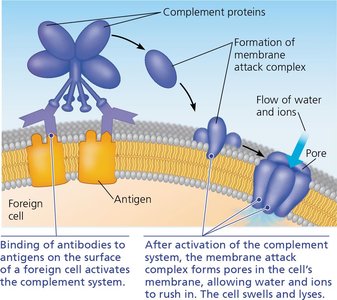
Complement Activation: Antibody-antigen complexes activate the complement system, leading to the lysis of foreign cells.
Cytotoxic T Cells: The Cell-Mediated Immune Response
Activation and Function of Cytotoxic T Cells
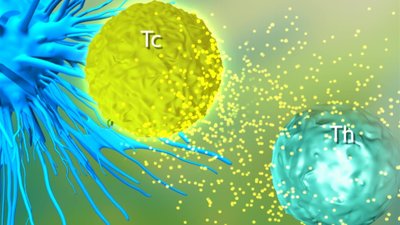
Cytotoxic T cells (Tc cells) are responsible for killing infected host cells. Their activation requires signals from helper T cells and recognition of antigens presented on class I MHC molecules of infected cells.
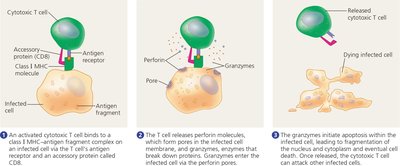
Antigen Recognition: Cytotoxic T cells recognize antigen fragments presented by class I MHC molecules on infected cells, with the help of the CD8 accessory protein.
Killing Mechanism: Activated cytotoxic T cells release perforin and granzymes, which induce apoptosis in the infected cell.
Immune Coordination: The destruction of infected cells exposes pathogens to antibodies, linking cell-mediated and humoral responses.
Summary of Humoral and Cell-Mediated Immune Responses
Integration and Memory
Both humoral and cell-mediated responses can generate memory cells, which enable a faster and stronger secondary response upon re-exposure to the same pathogen. Helper T cells are central to coordinating these responses.
Primary Response: Initiated upon first exposure to an antigen; slower and less robust.
Secondary Response: Initiated by memory cells; faster and more effective.
Immunization and Vaccination
Principles and Applications
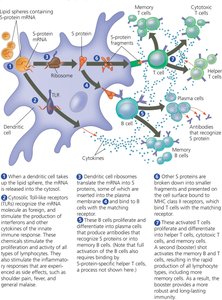
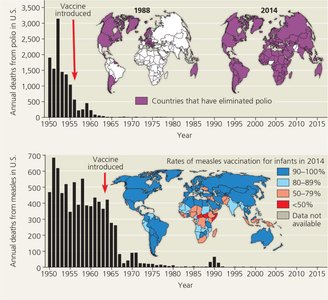
Immunization involves the artificial introduction of antigens to stimulate an adaptive immune response and memory cell formation, providing long-term protection against specific diseases.
Vaccine Types: Inactivated toxins, killed/weakened pathogens, or genetic material (mRNA/DNA) encoding pathogen proteins.
COVID-19 Vaccines: Use mRNA or DNA to encode the SARS-CoV-2 Spike protein, stimulating both innate and adaptive immunity.
Booster Doses: Required to maintain immunity by replenishing memory cells.
Active and Passive Immunity
Types of Immunity
Immunity can be acquired actively or passively, each with distinct mechanisms and durations.
Active Immunity: Results from direct exposure to a pathogen or vaccine; involves the body's own immune response and memory cell formation.
Passive Immunity: Involves the transfer of antibodies from another individual (e.g., maternal antibodies via placenta or breast milk); provides temporary protection.
Artificial Passive Immunization: Injection of antibodies from an immune animal (e.g., antivenin for snake bites).
Antibodies as Tools in Medicine and Research
Monoclonal Antibodies and Diagnostic Applications
Monoclonal antibodies are identical antibodies produced from a single clone of B cells. They are widely used in diagnostics and therapy.
Diagnostic Use: Home pregnancy tests detect hCG using monoclonal antibodies.
Therapeutic Use: Used in the treatment of cancers, autoimmune diseases, and infectious diseases (e.g., COVID-19).
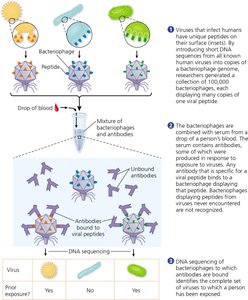
Comprehensive Viral Exposure Testing: Advanced tests use bacteriophage libraries to detect antibodies against all known human viruses from a single drop of blood.
Immune Rejection and Blood Groups
Transplantation and Blood Transfusion Compatibility
The immune system can recognize and reject foreign cells, such as transplanted tissues or mismatched blood transfusions, primarily due to differences in MHC molecules and blood group antigens.
MHC Molecules: Highly variable; mismatches can lead to transplant rejection.
ABO Blood Groups: Determined by specific carbohydrates on red blood cells; mismatches can cause severe transfusion reactions.
Prevention: Careful matching of MHC and blood group antigens, and immunosuppressive therapy for transplant recipients.
Key Terms and Concepts
Antigen: Any substance that elicits an immune response.
Antibody (Immunoglobulin): Protein produced by B cells that binds specifically to antigens.
MHC (Major Histocompatibility Complex): Cell surface proteins essential for antigen presentation.
Cytokines: Signaling molecules that mediate and regulate immunity.
Memory Cells: Long-lived lymphocytes that respond rapidly upon re-exposure to their specific antigen.
Summary Table: Humoral vs. Cell-Mediated Immunity
Feature | Humoral Immunity | Cell-Mediated Immunity |
|---|---|---|
Main Cells | B cells, Helper T cells | Cytotoxic T cells, Helper T cells |
Effector Molecules | Antibodies | Cytotoxic proteins (perforin, granzymes) |
Targets | Extracellular pathogens, toxins | Infected host cells, cancer cells |
Memory Formation | Yes | Yes |
Additional info: This guide integrates foundational concepts from Chapter 43 (The Immune System) and provides context for immunological applications in medicine and biotechnology.
