 Back
Advanced Genetics: Chromosomal Basis of Inheritance, Sex Linkage, Genomic Imprinting, and Extranuclear Genes
Study Guide - Smart Notes
 Tailored notes based on your materials, expanded with key definitions, examples, and context.
Advances in Genetic Research
Thomas Hunt Morgan and Drosophila Genetics
Thomas Hunt Morgan's early 20th-century research with Drosophila melanogaster (fruit flies) established foundational principles in genetics, including the chromosomal theory of inheritance. Morgan introduced key terminology to describe phenotypes:
Wild type: The phenotype most commonly observed in a natural population (e.g., red eyes in fruit flies). Not necessarily dominant.
Mutant type: Any phenotype differing from the wild type (e.g., white eyes in fruit flies). Not necessarily recessive.
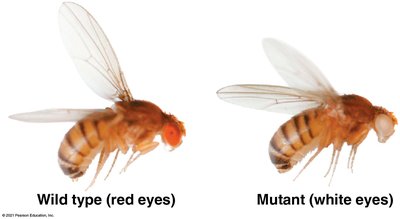
Wild type is denoted with a plus sign (+), while mutant type receives no sign.
Morgan's Experiments and Results
Morgan's experiments demonstrated the inheritance patterns of eye color in fruit flies, providing evidence for sex-linked inheritance.
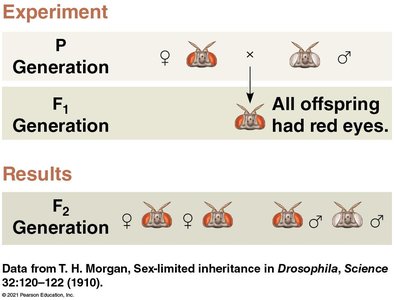
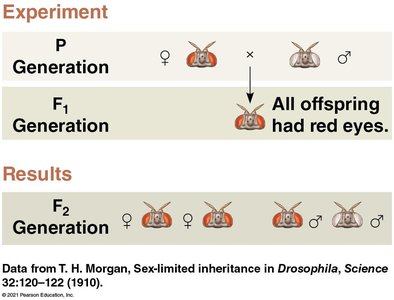
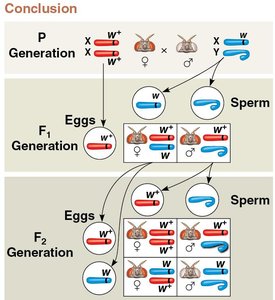
Sex-Linked Genes
Sex Chromosomes and Sex Determination
Sex chromosomes carry genes responsible for reproductive development. In mammals, the X and Y chromosomes are not homologous, and the X chromosome is much larger and contains more genes than the Y chromosome. Other organisms use different systems for sex determination.
X-Y system: Mammals (XX = female, XY = male)
X-0 system: Some insects (XX = female, X = male)
Z-W system: Birds (ZW = female, ZZ = male)
Haplo-diploid system: Bees (diploid = female, haploid = male)
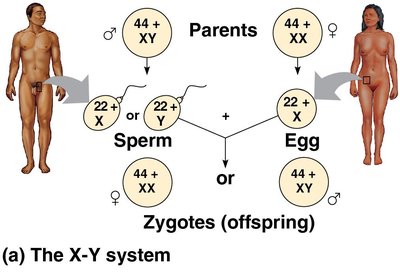
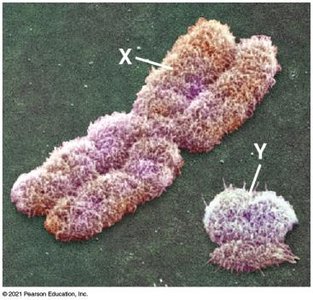
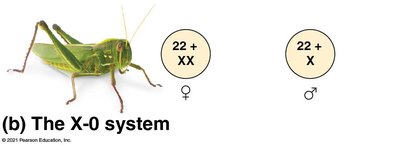
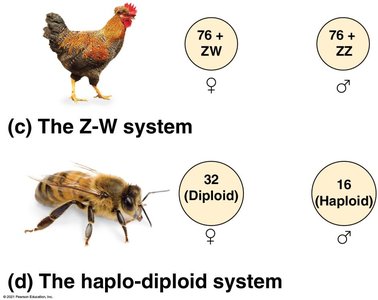
Sex-linked genes are genes located on a sex chromosome, most commonly the X chromosome in humans.
X-Linked Disorders and Hemizygosity
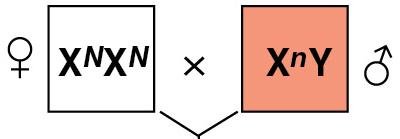
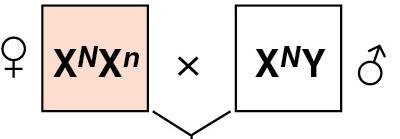
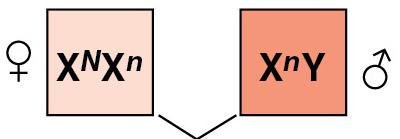
X-linked genes are found on the X chromosome. Males (XY) are hemizygous for X-linked genes, meaning they have only one copy. This makes them more susceptible to X-linked disorders such as color-blindness, hemophilia, and muscular dystrophy.
Hemizygous: Having only one allele for a gene in a diploid organism (e.g., males for X-linked genes).
X Inactivation
Barr Body Formation and Mosaicism
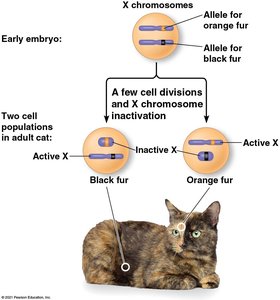
In female mammals (XX), one X chromosome is randomly inactivated in each cell during embryonic development, forming a Barr body. This process ensures dosage compensation between males and females. All X chromosomes are reactivated in oocytes for egg production. X inactivation is visually apparent in organisms like domestic cats, where coat color is X-linked.
Female cats can be both orange and black (mosaic).
Male cats can be either orange or black, but not both.
Linked Genes
Genetic Linkage and Recombination
Homologous chromosomes exchange genetic material during crossing over (recombination) in meiosis, creating recombinant chromosomes. Mendel's principle of independent assortment applies only to genes on different chromosomes. Morgan discovered that genes located on the same chromosome (linked genes) are not totally independent.
Unlinked genes: Located on different chromosomes; follow Mendelian genetics.
Linked genes: Located on the same chromosome; the closer two genes are, the more likely they are inherited together.
The farther apart two genes are, the more likely they are separated by crossing over.
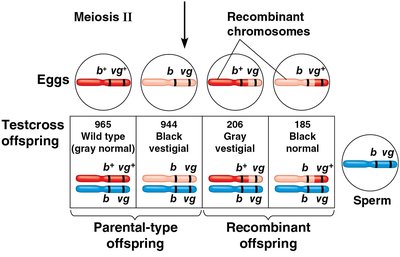
For linked genes, there is a higher percentage of non-recombinant offspring and a lower percentage of recombinant offspring.
Genomic Imprinting
Epigenetic Gene Silencing
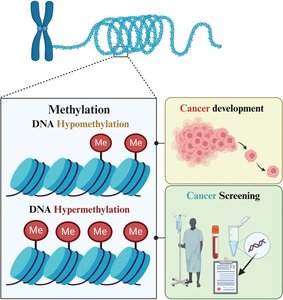
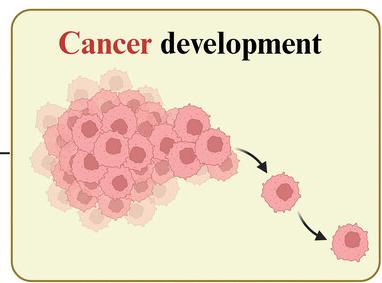
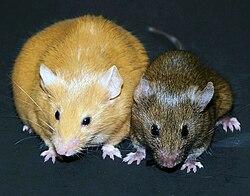
Genomic imprinting is an epigenetic phenomenon where certain genes are silenced during gamete formation (oogenesis or spermatogenesis) via methylation (addition of methyl groups, CH3). These genes remain silenced in the offspring. Improper imprinting can result in disorders such as cancer.
Genomic imprinting: Silencing of genes by methylation during gamete formation.
Imprinting can be influenced by parental sex or environmental factors (e.g., diet).
Parental Conflict Hypothesis: Males typically suppress genes for small offspring; females suppress genes for large offspring.
Inheritance of Extranuclear Genes
Mitochondrial and Chloroplast DNA
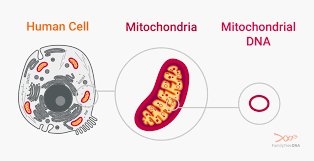
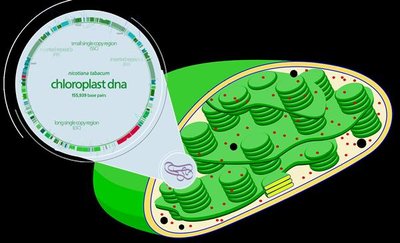
Mitochondria and chloroplasts contain their own small, circular DNA strands called plastids. Mitochondrial DNA is responsible for proteins in the electron transport chain (ETC), while chloroplast DNA affects leaf color in plants. Embryos receive all organelles from the egg cell, so extranuclear genes are inherited maternally.
Mitochondrial DNA: Encodes proteins for cellular respiration.
Chloroplast DNA: Encodes proteins affecting photosynthesis and leaf color.
Extranuclear inheritance is always maternal.

Summary Table: Types of Genetic Inheritance
Type | Location | Inheritance Pattern | Example |
|---|---|---|---|
Mendelian | Autosomal chromosomes | Dominant/recessive | Pea plant traits |
Sex-linked | Sex chromosomes (X or Y) | Hemizygous in males | Hemophilia, color-blindness |
Linked genes | Same chromosome | Inherited together unless separated by crossing over | Eye color and wing shape in fruit flies |
Genomic imprinting | DNA methylation | Silenced genes, parent-of-origin effects | Prader-Willi syndrome |
Extranuclear | Mitochondria, chloroplasts | Maternal inheritance | Mitochondrial diseases, leaf variegation |
Additional info: The notes expand on the original content by providing definitions, examples, and context for each genetic concept, ensuring completeness and academic quality for exam preparation.
