 Back
BackAmines, Amides, and Nucleic Acids: Structure, Function, and Genetic Information
Study Guide - Smart Notes
 Tailored notes based on your materials, expanded with key definitions, examples, and context.
Amines and Amides
Introduction to Amines and Amides
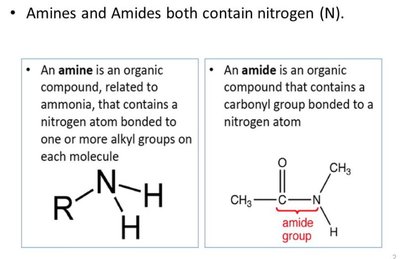
Amines and amides are nitrogen-containing organic compounds that play crucial roles in biological systems. Amines are derivatives of ammonia, while amides are formed from the reaction of amines with carboxylic acids.
Amines: Organic compounds containing a nitrogen atom bonded to one or more alkyl or aryl groups.
Amides: Organic compounds where a carbonyl group is bonded to a nitrogen atom.
Classification of Amines
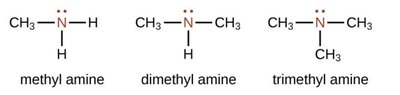
Amines are classified based on the number of organic groups attached to the nitrogen atom.
Primary amine: One alkyl/aryl group attached to nitrogen.
Secondary amine: Two alkyl/aryl groups attached to nitrogen.
Tertiary amine: Three alkyl/aryl groups attached to nitrogen.
Cyclic Amines
Amines can also be found in ring structures, such as pyridine, which is a heterocyclic aromatic amine. 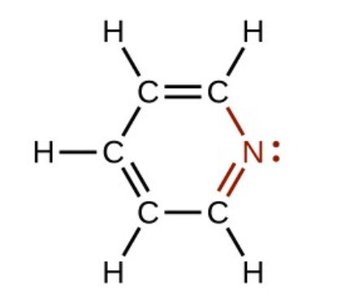
Biological Importance of Amines
Amines are found in many biologically important molecules:
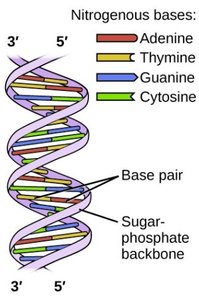
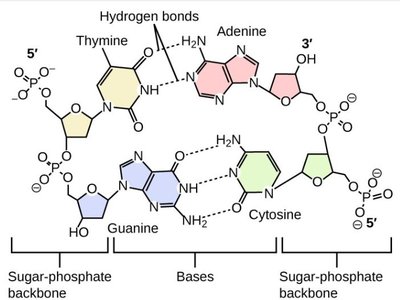
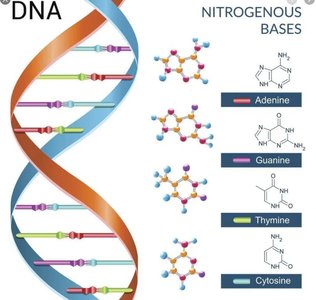
Nitrogenous bases in DNA and RNA (adenine, guanine, cytosine, thymine, uracil)
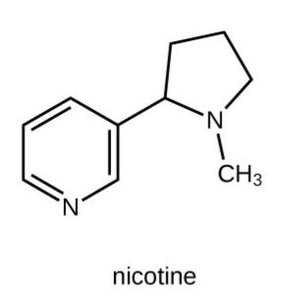
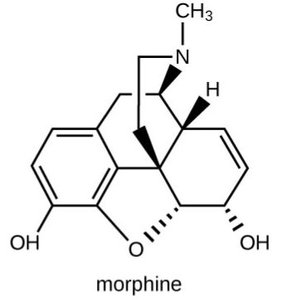
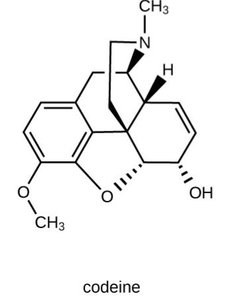
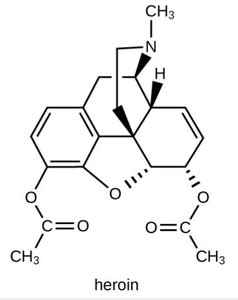
Alkaloids such as nicotine, morphine, codeine, and heroin
Amino acids, the building blocks of proteins
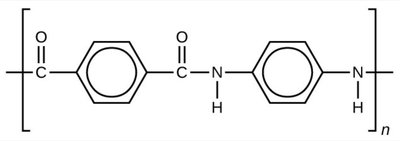
Polymers like Kevlar, used in body armor and clothing
Nucleic Acids
Overview of Nucleic Acids
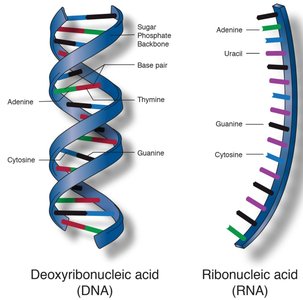
Nucleic acids are macromolecules responsible for the storage and expression of genetic information. The two main types are DNA (deoxyribonucleic acid) and RNA (ribonucleic acid).
DNA: Encodes genetic instructions for protein synthesis.
RNA: Involved in protein synthesis and gene regulation (mRNA, tRNA, rRNA).
Nucleotides: Building Blocks of Nucleic Acids
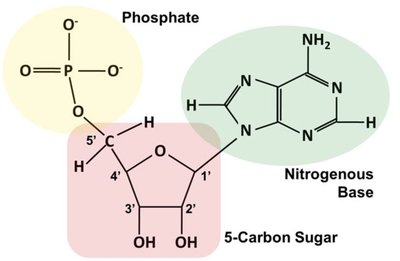
Nucleotides are the monomers of nucleic acids, each consisting of a phosphate group, a five-carbon sugar (ribose or deoxyribose), and a nitrogenous base.
DNA bases: Adenine (A), Guanine (G), Cytosine (C), Thymine (T)
RNA bases: Adenine (A), Guanine (G), Cytosine (C), Uracil (U)
Formation of Nucleic Acid Polymers
Nucleotides are joined by dehydration synthesis (condensation reaction) to form long chains (polynucleotides), with a sugar-phosphate backbone.
Phosphodiester bonds link the 3' carbon of one sugar to the 5' phosphate of the next.


DNA Structure
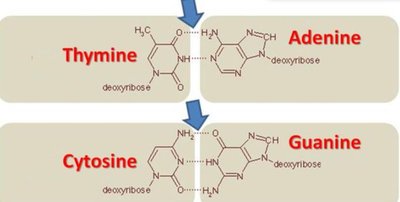
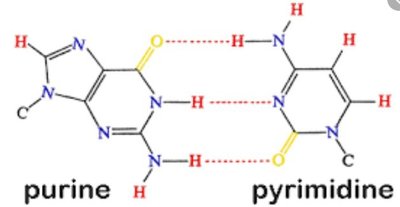
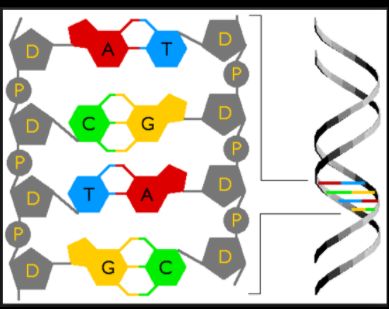
DNA is a double helix composed of two antiparallel strands held together by hydrogen bonds between complementary base pairs.
Base pairing rules: A pairs with T (2 hydrogen bonds), G pairs with C (3 hydrogen bonds)
Antiparallel orientation: One strand runs 5' to 3', the other 3' to 5'
DNA Packaging and Chromosomes
DNA is tightly packed in the nucleus by wrapping around histone proteins to form nucleosomes, further coiling into chromatin and chromosomes.
Genome: Complete set of genetic information (46 chromosomes in humans)
Gene: Segment of DNA coding for a protein
Chromosomal Abnormalities
Chromosomal abnormalities can be numerical (aneuploidy) or structural, often resulting from errors in meiosis.
Trisomy 21: Down syndrome (three copies of chromosome 21)
Klinefelter syndrome: XXY genotype
Turner syndrome: XO genotype
DNA Replication
Overview of DNA Replication
DNA replication is the process of making an identical copy of DNA, essential for cell division. It occurs during the S-phase of the cell cycle.
Semi-conservative replication: Each new DNA molecule contains one old and one new strand.
Enzymes Involved in DNA Replication
Topoisomerase: Relaxes supercoiled DNA
Helicase: Unzips the DNA double helix
DNA polymerase: Synthesizes new DNA strands and proofreads
Ligase: Joins Okazaki fragments on the lagging strand
Steps of DNA Replication
Unwinding and strand separation: Helicase breaks hydrogen bonds, forming a replication fork.
Complementary base pairing: DNA polymerase adds nucleotides in the 5' to 3' direction.
Joining fragments: Ligase connects Okazaki fragments on the lagging strand.
Proofreading: DNA polymerase checks for errors.
Gene Expression: Transcription and Translation
Gene Structure: Introns and Exons
Exons: Coding regions used to make proteins
Introns: Non-coding regions removed during mRNA processing
Transcription
Transcription is the process of synthesizing messenger RNA (mRNA) from a DNA template.
Initiation: RNA polymerase binds to the promoter region of a gene.
Elongation: RNA polymerase synthesizes mRNA by adding complementary RNA nucleotides (A, U, C, G).
Termination: RNA polymerase releases the completed mRNA, which is processed (splicing, capping, tailing) before leaving the nucleus.
Translation
Translation is the process of synthesizing a protein from an mRNA template, occurring in the cytoplasm at the ribosome.
Initiation: Ribosome assembles at the start codon (AUG) on mRNA.
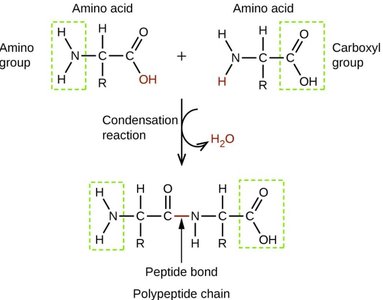
Elongation: tRNAs bring amino acids to the ribosome, matching codons with anticodons, and peptide bonds form between amino acids.
Termination: The ribosome reaches a stop codon (UAA, UAG, UGA), releasing the completed polypeptide.
Types of RNA
mRNA (messenger RNA): Carries genetic code from DNA to ribosome
tRNA (transfer RNA): Brings amino acids to the ribosome
rRNA (ribosomal RNA): Structural and catalytic component of ribosomes
Summary Table: DNA vs RNA
Feature | DNA | RNA |
|---|---|---|
Sugar | Deoxyribose | Ribose |
Strands | Double-stranded | Single-stranded |
Nitrogenous Bases | A, T, G, C | A, U, G, C |
Location | Nucleus | Nucleus & Cytoplasm |
Function | Genetic information storage | Protein synthesis, gene regulation |
