 Back
An Introduction to Carbohydrates
Study Guide - Smart Notes
 Tailored notes based on your materials, expanded with key definitions, examples, and context.
Chapter 5: An Introduction to Carbohydrates
Overview of Carbohydrates
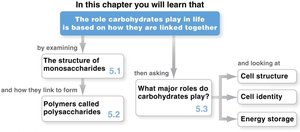
Carbohydrates are essential macromolecules that play critical roles in energy storage, cell structure, and cell recognition. Their biological function is largely determined by how their monomer units are linked together. This chapter explores the structure of monosaccharides, the formation of polysaccharides, and the major roles carbohydrates play in living organisms.
Monosaccharides: Structure and Diversity
General Structure and Formula
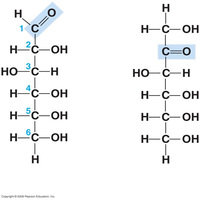
Monosaccharides are the simplest carbohydrates, often referred to as simple sugars. Their general molecular formula is , where n is typically 3–6. They contain a carbonyl group (C=O), multiple hydroxyl groups (–OH), and several carbon–hydrogen (C–H) bonds, making them hydrophilic and highly reactive.
Classification of Monosaccharides
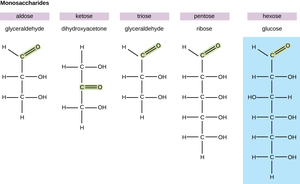
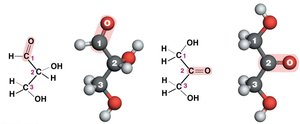
By Carbonyl Group Position: If the carbonyl group is at the end of the carbon chain, the sugar is an aldose; if in the middle, it is a ketose.
By Number of Carbons: Triose (3C), Pentose (5C), Hexose (6C).
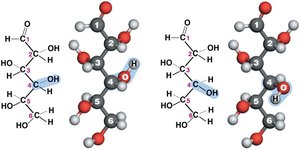
By Spatial Arrangement: The arrangement of hydroxyl groups around asymmetric carbons leads to different isomers.
Structural Variations
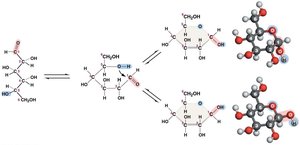
Monosaccharides can exist in linear or ring forms. In aqueous solutions, they typically form rings due to a reaction between the carbonyl and a hydroxyl group.
Formation of Disaccharides and Polysaccharides
Glycosidic Linkages
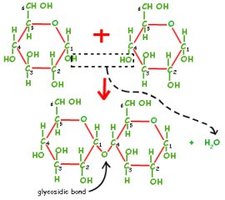
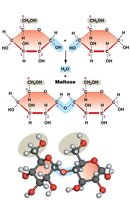
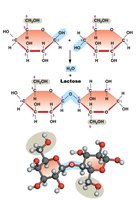
Monosaccharides are joined by condensation reactions between hydroxyl groups, forming covalent bonds known as glycosidic linkages. These linkages can be broken by hydrolysis. The most common types are:
α-1,4-glycosidic linkage
β-1,4-glycosidic linkage
The geometry of these linkages affects the structure and function of the resulting polysaccharide.
Storage Polysaccharides
Starch in Plants
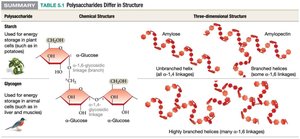
Starch is the primary storage polysaccharide in plants, composed of α-glucose monomers. It exists in two forms:
Amylose: Unbranched, with only α-1,4-glycosidic linkages, forming a helical structure.
Amylopectin: Branched, with some α-1,6-glycosidic linkages, branching about every 30 monomers.
Glycogen in Animals
Glycogen is the main storage polysaccharide in animals, stored in liver and muscle cells. It is a highly branched α-glucose polymer, similar to starch but with more frequent branches (about every 10 monomers).
Structural Polysaccharides
Cellulose in Plants
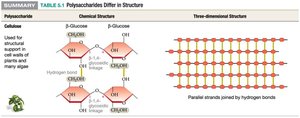
Cellulose is a structural polymer found in plant cell walls. It consists of β-glucose monomers joined by β-1,4-glycosidic linkages, with every other glucose flipped. This arrangement allows the formation of linear strands that can hydrogen bond with each other, providing rigidity and strength.
Chitin in Fungi and Animals
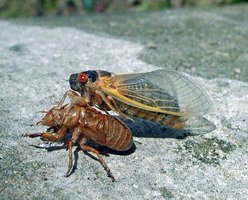
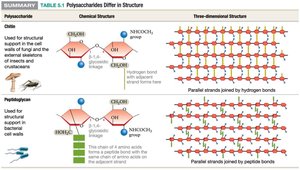
Chitin is a structural polysaccharide found in fungal cell walls and the exoskeletons of arthropods. Its monomer is N-acetylglucosamine (NAG), and it forms linear strands with β-1,4-glycosidic linkages and hydrogen bonds between strands.
Peptidoglycan in Bacteria
Peptidoglycan is a structural polymer in bacterial cell walls, consisting of alternating monosaccharides joined by β-1,4-glycosidic linkages. Short amino acid chains form peptide bonds between adjacent strands, providing additional strength.
Functions of Carbohydrates
Structural Support
Cellulose, chitin, and peptidoglycan form long, fibrous strands that provide structural support in plants, fungi, and bacteria. Their β-1,4-glycosidic linkages are resistant to hydrolysis, making them durable structural materials. These fibers also contribute to dietary fiber in human nutrition.
Cell Identity and Recognition
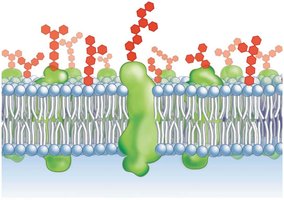
Carbohydrates on the cell surface play a key role in cell recognition and signaling. Glycoproteins (carbohydrates attached to proteins) and glycolipids (carbohydrates attached to lipids) are essential for identifying cells as "self" and for communication between cells.
Energy Storage and Release
Carbohydrates are vital for energy storage. In photosynthesis, plants convert sunlight, CO2, and water into carbohydrates:
Carbohydrates contain more energy than CO2 due to their C–H and C–C bonds. Fatty acids store even more energy because they have more of these bonds.
Enzymatic Hydrolysis and ATP Production
Starch and glycogen are easily hydrolyzed by enzymes (amylase for starch, phosphorylase for glycogen) to release glucose. Cells use glucose to produce ATP, the universal energy currency:
Summary Table: Major Polysaccharides and Their Functions
Polysaccharide | Monomer | Linkage | Main Function | Location |
|---|---|---|---|---|
Starch | α-glucose | α-1,4 & α-1,6 | Energy storage | Plants |
Glycogen | α-glucose | α-1,4 & α-1,6 | Energy storage | Animals |
Cellulose | β-glucose | β-1,4 | Structural support | Plants |
Chitin | N-acetylglucosamine | β-1,4 | Structural support | Fungi, arthropods |
Peptidoglycan | Modified sugars + peptides | β-1,4 + peptide bonds | Structural support | Bacteria |
