 Back
An Introduction to Invertebrates (Chapter 33): Diversity, Structure, and Function
Study Guide - Smart Notes
 Tailored notes based on your materials, expanded with key definitions, examples, and context.
Chapter 33: An Introduction to Invertebrates
Overview of Invertebrate Diversity
Invertebrates are animals that lack a backbone and represent more than 95% of known animal species. They are morphologically diverse and inhabit nearly every ecosystem on Earth. Understanding their diversity involves examining their evolutionary relationships and unique adaptations.
Definition: Invertebrates are animals without a vertebral column (backbone).
Diversity: Over 1.3 million described species, with estimates up to 10–20 million total species.
Habitats: Found in marine, freshwater, and terrestrial environments.
Major Clades of Invertebrates
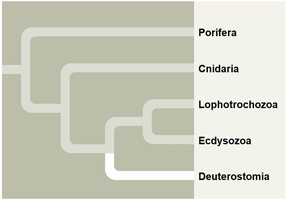
Animal diversity is organized into several major clades based on evolutionary relationships. The main groups include Porifera, Cnidaria, Lophotrochozoa, Ecdysozoa, and Deuterostomia.
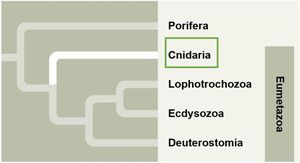
Porifera: Sponges, basal animals lacking true tissues.
Cnidaria: Ancient eumetazoans with true tissues.
Lophotrochozoa: Includes flatworms, molluscs, annelids, and others.
Ecdysozoa: Includes nematodes and arthropods, characterized by molting.
Deuterostomia: Includes echinoderms and chordates.
Phylum Platyhelminthes: Flatworms
Tapeworms (Class Cestoda)
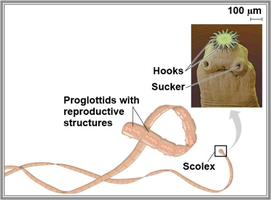
Tapeworms are parasitic flatworms that inhabit the intestines of vertebrates, including humans. They lack a digestive system and absorb nutrients directly from their host.
Scolex: The anterior end with hooks and suckers for attachment.
Proglottids: Repetitive segments containing reproductive organs; mature proglottids are released in feces.
Life Cycle: Involves intermediate hosts (e.g., pigs, cattle); humans are infected by consuming undercooked meat containing larvae.
Phylum Syndermata: Rotifers and Acanthocephalans
Rotifers are tiny, multicellular animals with specialized organ systems, while acanthocephalans are parasitic worms known for their spiny proboscis.
Rotifers: Possess a crown of cilia for feeding and a complete digestive tract.
Acanthocephalans: Parasitic, lack a complete digestive tract, and manipulate host behavior for transmission.
Phylum Ectoprocta and Brachiopoda
Ectoprocts (Bryozoans)
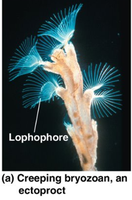
Ectoprocts are colonial, sessile animals that use a lophophore for filter feeding. They are important reef builders in marine environments.
Lophophore: Crown of ciliated tentacles used for feeding.
Colony Structure: Many species secrete a hard exoskeleton.
Phylum Mollusca
Bivalves
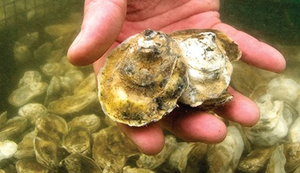
Bivalves are aquatic molluscs with a shell divided into two hinged halves. They include clams, oysters, mussels, and scallops.
Shell: Two parts joined by adductor muscles.
Feeding: Most are filter feeders using gills.
Mobility: Most are sedentary, but some can move by digging or swimming.
Phylum Arthropoda
Myriapods: Millipedes and Centipedes
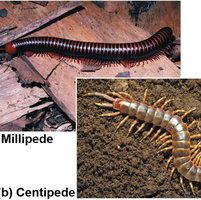
Myriapods are terrestrial arthropods with elongated bodies and many legs. Millipedes are detritivores, while centipedes are carnivorous.
Millipedes: Two pairs of legs per segment, feed on decaying plant matter.
Centipedes: One pair of legs per segment, possess poison claws for predation.
Crustaceans: Isopods
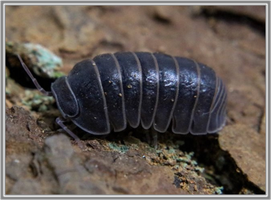
Isopods are a diverse group of crustaceans found in marine, freshwater, and terrestrial habitats. Pill bugs are common terrestrial isopods.
Body: Segmented with a hard exoskeleton.
Habitat: Moist environments, such as under logs and leaves.
Summary Table: Major Invertebrate Groups
Phylum/Clade | Key Features | Examples |
|---|---|---|
Porifera | No true tissues, filter feeders | Sponges |
Cnidaria | Diploblastic, radial symmetry, stinging cells | Jellies, corals, hydras |
Lophotrochozoa | Bilateral symmetry, diverse body plans | Flatworms, molluscs, annelids |
Ecdysozoa | Molting of cuticle (ecdysis) | Nematodes, arthropods |
Deuterostomia | Radial cleavage, anus develops from blastopore | Echinoderms, chordates |
