 Back
An Introduction to Invertebrates: Diversity, Structure, and Evolution
Study Guide - Smart Notes
 Tailored notes based on your materials, expanded with key definitions, examples, and context.
Chapter 33: An Introduction to Invertebrates
Overview of Invertebrate Diversity
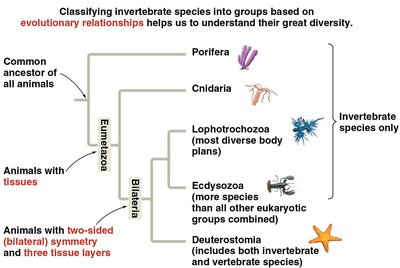
Invertebrates are animals that lack a backbone and account for over 95% of known animal species. They occupy nearly every habitat on Earth and display remarkable morphological diversity. Understanding their evolutionary relationships helps clarify their classification and diversity.
Invertebrates: Animals without a backbone.
They are found in marine, freshwater, and terrestrial environments.
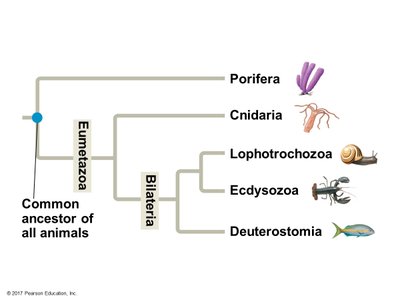
Major groups include Porifera (sponges), Cnidaria (jellies, corals), Lophotrochozoa, Ecdysozoa, and Deuterostomia.
Major Invertebrate Phyla
Invertebrates are classified into several major phyla based on body plan, symmetry, and developmental characteristics.
Porifera: Sponges, simple animals lacking true tissues.
Cnidaria: Jellies, corals, and hydras with radial symmetry and stinging cells.
Lophotrochozoa: Includes flatworms, molluscs, annelids, and others with diverse body plans.
Ecdysozoa: Animals that molt their cuticle, including nematodes and arthropods.
Deuterostomia: Includes both invertebrate and vertebrate species, such as echinoderms and chordates.
Porifera: The Sponges
Structure and Function
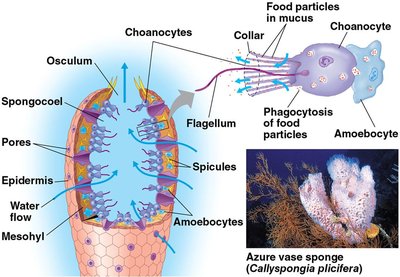
Sponges are basal animals that lack true tissues and organs. Their bodies are porous, facilitating filter feeding. Water flows through pores into a central cavity (spongocoel) and exits via the osculum.
Choanocytes: Flagellated collar cells that capture food particles from water.
Amoebocytes: Cells involved in digestion and skeletal fiber production.
Sponges are mostly hermaphroditic, functioning as both male and female at different times.
Cnidaria: Ancient Eumetazoans
Basic Body Plan
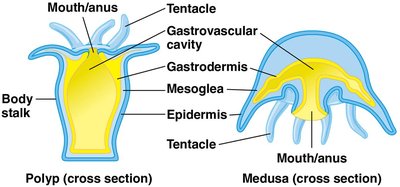
Cnidarians are diploblastic, radially symmetrical animals with a central gastrovascular cavity. They exist in two main forms: sessile polyps and motile medusae.
Polyp: Cylindrical, adheres to substrate (e.g., hydras, sea anemones).
Medusa: Free-swimming, bell-shaped (e.g., jellyfish).
Diploblastic: Two germ layers—ectoderm (epidermis) and endoderm (gastrodermis).
Single opening serves as both mouth and anus.
Feeding and Defense
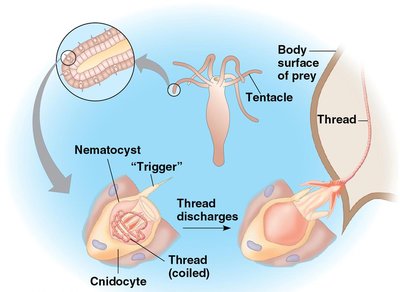
Cnidarians are carnivores that use tentacles armed with specialized cells called cnidocytes for prey capture and defense. Nematocysts within cnidocytes eject stinging threads to immobilize prey.
Cnidocyte: Unique stinging cell containing a nematocyst.
Nematocyst: Organelles that discharge a coiled thread capable of delivering toxins.
Major Clades of Cnidaria
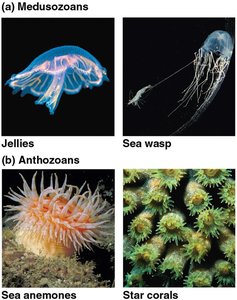
Medusozoa: Includes jellies and sea wasps (medusa form dominant).
Anthozoa: Includes sea anemones and corals (polyp form only).
Coral Reefs and Environmental Threats
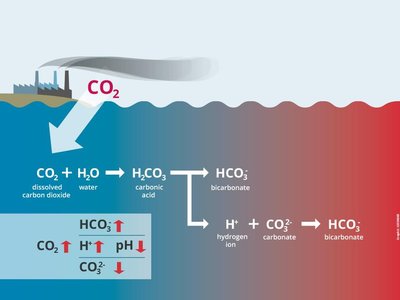
Corals form symbiotic relationships with algae and secrete calcium carbonate exoskeletons, building reefs that support diverse marine life. Coral reefs are threatened by pollution, overharvesting, ocean acidification, and climate change.
Lophotrochozoa: Diverse Body Plans
General Features
Lophotrochozoans are a clade identified by molecular data, characterized by bilateral symmetry and triploblastic development. Most have a coelom and a complete digestive tract.
Includes flatworms, rotifers, ectoprocts, brachiopods, molluscs, and annelids.

Flatworms (Platyhelminthes)
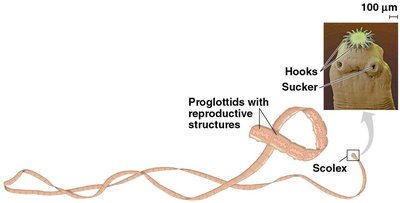
Flatworms are acoelomate, triploblastic animals with dorsoventrally flattened bodies. Many are free-living (e.g., planarians), while others are parasitic (e.g., tapeworms).
Flat body increases surface area for gas exchange.
Planarians have light-sensitive eyespots and a more centralized nervous system than cnidarians.
Tapeworms lack a digestive system and absorb nutrients directly from the host.
Rotifers and Acanthocephalans
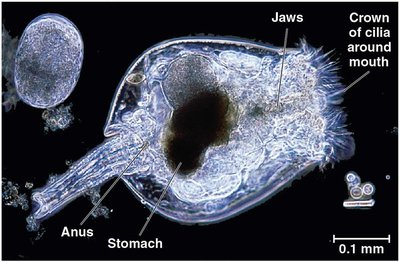
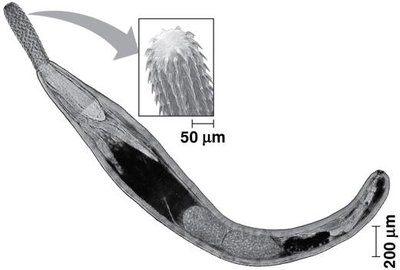
Rotifers are microscopic, aquatic animals that reproduce mainly by parthenogenesis. Acanthocephalans are sexually reproducing parasites of vertebrates, lacking a digestive tract and possessing a spiny proboscis.
Ectoprocts and Brachiopods
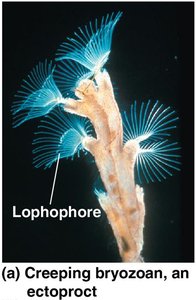
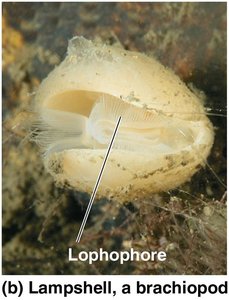
Both groups possess a lophophore, a crown of ciliated tentacles for feeding, and a U-shaped alimentary canal. Ectoprocts form colonies covered by a hard exoskeleton, while brachiopods have dorsal and ventral shells and attach to substrates by a stalk.
Molluscs
Molluscs are soft-bodied animals, often protected by a calcium carbonate shell. Their body plan includes a muscular foot, visceral mass, and mantle. Many have a radula for feeding.
Major clades: Polyplacophora (chitons), Gastropoda (snails, slugs), Bivalvia (clams, oysters), Cephalopoda (squids, octopuses).
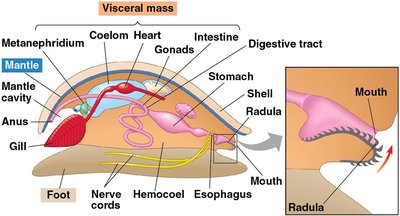
Annelids: Segmented Worms
Annelids are coelomate, segmented worms found in marine, freshwater, and terrestrial habitats. They are divided into Errantia (mobile, often predatory) and Sedentaria (less mobile, includes earthworms and leeches).
Errantians have parapodia for locomotion, each with many chaetae (bristles).
Sedentarians may burrow or live in tubes.
Ecdysozoa: Animals That Molt
General Features
Ecdysozoans are defined by their ability to molt a tough external cuticle. The two largest phyla are Nematoda and Arthropoda.
Nematodes (Roundworms)
Nematodes are unsegmented, cylindrical worms found in diverse habitats. Many are free-living, while others are important parasites of plants and animals.
Body covered by a cuticle; movement is by longitudinal muscles only.
Some species, such as Caenorhabditis elegans, are model organisms in research.
Arthropods
Arthropods are the most diverse and abundant animals, characterized by a segmented body, jointed appendages, and a hard exoskeleton made of chitin. Their appendages are specialized for various functions, and they undergo molting to grow.
Three major clades: Chelicerates (spiders, scorpions), Myriapods (centipedes, millipedes), Pancrustaceans (insects, crustaceans).
Deuterostomia: Echinoderms and Chordates
Deuterostomes are defined by radial cleavage and the formation of the anus from the blastopore. Echinoderms (e.g., sea stars, sea urchins) have a unique water vascular system and show radial symmetry as adults. Chordates include all vertebrates and some invertebrates, and will be discussed in detail in the next chapter.
