 Back
An Introduction to Invertebrates: Diversity, Structure, and Evolution
Study Guide - Smart Notes
 Tailored notes based on your materials, expanded with key definitions, examples, and context.
Chapter 33: An Introduction to Invertebrates
Overview of Invertebrate Diversity
Invertebrates are animals that lack a backbone and account for more than 95% of known animal species. They are morphologically diverse and occupy nearly every habitat on Earth. Understanding their diversity requires examining their evolutionary relationships and major body plans.
Invertebrates: Animals without a vertebral column (backbone).
They include phyla such as Porifera, Cnidaria, Lophotrochozoa, Ecdysozoa, and Deuterostomia.
Kingdom Animalia contains approximately 1.3 million described species, with estimates of total species ranging much higher.
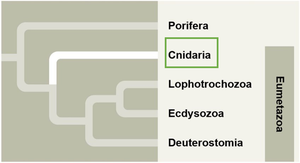
Major Clades of Invertebrates
Porifera: Sponges
Sponges are basal animals that lack true tissues and organs. They are primarily marine and have a simple body plan adapted for filter feeding.
Body Structure: Sac-like body with pores, central cavity (spongocoel), and an opening (osculum).
Cell Types: Includes choanocytes (collar cells for feeding), amoebocytes (totipotent cells for digestion and support), and other specialized cells.
Reproduction: Most are hermaphrodites, exhibiting sequential hermaphroditism. Larvae are flagellated and free-swimming before settling as sessile adults.
Cnidaria: Ancient Eumetazoans
Cnidarians are among the oldest eumetazoans (animals with true tissues) and include corals, hydras, and jellies. They are diploblastic and exhibit radial symmetry.
Body Plan: Sac with a central gastrovascular cavity; single opening serves as both mouth and anus.
Forms: Two main forms—sessile polyp and motile medusa.
Feeding: Tentacles armed with cnidocytes (stinging cells) containing nematocysts for prey capture and defense.
Nervous System: Noncentralized nerve net coordinates movement and response to stimuli.
Major Clades: Medusozoa (jellies, box jellies, hydrozoans) and Anthozoa (sea anemones, corals).
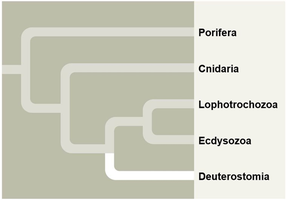
Lophotrochozoa: Diversity of Body Forms
Flatworms (Phylum Platyhelminthes)
Flatworms are acoelomate, dorsoventrally flattened animals found in marine, freshwater, and damp terrestrial habitats. Many are parasitic.
Body Plan: No body cavity; gastrovascular cavity branches throughout the body for nutrient distribution.
Surface Area: Flattened shape increases surface area for diffusion of gases and nutrients.
Excretory System: Protonephridia with flame bulbs maintain osmotic balance.
Lineages: Catenulida (chain worms) and Rhabditophora (includes planarians, trematodes, tapeworms).
Tapeworms
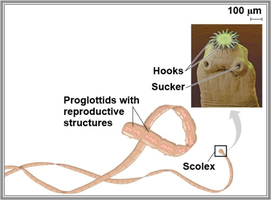
Tapeworms are parasitic flatworms lacking a digestive system, absorbing nutrients directly from the host's intestine.
Scolex: Anterior structure with hooks and suckers for attachment.
Proglottids: Reproductive units containing sex organs; released in host feces.
Life Cycle: Involves intermediate hosts (e.g., pigs, cattle); humans infected by eating undercooked meat.
Rotifers and Acanthocephalans (Phylum Syndermata)
Rotifers are tiny, multicellular animals with specialized organ systems, while acanthocephalans are parasitic worms with complex life cycles.
Rotifers: Possess a crown of cilia for feeding, a complete digestive tract, and reproduce by parthenogenesis or sexually.
Acanthocephalans: Parasitic, lack a complete digestive tract, and manipulate host behavior for transmission.
Ectoprocts and Brachiopods
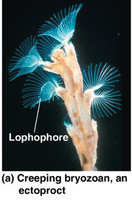
Both groups possess a lophophore for feeding and a U-shaped alimentary canal. Ectoprocts are colonial, while brachiopods have dorsal and ventral shells.
Ectoprocts (Bryozoans): Sessile, colonial, often encased in a hard exoskeleton.
Brachiopods: Marine, attach to substrate by a stalk, superficially resemble clams.
Molluscs
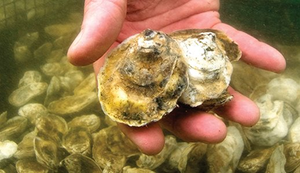
Molluscs are a diverse phylum including snails, slugs, clams, oysters, octopuses, and squids. They have a soft body, often protected by a calcium carbonate shell.
Body Plan: Muscular foot, visceral mass, and mantle (secretes shell).
Feeding: Many use a radula to scrape food.
Major Clades: Polyplacophora (chitons), Gastropoda (snails, slugs), Bivalvia (clams, oysters), Cephalopoda (squids, octopuses).
Ecdysozoa: Animals with a Cuticle
Arthropods
Arthropods are the most species-rich animal group, characterized by a segmented body, exoskeleton, and jointed appendages. They include insects, crustaceans, myriapods, and chelicerates.
Exoskeleton: Made of chitin, provides protection and support, must be molted for growth (ecdysis).
Sensory Organs: Eyes, antennae, and olfactory receptors.
Open Circulatory System: Hemolymph is pumped into the hemocoel.
Major Lineages: Chelicerates (spiders, scorpions), Myriapods (centipedes, millipedes), Pancrustaceans (insects, crustaceans).
Myriapods: Millipedes and Centipedes
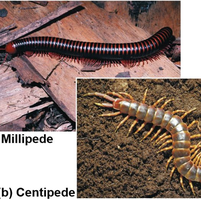
Myriapods are terrestrial arthropods with many body segments and legs. Millipedes are detritivores, while centipedes are carnivores with poison claws.
Millipedes: Two pairs of legs per segment, feed on decaying plant matter.
Centipedes: One pair of legs per segment, possess poison claws for predation.
Crustaceans
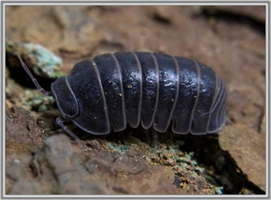
Crustaceans are primarily aquatic arthropods with specialized appendages for feeding, locomotion, and sensory functions. Isopods are a diverse group within crustaceans.
Isopods: Includes terrestrial species like pill bugs, as well as aquatic forms.
Summary Table: Selected Invertebrate Groups and Features
Phylum/Group | Key Features | Examples |
|---|---|---|
Porifera | No true tissues, filter feeders, sessile | Sponges |
Cnidaria | Diploblastic, radial symmetry, cnidocytes | Jellies, corals, hydras |
Platyhelminthes | Acoelomate, flattened body, gastrovascular cavity | Planarians, tapeworms |
Syndermata | Microscopic, complete digestive tract, parthenogenesis | Rotifers |
Brachiopoda | Lophophore, dorsal/ventral shells | Lamp shells |
Mollusca | Muscular foot, mantle, radula | Snails, clams, squids |
Arthropoda | Segmented body, exoskeleton, jointed appendages | Insects, crustaceans, spiders |
