 Back
An Introduction to Invertebrates: Structure, Diversity, and Evolution
Study Guide - Smart Notes
 Tailored notes based on your materials, expanded with key definitions, examples, and context.
An Introduction to Invertebrates
Overview: Life Without a Backbone
Invertebrates are animals that lack a backbone and represent approximately 95% of all known animal species. They display remarkable morphological diversity and occupy a wide range of ecological niches. Understanding invertebrates is essential for grasping the evolutionary history and functional adaptations of the animal kingdom.
Definition: Invertebrates are animals without a vertebral column (backbone).
Diversity: Includes phyla such as Porifera, Cnidaria, Mollusca, Annelida, Arthropoda, and Echinodermata.
Evolutionary significance: Invertebrates illustrate key evolutionary innovations, including tissues, symmetry, and body cavities.
Major Invertebrate Groups and Their Characteristics
Porifera: Sponges
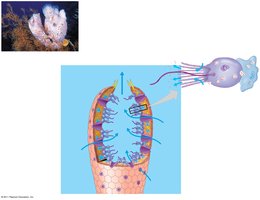
Sponges (phylum Porifera) are simple, sedentary animals found in marine and freshwater environments. They lack true tissues and organs and are characterized by their unique feeding system.
Suspension feeders: Capture food particles from water passing through their porous bodies.
Choanocytes: Flagellated collar cells that generate water currents and ingest food by phagocytosis.
Amoebocytes: Mobile cells involved in digestion and structural support.
Structure: Body consists of an outer epidermis, a gelatinous mesohyl, and internal spongocoel cavity.
Cnidaria: Ancient Eumetazoans
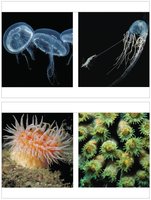
Cnidarians are among the oldest eumetazoans (animals with true tissues) and include jellies, corals, and hydras. They exhibit a diploblastic, radially symmetrical body plan with a central gastrovascular cavity.
Body forms: Sessile polyp and motile medusa.
Gastrovascular cavity: Central digestive compartment with a single opening serving as both mouth and anus.
Carnivorous feeding: Use tentacles armed with specialized cells called cnidocytes for prey capture and defense.
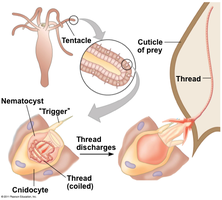
Nematocysts: Specialized organelles within cnidocytes that eject a stinging thread to immobilize prey.
Lophotrochozoa: Diversity of Body Forms
Lophotrochozoans are a major clade of bilaterian animals, characterized by bilateral symmetry and triploblastic development. Most possess a coelom and a complete digestive tract.
Flatworms (Phylum Platyhelminthes)
Habitat: Marine, freshwater, and damp terrestrial environments.
Gas exchange: Occurs across the body surface; flattened shape increases surface area.
Parasitic groups: Trematodes (e.g., blood flukes) and tapeworms (intestinal parasites of vertebrates).
Tapeworm adaptations: Lack digestive system; absorb nutrients through body surface; scolex for attachment; proglottids for reproduction.
Molluscs (Phylum Mollusca)
Molluscs are soft-bodied animals, often protected by a hard shell. They are highly diverse and include snails, slugs, clams, oysters, octopuses, and squids.
Body plan: Three main parts—muscular foot (locomotion), visceral mass (internal organs), and mantle (secretes shell, forms cavity).
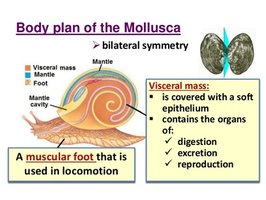
Gastropods: Most numerous; single, spiraled shell.
Bivalves: Shell divided into two halves; includes clams, oysters, mussels, and scallops.
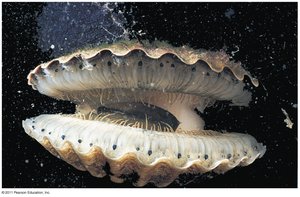
Cephalopods: Carnivores with beak-like jaws and tentacles; include squids and octopuses; capable of rapid movement via jet propulsion.
Conservation: Many molluscs are threatened by habitat loss, pollution, and invasive species.
Annelids (Phylum Annelida)
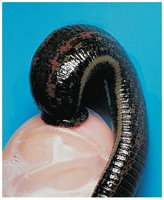
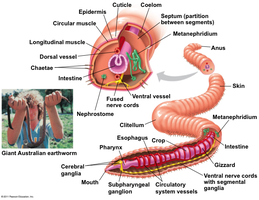
Annelids are segmented worms, including earthworms and leeches. They possess a true coelom and a segmented body plan.
Leeches: Some are blood-sucking parasites; secrete hirudin to prevent blood clotting.
Earthworms: Ingest soil and extract nutrients as it passes through their alimentary canal; important for soil aeration and fertility.
Ecdysozoa: The Most Species-Rich Animal Group
Ecdysozoans are defined by their tough external cuticle, which is periodically shed through ecdysis (molting). The largest group within this clade is the arthropods.
Arthropods: Characterized by jointed appendages, segmented bodies, and exoskeletons.
Major groups: Chelicerates (spiders, scorpions), myriapods (centipedes, millipedes), pancrustaceans (crustaceans and insects).
Insects: Most diverse group; adapted for flight, metamorphosis, and exploitation of terrestrial habitats.
Metamorphosis: Distinct larval and adult stages; allows specialization for different ecological roles.
Deuterostomia: Echinoderms and Chordates
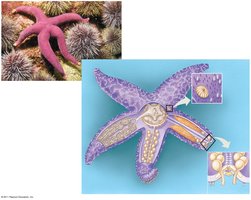
Echinoderms (e.g., sea stars, sea urchins) and chordates are grouped as deuterostomes. Echinoderms are exclusively marine and possess a unique water vascular system for locomotion and feeding.
Water vascular system: Network of hydraulic canals ending in tube feet for movement and prey capture.
Feeding: Sea stars can evert their stomachs to digest prey externally.
Summary Table: Major Invertebrate Groups
Phylum | Key Features | Examples |
|---|---|---|
Porifera | No true tissues, suspension feeders | Sponges |
Cnidaria | Diploblastic, radial symmetry, cnidocytes | Jellies, corals, hydras |
Platyhelminthes | Flatworms, acoelomate, some parasitic | Planarians, tapeworms |
Mollusca | Muscular foot, visceral mass, mantle | Snails, clams, squids |
Annelida | Segmented worms, true coelom | Earthworms, leeches |
Arthropoda | Exoskeleton, jointed appendages | Insects, spiders, crustaceans |
Echinodermata | Water vascular system, radial symmetry (adults) | Sea stars, sea urchins |
Additional info: This summary integrates foundational concepts from animal diversity, focusing on the evolutionary relationships and functional adaptations of major invertebrate phyla. For further study, review the evolutionary tree of animals and the specific adaptations that have enabled invertebrates to colonize diverse habitats.
