 Back
BackAn Introduction to Invertebrates: Structure, Diversity, and Evolution
Study Guide - Smart Notes
 Tailored notes based on your materials, expanded with key definitions, examples, and context.
Introduction to Invertebrates
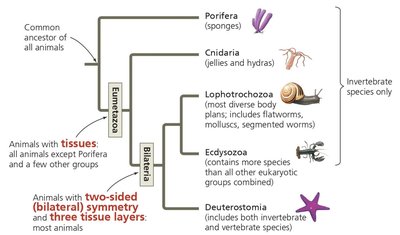
Overview of Invertebrate Diversity
Invertebrates are animals that lack a backbone and represent approximately 95% of all animal species. They occupy nearly every habitat on Earth and display remarkable morphological diversity. Understanding invertebrate groups provides insight into animal evolution and the development of complex body plans.
Basal animals such as sponges lack true tissues.
Cnidarians are among the earliest eumetazoans with true tissues.
Lophotrochozoans and Ecdysozoans are highly diverse clades within Bilateria.
Echinoderms and chordates are deuterostomes, with chordates including all vertebrates.
Phylum Porifera (Sponges)
Characteristics and Anatomy
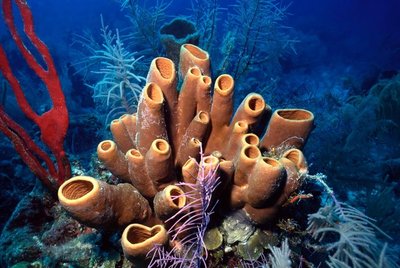
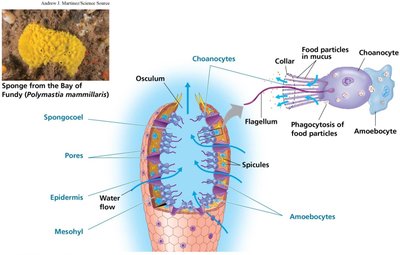
Sponges are basal animals that lack true tissues and organs. They are primarily marine, though some inhabit freshwater. Sponges are suspension feeders, filtering food particles from water that passes through their porous bodies.
Body contains spongocoel (central cavity) and osculum (large opening).
Specialized cells: Choanocytes (generate water currents and capture food) and amoebocytes (digestion and structure).
Most are sequential hermaphrodites, functioning as both male and female at different times.
Phylum Cnidaria
Body Plan and Diversity
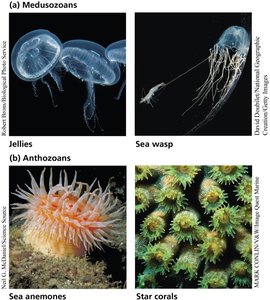
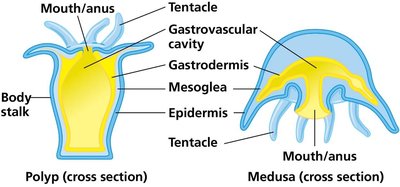
Cnidarians are ancient eumetazoans with true tissues and a simple, diploblastic, radially symmetrical body plan. They include jellies, corals, and hydras. The basic body structure is a sac with a central gastrovascular cavity and a single opening serving as both mouth and anus.
Two main body forms: Polyp (sessile) and Medusa (motile).
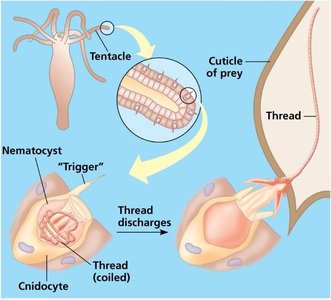
Possess cnidocytes—specialized cells containing nematocysts for prey capture and defense.
Hydrostatic skeleton and a simple nerve net (no brain).
Bilateria
Major Clades and Features
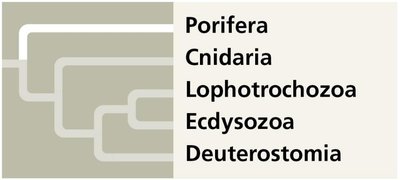
The Bilateria clade includes animals with bilateral symmetry, three germ layers (triploblastic), and a complete digestive tract with two openings. The three major groups are Lophotrochozoa, Ecdysozoa, and Deuterostomia.
Lophotrochozoa: Identified by molecular data; includes flatworms, molluscs, annelids, and others. Some have a lophophore (feeding structure), others a trochophore larva.
Ecdysozoa: Characterized by molting a cuticle (ecdysis); includes nematodes and arthropods.
Deuterostomia: Includes echinoderms and chordates; defined by developmental features and DNA evidence.
Phylum Mollusca
Body Plan and Diversity
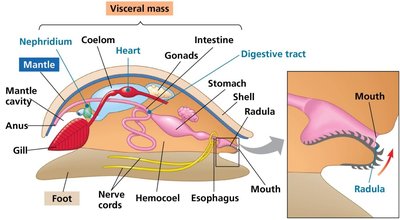
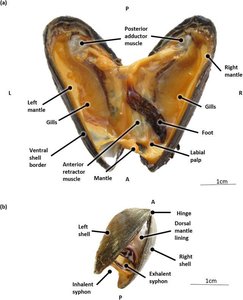
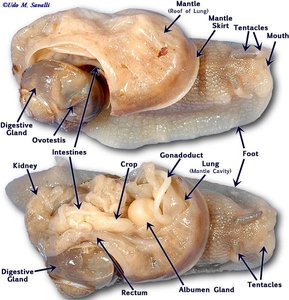
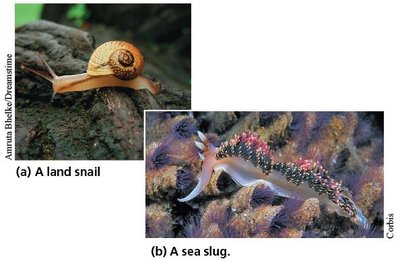
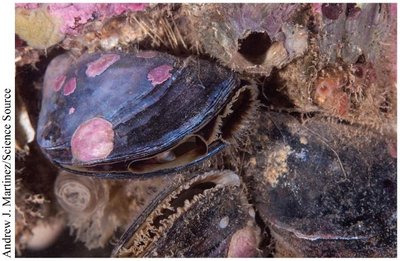
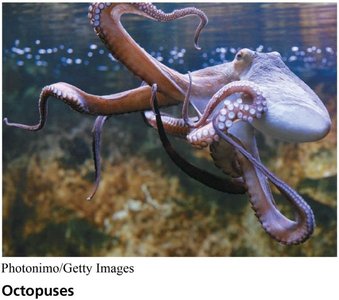
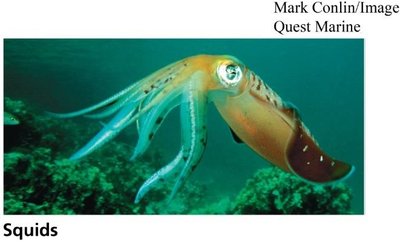
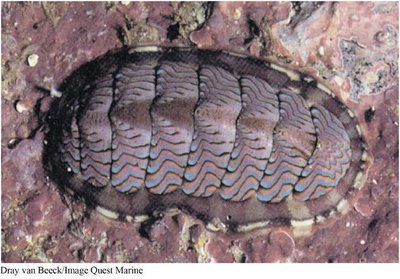
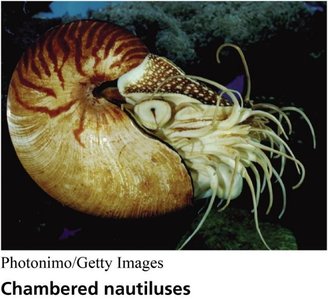
Molluscs are soft-bodied coelomates, most with a calcium carbonate shell. They are highly diverse, including snails, slugs, clams, oysters, squids, and octopuses. All molluscs share a basic body plan with three main parts: muscular foot, visceral mass, and mantle.
Many have a mantle cavity and a rasp-like feeding organ called a radula.
Major classes: Polyplacophora (chitons), Gastropoda (snails, slugs), Bivalvia (clams, oysters), Cephalopoda (squids, octopuses, cuttlefish, nautiluses).
Phylum Annelida
Segmented Worms
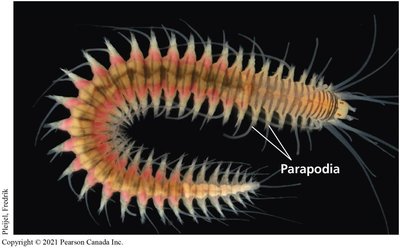
Annelids are coelomates with segmented bodies composed of a series of fused rings. They include earthworms, leeches, and marine polychaetes. Recent molecular studies divide annelids into two major clades: Errantia and Sedentaria.
Errantians: Mostly mobile, marine, with parapodia for locomotion and respiration.
Sedentarians: Less mobile, often burrow or live in tubes; includes earthworms and leeches.
Earthworms: Hermaphroditic, closed circulatory system, respire through skin.
Leeches: Many are blood-sucking parasites, secrete hirudin to prevent blood clotting.
Phylum Nematoda (Roundworms)
General Features
Nematodes are unsegmented, cylindrical worms found in diverse habitats. They possess a hemocoel and a complete alimentary canal but lack a circulatory system. Nematodes periodically shed their cuticle as they grow.
Many are free-living; some are important parasites of plants and animals.
Caenorhabditis elegans is a widely used model organism in research.
Phylum Arthropoda
Body Plan and Diversity
Arthropods are the most species-rich animal phylum, with segmented bodies, jointed appendages, and a chitinous exoskeleton that must be molted for growth. They have open circulatory systems and highly specialized appendages for various functions.
Major groups include crustaceans, insects, and others.
Insects (Hexapoda) are the most diverse group, with adaptations such as flight and complex organ systems.
Metamorphosis: Incomplete (nymphs resemble adults) and complete (larvae differ from adults).
Phylum Echinodermata
Unique Features
Echinoderms include sea stars, sea urchins, brittle stars, and others. They have a thin epidermis covering an endoskeleton of calcareous plates and a unique water vascular system for locomotion and feeding. Most are slow-moving or sessile, with external sexual reproduction.
Deuterostome development: radial cleavage, anus forms from blastopore.
Examples: sea stars, brittle stars, sea urchins, sand dollars, sea cucumbers.
*Additional info: This guide covers the major invertebrate phyla, their evolutionary relationships, and key anatomical and physiological features, providing a foundation for further study in animal diversity and evolution.*
