 Back
An Overview of Animal Diversity
Study Guide - Smart Notes
 Tailored notes based on your materials, expanded with key definitions, examples, and context.
An Overview of Animal Diversity
Introduction to the Animal Kingdom
The animal kingdom encompasses a vast diversity of organisms, with over 1.3 million living species identified by scientists. Animals are found in nearly every environment on Earth, from deep oceans to terrestrial habitats. This chapter provides an overview of the defining characteristics, evolutionary history, and major body plans of animals.
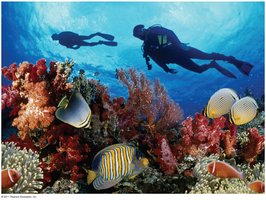
Concept 32.1: Animals are Multicellular, Heterotrophic Eukaryotes with Tissues from Embryonic Layers
Cell Structure and Specialization
Multicellularity: Animals are composed of multiple cells that work together to form complex structures.
Eukaryotic Cells: Animal cells contain membrane-bound organelles and a nucleus.
Lack of Cell Walls: Unlike plants and fungi, animal cells do not have cell walls. Instead, their bodies are supported by structural proteins such as collagen.
Unique Tissues: Nervous and muscle tissues are unique to animals and are essential for movement and response to stimuli.
Tissues: Groups of cells with a common structure and function, forming the building blocks of organs and organ systems.
Reproduction and Development
Sexual Reproduction: Most animals reproduce sexually, with the diploid stage dominating the life cycle.
Cleavage: After fertilization, the zygote undergoes rapid cell divisions (cleavage), forming a multicellular, hollow blastula.
Gastrulation: The blastula undergoes gastrulation, resulting in a gastrula with distinct embryonic tissue layers.
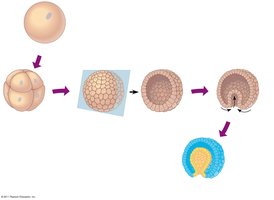
Larval Stages: Many animals have a larval stage that is morphologically distinct from the adult and undergoes metamorphosis.
Hox Genes: Most animals possess Hox genes, which regulate the development of body form and are unique to the animal kingdom.
Concept 32.2: The History of Animals Spans More Than Half a Billion Years
Origins and Early Evolution
Common Ancestor: The common ancestor of living animals likely existed between 675 and 800 million years ago and may have resembled modern choanoflagellates, which are protists closely related to animals.
Major Eras in Animal Evolution
Neoproterozoic Era (1 Billion–542 Million Years Ago): Early animal fossils date from 565 to 550 million years ago.
Paleozoic Era (542–251 Million Years Ago): The Cambrian explosion (535–525 million years ago) marks the rapid diversification of animal life, especially bilaterians (organisms with bilateral symmetry and a complete digestive tract).
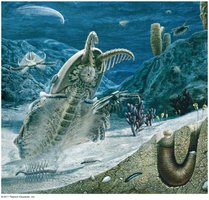
Hypotheses for Cambrian Explosion: Possible causes include new predator-prey relationships, increased atmospheric oxygen, and the evolution of the Hox gene complex.
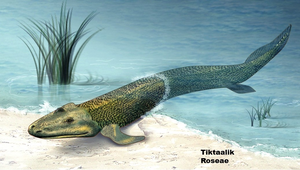
Transition to Land: Animals began to colonize land around 460 million years ago, leading to further diversification.
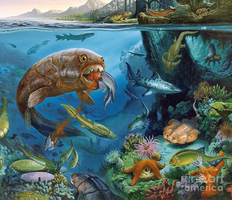
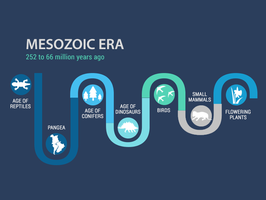
Mesozoic Era (251–65.5 Million Years Ago)
Coral Reefs: Emerged as important marine habitats.
Dinosaurs: Dominated terrestrial ecosystems.
First Mammals: Appeared during this era.
Flowering Plants and Insects: Diversified significantly.
Cenozoic Era (65.5 Million Years Ago to Present)
Mass Extinctions: Marked the end of the Mesozoic, including the extinction of nonflying dinosaurs.
Mammalian Radiation: Mammals increased in size and diversity, occupying ecological niches left vacant by extinct species.
Concept 32.3: Animals Can Be Characterized by “Body Plans”
Symmetry
Radial Symmetry: Body parts are arranged around a central axis; no distinct front, back, left, or right. Common in sessile or planktonic animals.
Bilateral Symmetry: Body has distinct dorsal (top), ventral (bottom), anterior (head), and posterior (tail) sides. Associated with active movement and cephalization (development of a head).
Tissues and Germ Layers
Tissues: Specialized groups of cells separated by membranous layers.
Germ Layers: Ectoderm (outer layer), endoderm (inner layer), and in triploblastic animals, mesoderm (middle layer).
Diploblastic Animals: Have two germ layers (ectoderm and endoderm), e.g., cnidarians.
Triploblastic Animals: Have three germ layers (ectoderm, mesoderm, endoderm), e.g., flatworms, arthropods, vertebrates.
Body Cavities
Coelom: A true body cavity derived from mesoderm, providing space for organ development and movement.
Coelomates: Animals with a true coelom.
Type | Body Cavity | Example |
|---|---|---|
Coelomate | True coelom (from mesoderm) | Earthworm |
Pseudocoelomate | Body cavity from mesoderm and endoderm | Roundworm |
Acoelomate | No body cavity | Flatworm |
Additional info: The presence and type of body cavity influence organ development, movement, and complexity in animals.
