 Back
BackAn Overview of Animal Diversity
Study Guide - Smart Notes
 Tailored notes based on your materials, expanded with key definitions, examples, and context.
An Overview of Animal Diversity
Introduction to Animal Diversity
The animal kingdom, or Metazoa, is a highly diverse group within the domain Eukarya. Animals are multicellular, heterotrophic organisms that evolved from a common ancestor shared with fungi and certain protists. Their evolutionary history is marked by the development of specialized tissues, complex body plans, and adaptations for efficient consumption and interaction with their environments.
Major Clades and Evolutionary Relationships
Unikonta and Animal Origins
Animals belong to the supergroup Unikonta, which also includes fungi and some protists. Within Unikonta, animals are most closely related to choanoflagellates, a group of protists. Molecular and morphological evidence, such as similarities in cadherin proteins, supports this relationship.
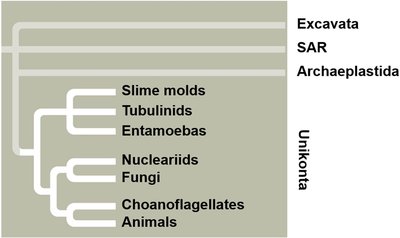
Opisthokonts: Clade including animals, fungi, and related protists.
Choanoflagellates: Closest living relatives to animals; share genes involved in cell adhesion and communication.
Defining Characteristics of Animals
General Features
Animals are defined by a combination of morphological and developmental traits. While exceptions exist, the following characteristics are generally observed:
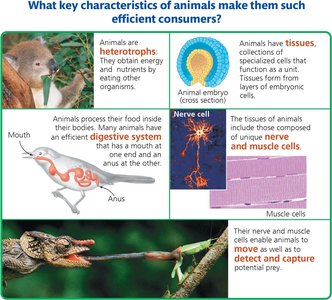
Multicellularity: Composed of multiple, specialized cells.
Heterotrophy: Obtain energy and nutrients by consuming other organisms.
Tissues: Specialized collections of cells that perform specific functions; unique to animals are nervous and muscle tissues.
Sexual Reproduction: Most animals reproduce sexually, with a dominant diploid (2n) stage.
Development from Embryonic Layers: Tissues arise from germ layers formed during embryogenesis.
Cell Structure and Specialization
Structural Proteins: Animal cells are supported by proteins such as collagen, not cell walls.
Nervous and Muscle Tissue: Unique to animals, allowing for rapid response and movement.
Animal Body Plans
Symmetry
Animal body plans are characterized by their symmetry, which influences movement and lifestyle.
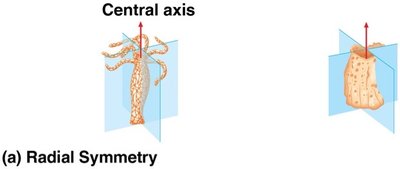
Radial Symmetry: Body parts arranged around a central axis; typical of sessile or planktonic animals (e.g., cnidarians).
Bilateral Symmetry: Body has right and left halves that are mirror images; associated with active movement and cephalization (development of a head region).
Tissues and Germ Layers
Animals develop tissues from embryonic germ layers:
Diploblastic: Two germ layers (ectoderm and endoderm); found in cnidarians and some other groups.
Triploblastic: Three germ layers (ectoderm, mesoderm, endoderm); characteristic of most animals, allowing for more complex structures.
Body Cavities
Types of Body Cavities
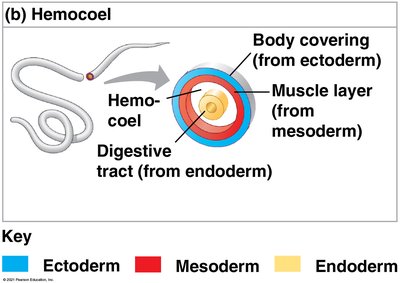
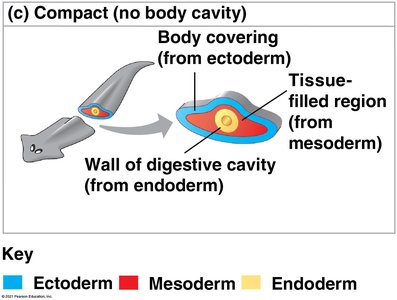
Triploblastic animals may possess a body cavity, which provides space for organ development and movement.
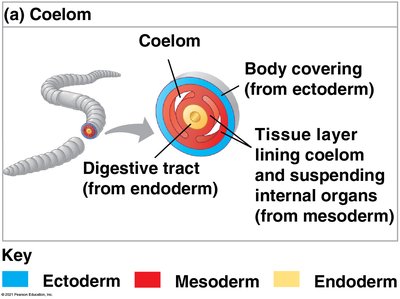
Coelom: A true body cavity completely lined by mesoderm-derived tissue.
Hemocoel: A body cavity formed between the mesoderm and endoderm; found in some invertebrates.
Acoelomate: Animals lacking a body cavity; their bodies are solid except for the digestive tract.
Developmental Patterns: Protostomes vs. Deuterostomes
Key Differences
Animal development is classified based on cleavage patterns, coelom formation, and the fate of the blastopore:
Protostome Development:
Spiral and determinate cleavage
Coelom forms from solid masses of mesoderm splitting
Blastopore becomes the mouth
Deuterostome Development:
Radial and indeterminate cleavage
Coelom forms from folds of the archenteron
Blastopore becomes the anus
Animal Phylogeny and Major Clades
Modern Phylogenetic Analysis
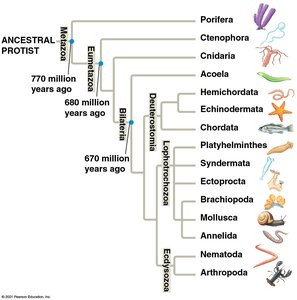
Current animal phylogenies are based on a combination of morphological and molecular data, including whole-genome analysis, rRNA genes, Hox genes, and protein-coding genes. The major clades within Bilateria are:
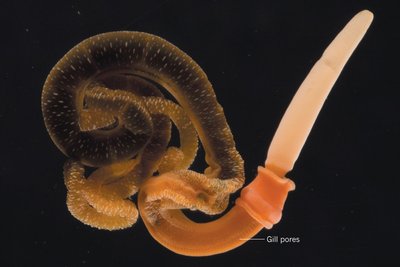
Deuterostomia: Includes hemichordates, echinoderms, and chordates.
Lophotrochozoa: Includes groups with lophophores (feeding structures) or trochophore larvae (e.g., molluscs, annelids).
Ecdysozoa: Characterized by molting of an external skeleton (ecdysis); includes nematodes and arthropods.
Summary Table: Major Animal Phyla
The following table summarizes key characteristics of major animal phyla:
Phylum | Description |
|---|---|
Porifera | Lack tissues; have choanocytes (collar cells) |
Cnidaria | Unique stinging structures (nematocysts); diploblastic; radial symmetry; gastrovascular cavity |
Platyhelminthes | Dorsoventrally flattened acoelomates; gastrovascular cavity or no digestive tract |
Syndermata | Pseudocoelomates; rotifers have alimentary canal and jaws; acanthocephalans are parasites |
Lophophorates | Coelomates with lophophores (ciliated feeding structures) |
Mollusca | Coelomates with three main body parts; most have hard shells |
Annelida | Coelomates with segmented bodies |
Nematoda | Cylindrical pseudocoelomates; no circulatory system; undergo ecdysis |
Arthropoda | Coelomates with segmented bodies, jointed appendages, and exoskeletons |
Echinodermata | Coelomates with bilaterally symmetrical larvae and five-part adult bodies; water vascular system |
Chordata | Coelomates with notochord, dorsal hollow nerve cord, pharyngeal slits, post-anal tail |
Key Innovations in Animal Evolution
Development of tissues and organs
Evolution of body cavities
Specialization of nervous and muscle tissues
Emergence of bilateral symmetry and cephalization
Adaptations for efficient consumption and movement
Major Events in Animal Evolution
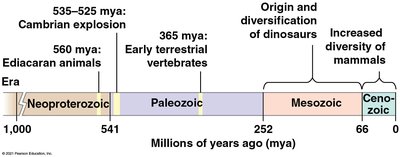
Animal evolution is marked by several key events, including the Cambrian explosion, the origin of vertebrates, and the diversification of major groups such as mammals and dinosaurs.
Specialized Structures in Major Clades
Lophotrochozoa
Lophophore: Ciliated feeding structure
Trochophore larva: Distinct larval stage in some groups
Ecdysozoa
Secrete external skeletons and undergo molting (ecdysis)
Conclusion
The animal kingdom is defined by a unique combination of multicellularity, heterotrophy, specialized tissues, and complex developmental patterns. Understanding the evolutionary relationships and innovations among animal groups provides insight into the diversity and adaptability of life on Earth.
